 Garmo team
What is a lookbook? The meaning in fashion
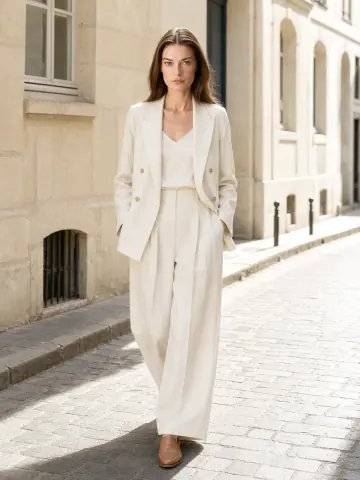
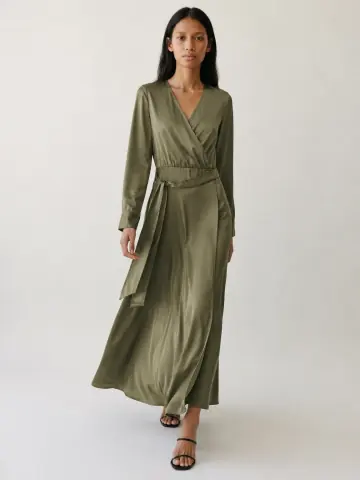
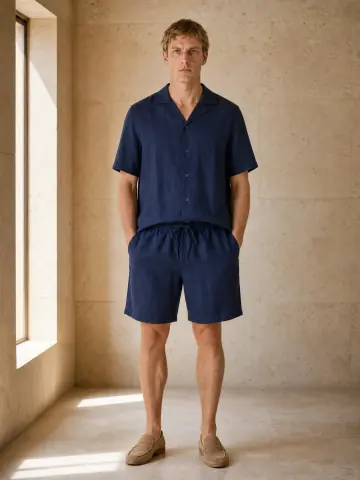
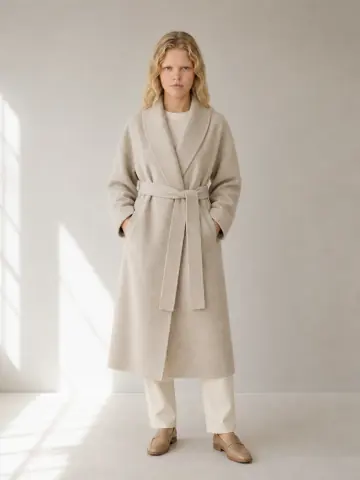
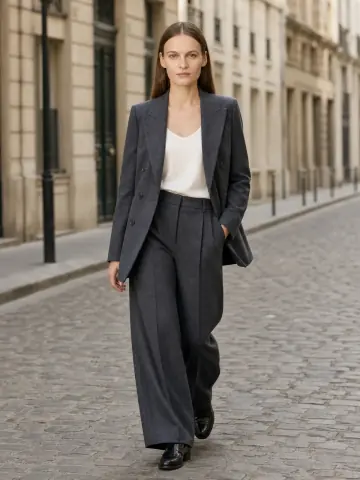
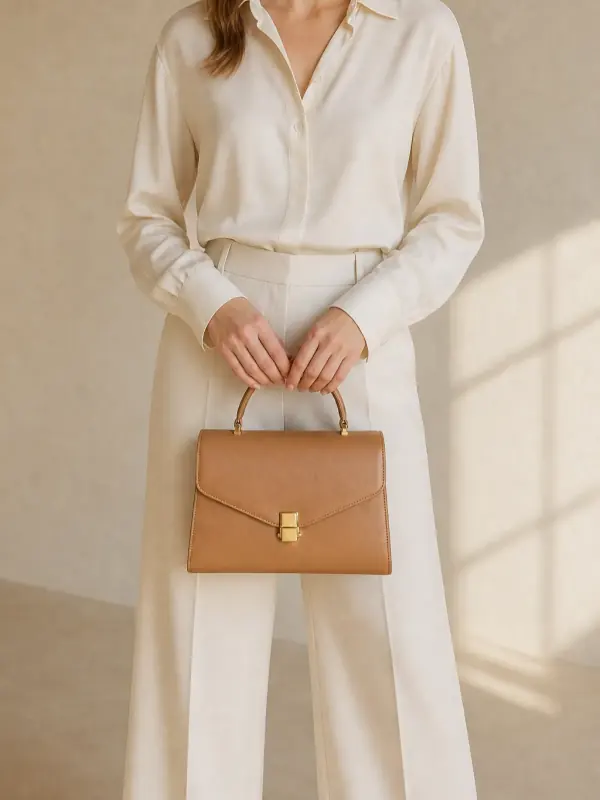
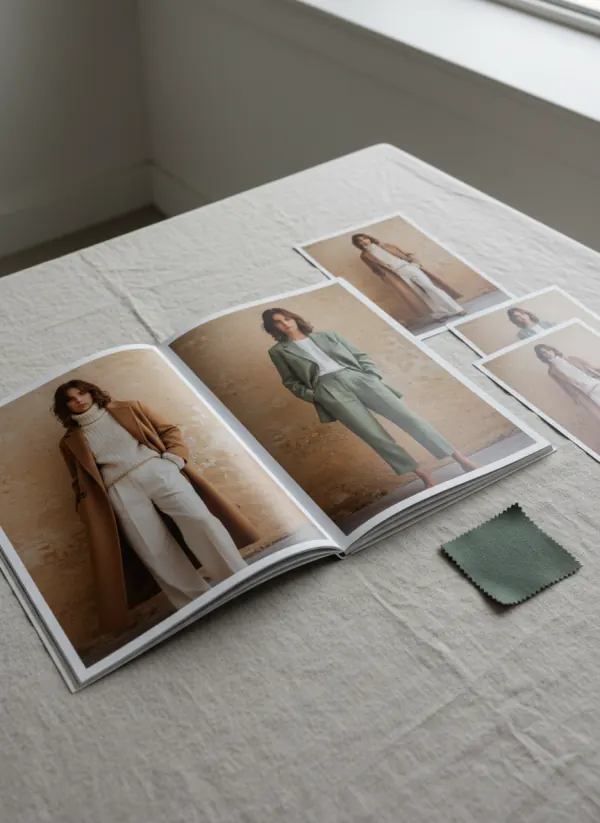
A lookbook is a collection told in outfits. Each page or frame shows one look: a coat with the knit, trousers and shoes it was designed with, photographed head to toe. The name says it plainly: a book of looks. It can be printed, a PDF or a page on a website.
What makes it a lookbook rather than a pile of product photos is consistency. The same model or small cast, the same light, the same setting or a small set of settings, and a clear order from the first look to the last. A buyer flicking through should feel the collection as one idea.
Lookbooks are made for people deciding whether to buy into a collection before they see it in a shop: retail buyers, stylists, journalists and, more and more, the brand’s own customers on Instagram or a website. That is why a lookbook usually comes out at the start of a season, before or alongside the product pages.
Lookbook vs catalogue vs line sheet vs campaign
These four are often confused. They can use the same photos, but each has a different job.
| Lookbook | Catalogue | Line sheet | Campaign | |
|---|---|---|---|---|
| Job | Show the collection as outfits | Sell each product | Let stores place orders | Build the brand mood |
| Main reader | Buyers, press, customers | Customers | Wholesale buyers | Everyone who sees the ad |
| Photos | Full looks, head to toe | Each item clearly, often plain background | Small product images or sketches | A few strong images |
| Text | Look numbers, product names | Prices, sizes, details | Style codes, wholesale prices, minimums | A line or a slogan |
| When | Start of the season | All year | Sales period | Launch |
Small brands often merge the first two: a lookbook page per look, with the product names and links underneath.
Types of lookbooks
All lookbooks show outfits; they differ in who they are for and where they are seen.
Seasonal collection
The classic: every look of a spring or autumn collection, in order, released at the start of the season.
Wholesale lookbook
Sent to stores with style codes and order details, often next to a line sheet.
E-commerce lookbook
A web page where each look links to the products, so a customer can buy the outfit.
Drop or capsule
A short lookbook of six to twelve looks for a small release or a collaboration.
Model or personal
A model’s or stylist’s portfolio of looks they have worn or styled.
Lookbook in film
In film and video, a visual pitch of mood, colour, locations and costumes before production.
What is a lookbook shoot?
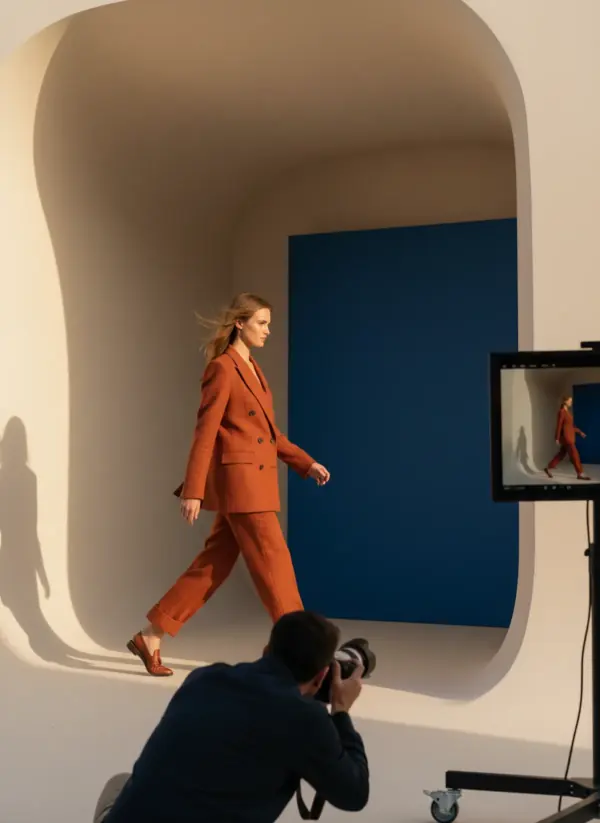
A lookbook shoot is the photoshoot that produces those outfit photos. Unlike a campaign shoot, which chases a few dramatic images, it has to cover every look in the collection with the same model, light and framing, so the pages sit together. A typical plan is one full-length front shot per look, plus a three-quarter or walking shot and a detail if the look needs it.
Poses are simple and repeatable: standing, a step, a hand in a pocket, a turn of the shoulder. The fashion model poses guide lists ones that keep the garment readable. The setting is either a clean studio or one location that suits the collection; fashion photoshoot locations covers both routes.
Before the day, write a look list: every outfit, in the order it will appear, with the pieces in each. Styling changes are the slow part, so group looks by the pieces they share. The same thinking runs through a catalogue photoshoot, only there each item gets its own frame.
What goes into a lookbook
Most lookbooks open with a cover image and a short page on the idea of the collection: the season, the inspiration, the fabrics. Then come the looks, one per page or spread, numbered so a buyer can say ‘look 7’ in an email. Under each look go the names or codes of the pieces.
For a wholesale lookbook, add sizes, colours, wholesale price and order dates, or attach a line sheet with them. For a customer lookbook on a website, link each piece to its product page instead. End with contact details and, if relevant, where the collection is sold.
Keep it short. Twelve to thirty looks is plenty for most small brands; a lookbook that shows every colour of every piece has turned into a catalogue. Choose the strongest version of each outfit and let the product pages do the rest.
Lookbook examples made from one product photo
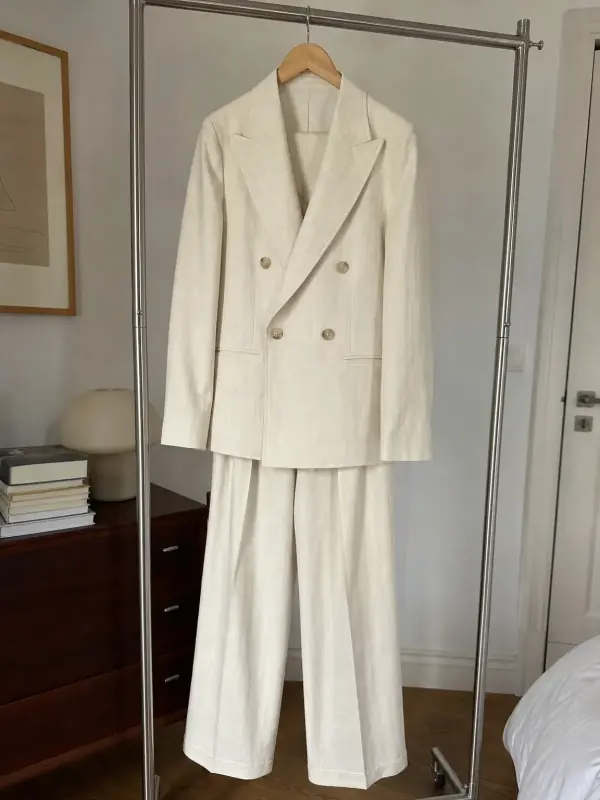
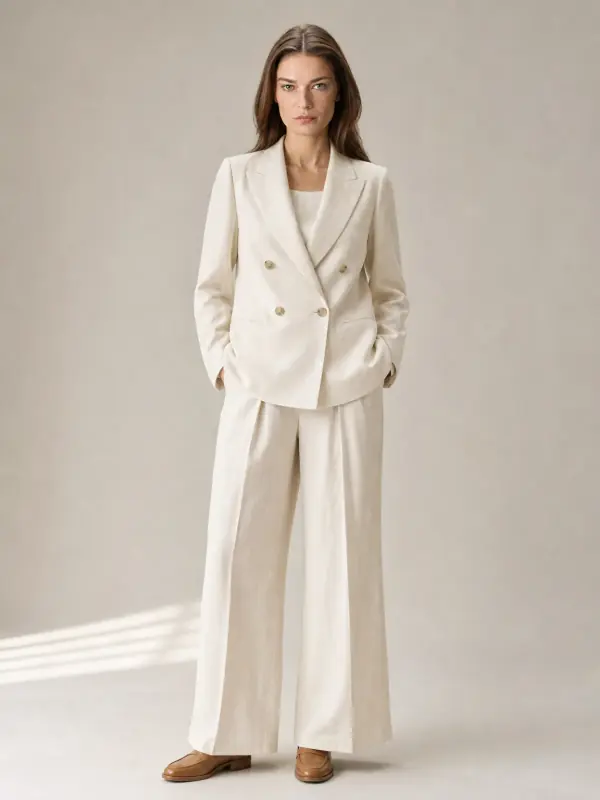
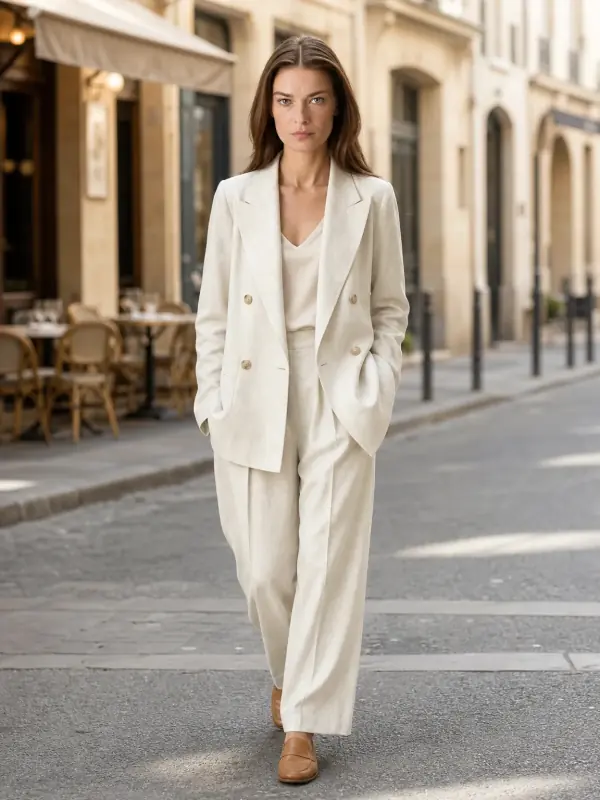
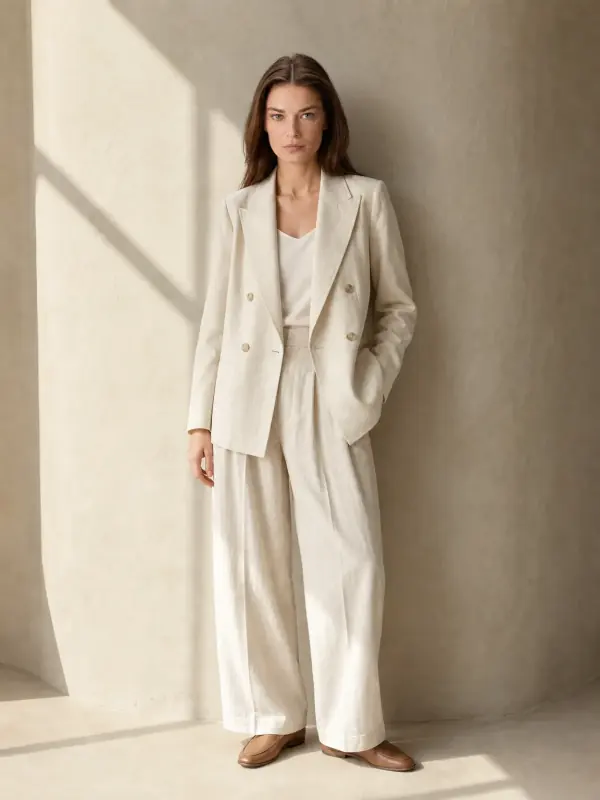
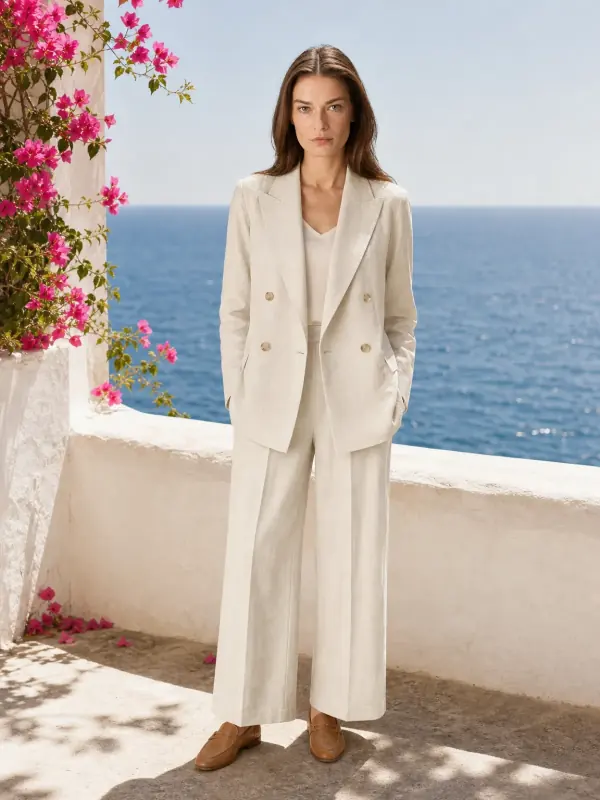
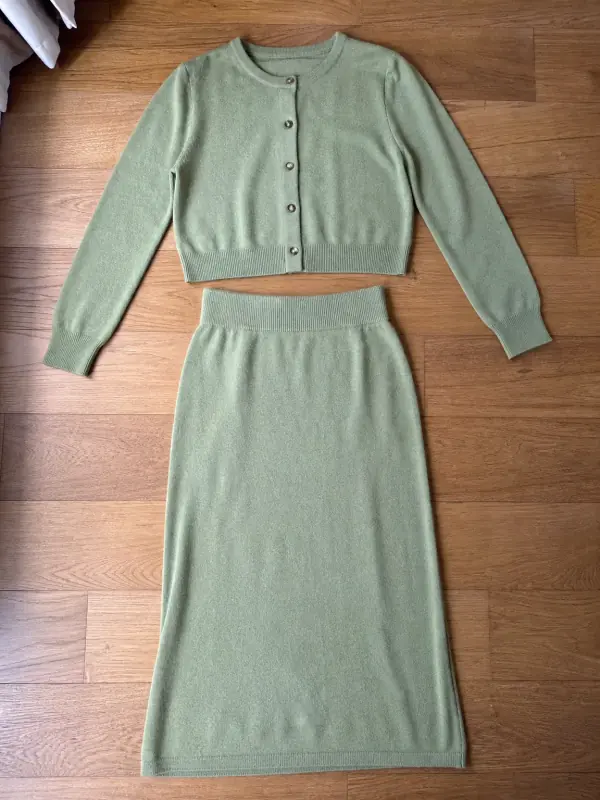
Each set started as a single photo of the garment. Garmo kept the same model across the frames, which is what lets them sit side by side in a lookbook.
One suit, four settings
Studio, street, editorial and terrace from one product photo: the same model and suit, four moods for four lookbook spreads.
 Your photo
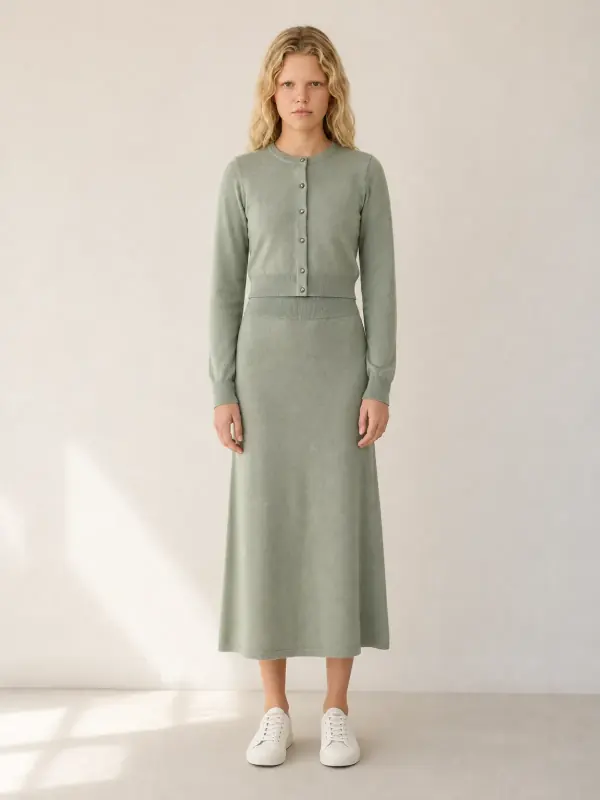
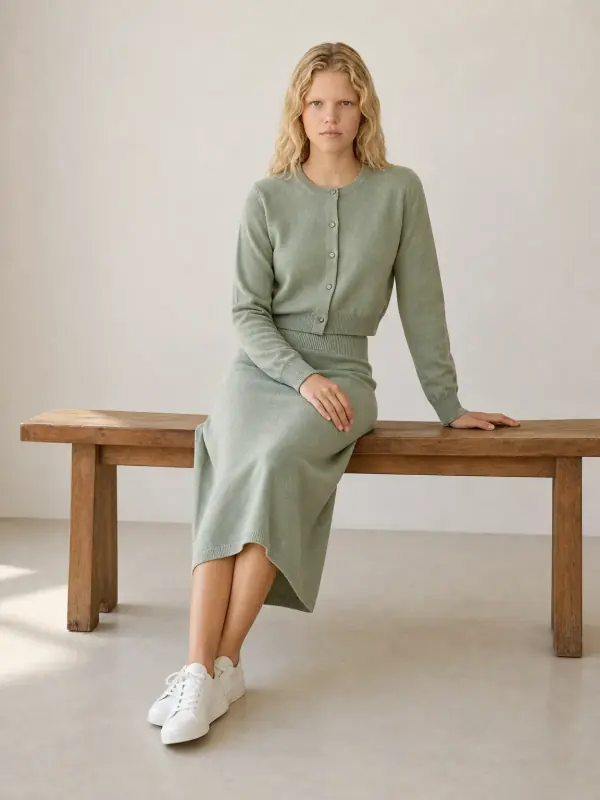
A two-piece knit, two poses
Standing and seated frames of the same cardigan and skirt, the pair a lookbook page needs to show the full look.
 Your photo
How to make a lookbook without a photoshoot
A small brand rarely has the budget to book a model, photographer and location for every new collection. With Garmo you start from your own photos of the pieces instead. In an AI model photoshoot you pick one of 42 ready models and a studio, street or editorial setting, and get one to six images per shoot; keep that model for the whole collection so every look matches.
If you want a specific face for your brand, the AI fashion model generator helps you choose it. For the walking or turned frames a lookbook needs, the AI pose changer changes the pose and keeps the outfit, and the AI background changer moves a look to another setting. Co-ords and suits go through two piece set on model AI as one outfit.
Check every frame against the real garment before it goes in the book: colour, length, buttons and print should match. For a step-by-step plan, with a four-hour schedule and how to mix settings, read the AI lookbook generator guide. The first 3 images are free.
Lookbook questions
What is the purpose of a lookbook?
To show how a collection is meant to be worn, as complete outfits, so buyers, press and customers can picture it before they see it in a shop. It sets the mood of the season; product pages and catalogues then sell the individual pieces.
What is the difference between a lookbook and a catalogue?
A lookbook shows outfits and the idea of the collection; a catalogue shows each product clearly with prices and details. Many small brands combine them, with a look per page and product names underneath.
How many looks should a lookbook have?
There is no rule. Twelve to thirty looks covers most small collections, and a drop or capsule can work with six to twelve. Show the strongest version of each outfit, not every colour.
What is a lookbook in film?
In film and video production, a lookbook is a visual pitch made before shooting: reference images for mood, colour, locations, costumes and framing, so the crew and funders share one picture of the project.
Can I make a lookbook with AI?
Yes, as long as the garments are real and each image matches them. Start from your own product photos, keep one model across the collection and check colour, length and details in every frame before publishing.
Tools for making a lookbook
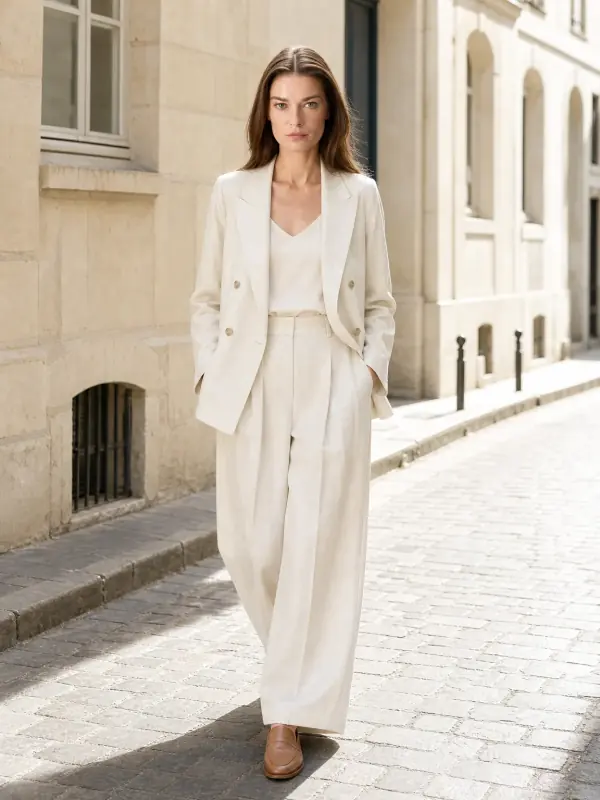 AI model photoshootTurn one product photo into a full photoshoot with a model: studio, street, editorial or a scene you describe, with up to six angles.
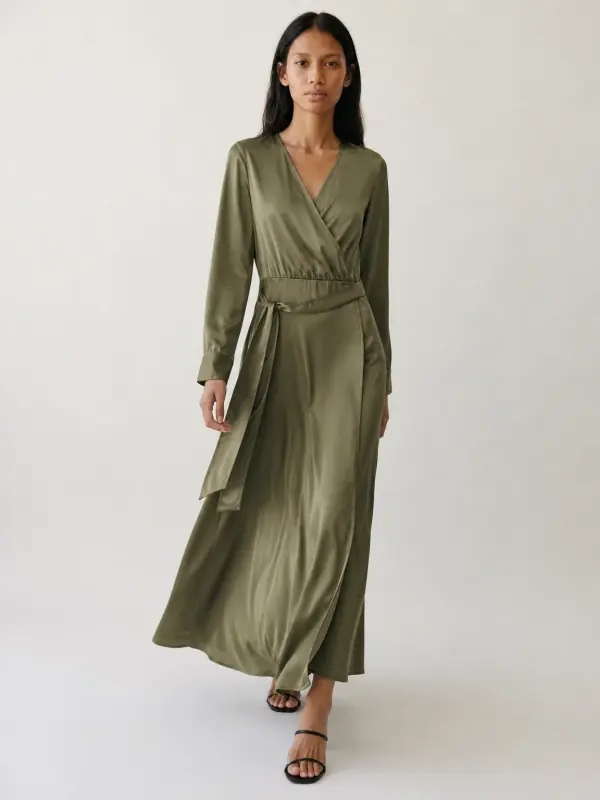
 AI fashion model generatorChoose from 42 AI fashion models, or create your own from photos, and keep the same face across every product you sell.
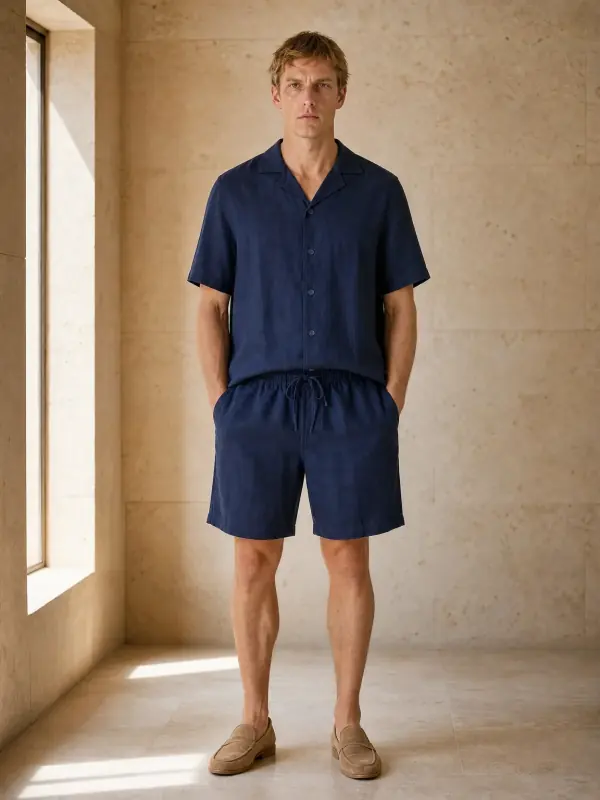
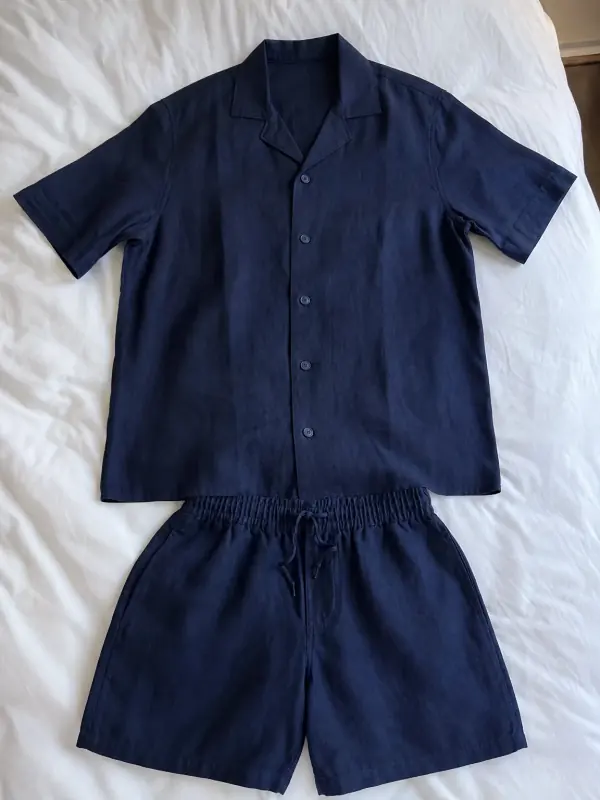 Two-piece set on model AIMatching sets and co-ords worn together, so shoppers see the whole outfit the way it is sold.
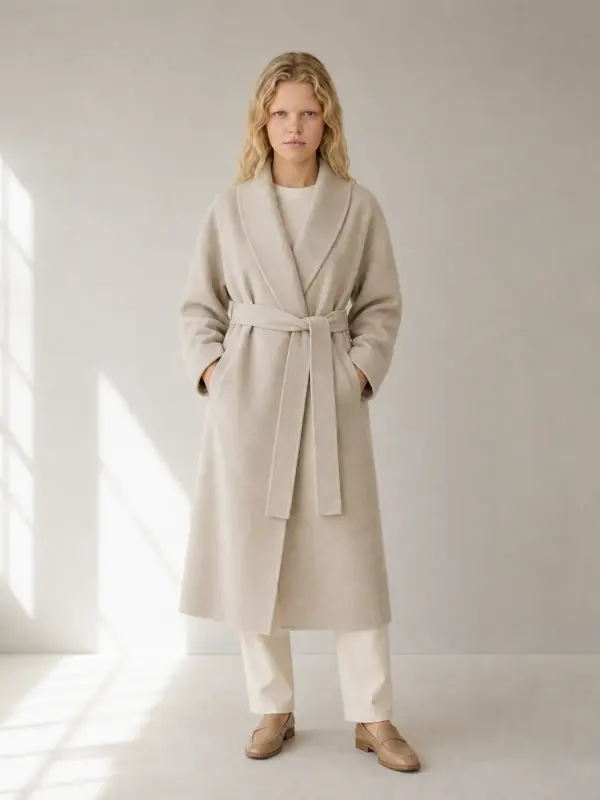
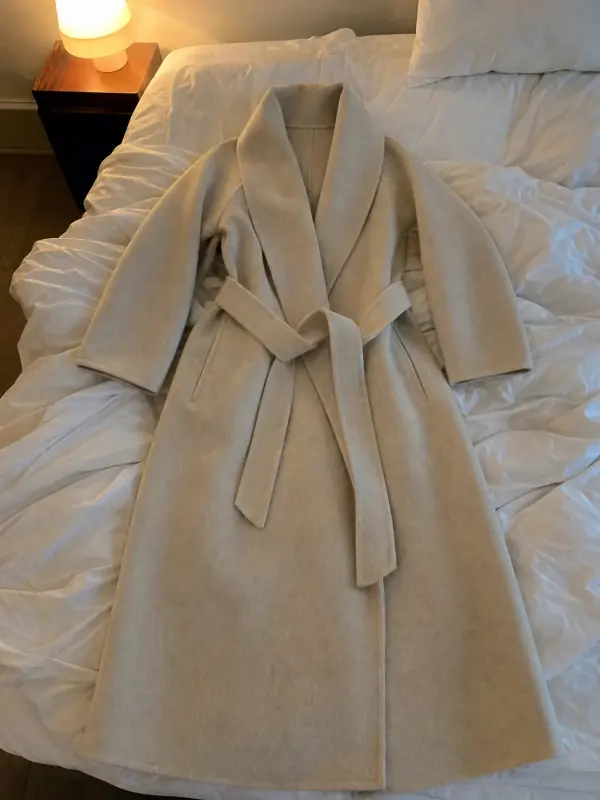 Flat lay to modelLay the garment flat, take one phone photo and get it worn by an AI model from three angles.
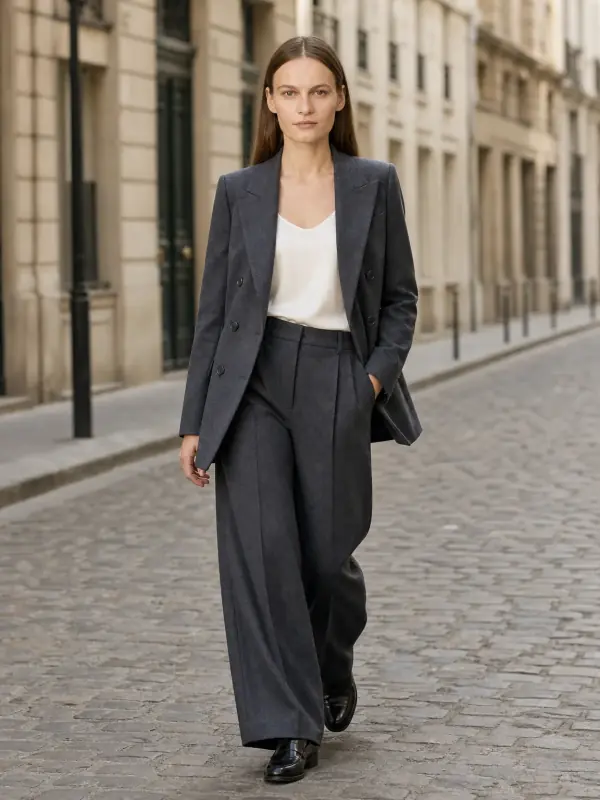
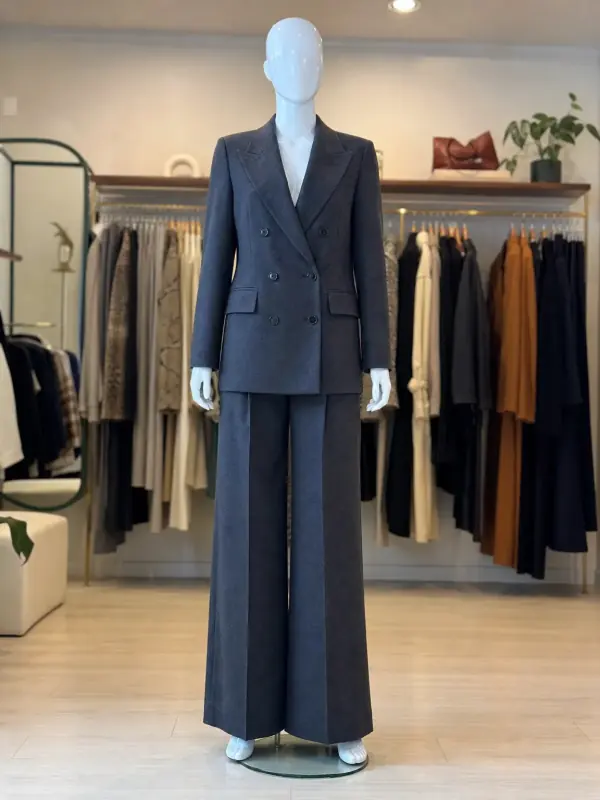 Mannequin to model AIAlready shoot on a mannequin or dress form? Upload that photo as it is and get the same piece worn by a model.
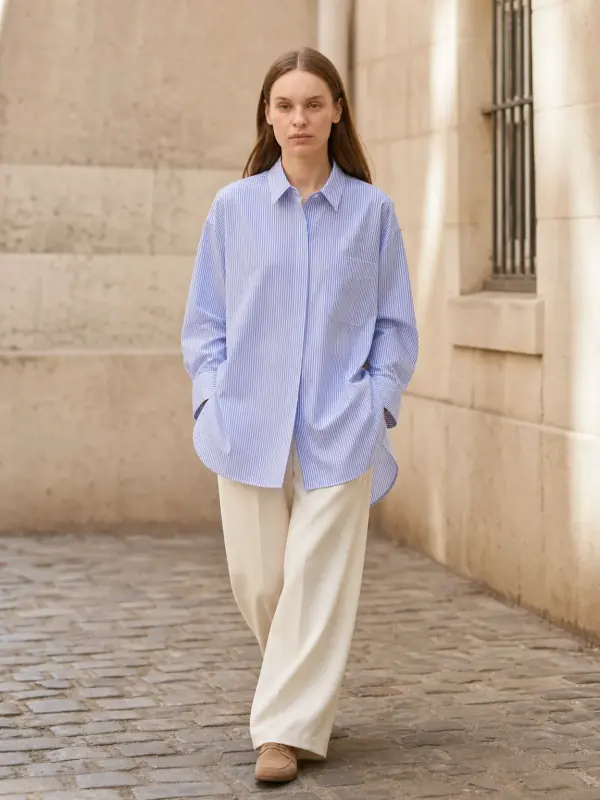
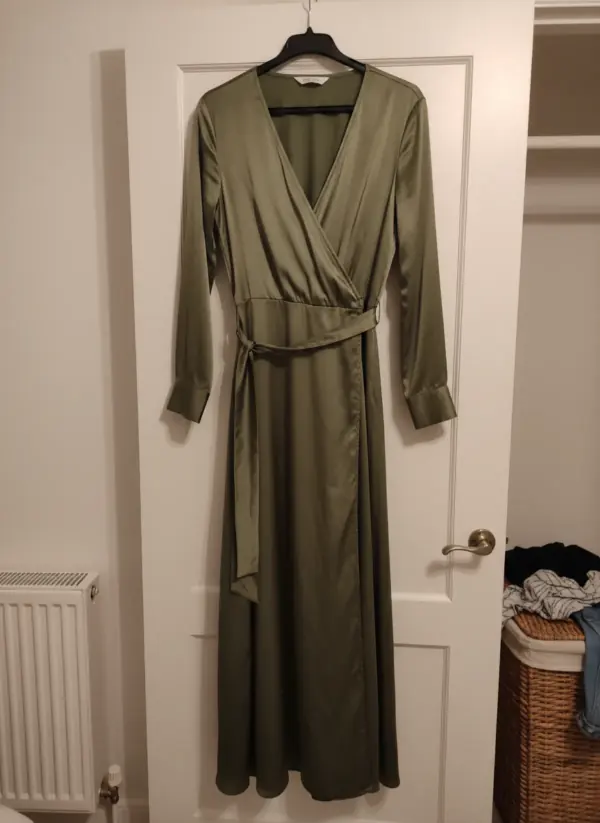
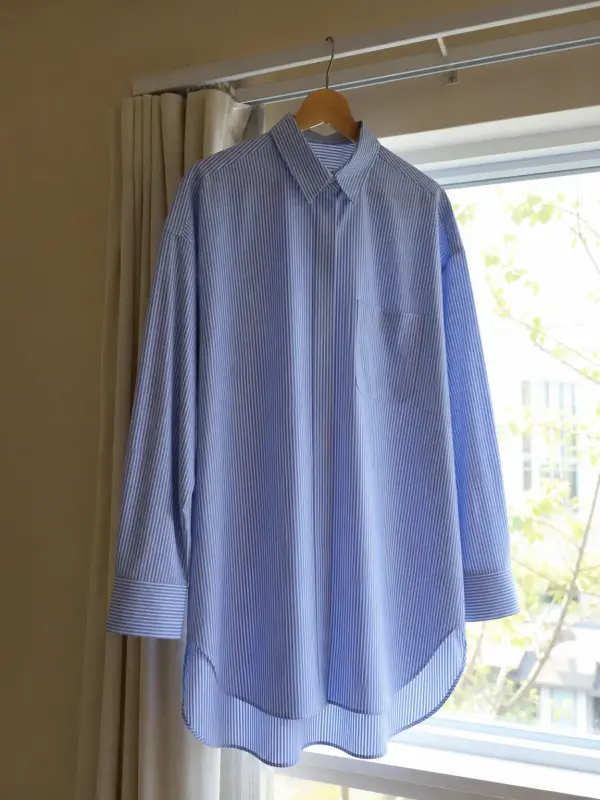 Garment to model AIHang the garment on a door or a rail, take one photo, and get it back worn by a model.