Give every creative idea a commercial job
Begin with the decision a shopper needs to make. A product-page image must clarify cut, length, color and fabric; a collection image has to stop the scan and express a category; an ad needs one instant message; social content can spend more time on personality and process. The same concept rarely performs every task. Label each shot PDP, collection, ad, email or social before you plan the set.
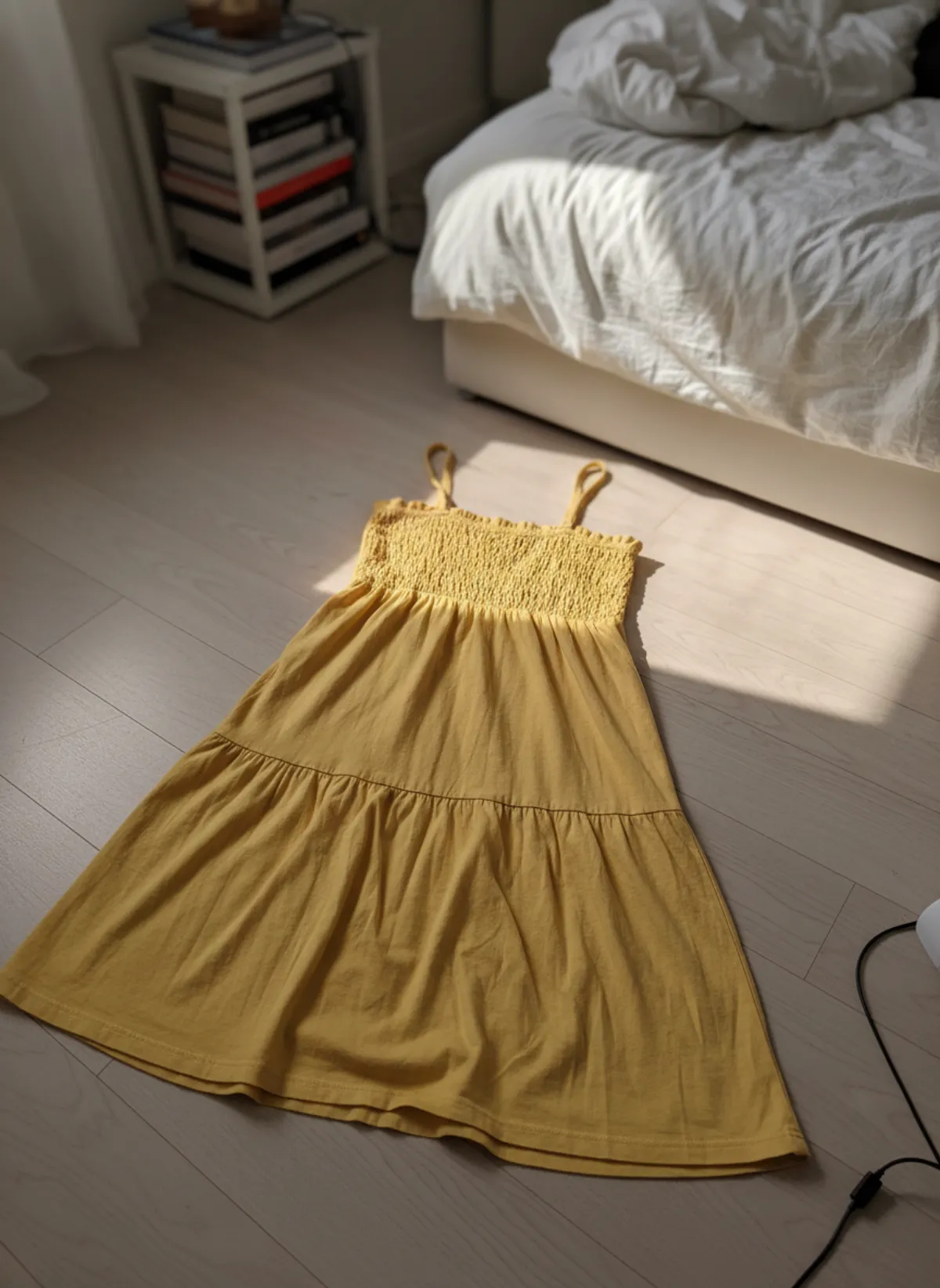
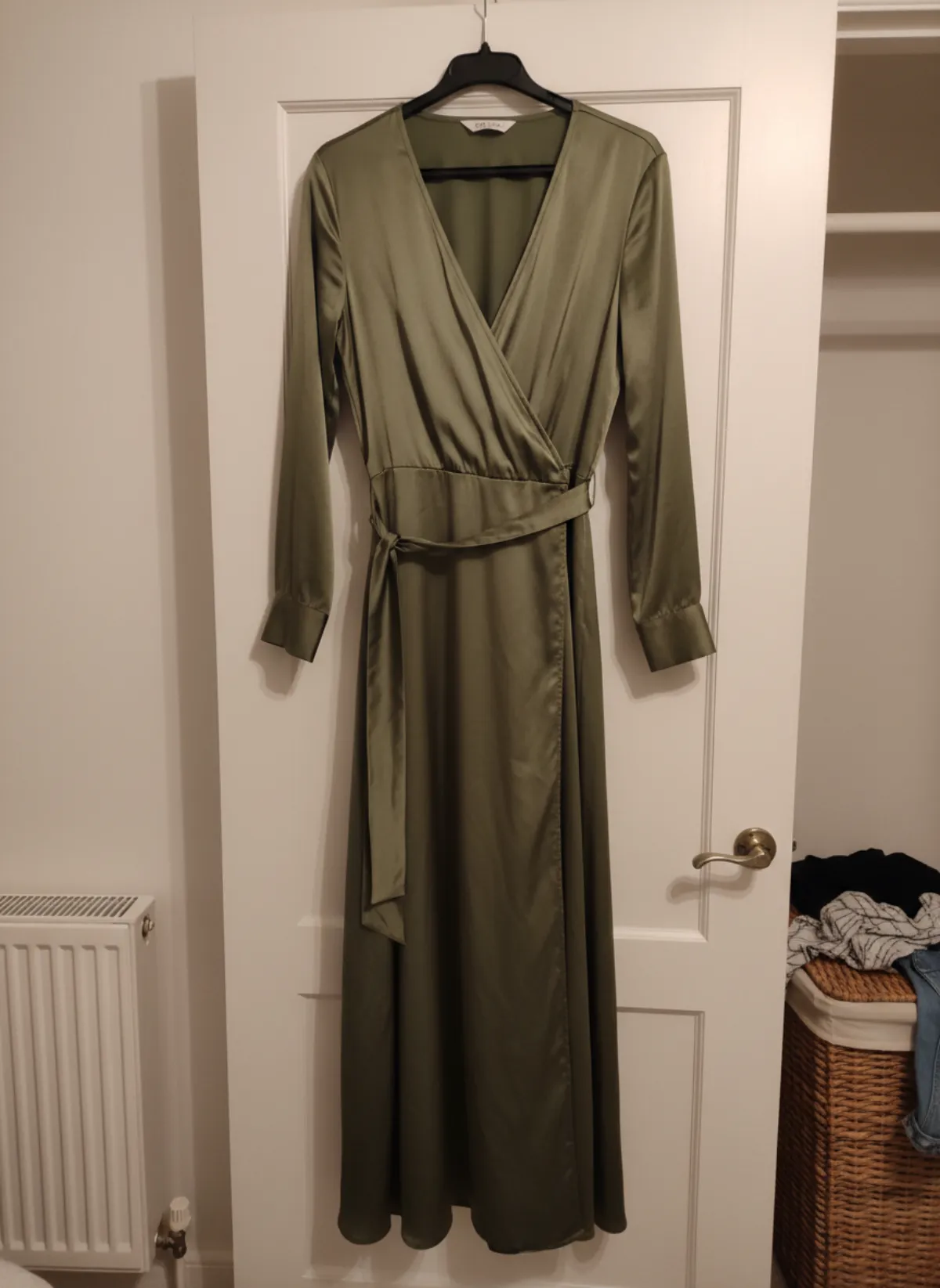
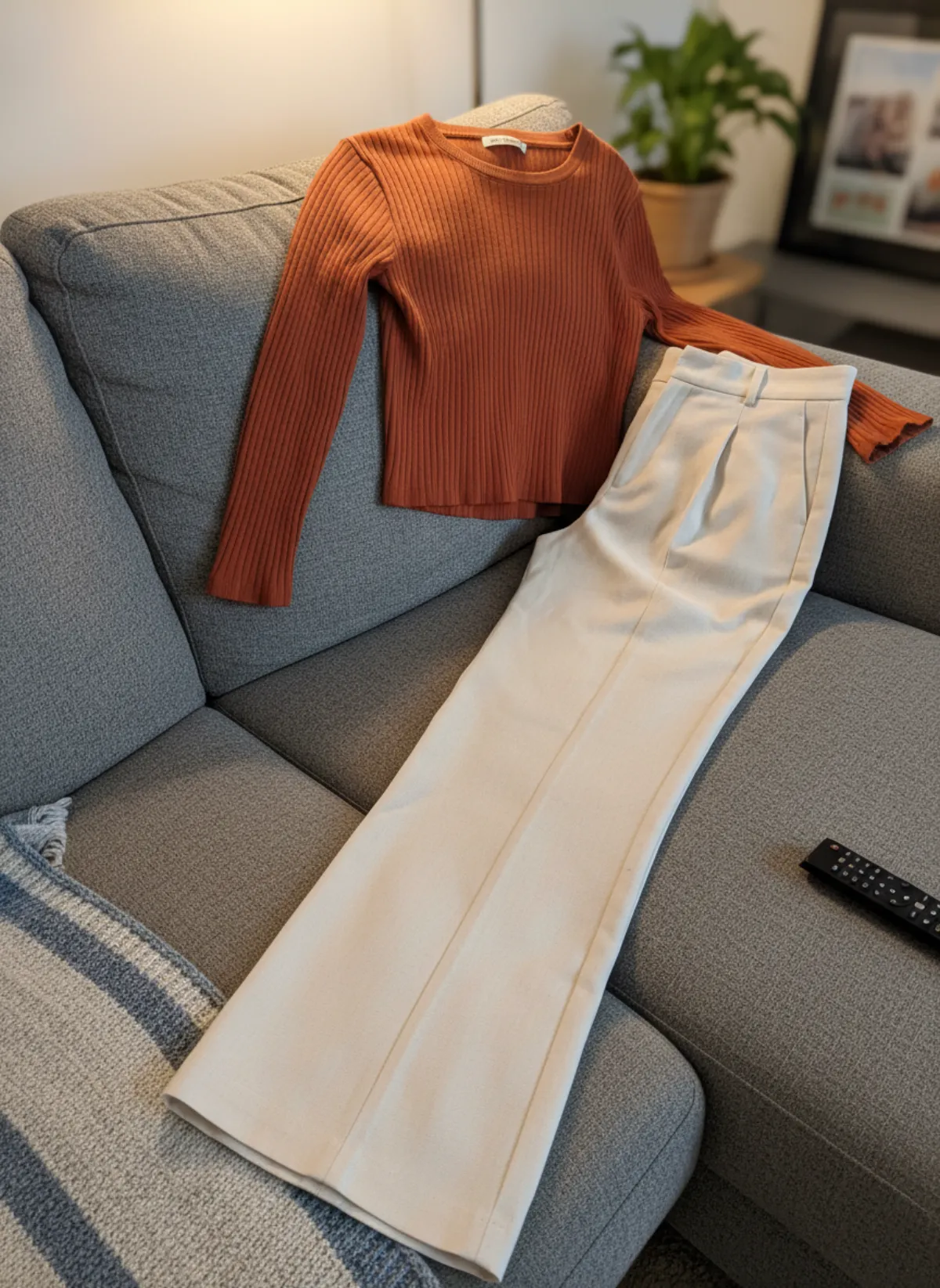
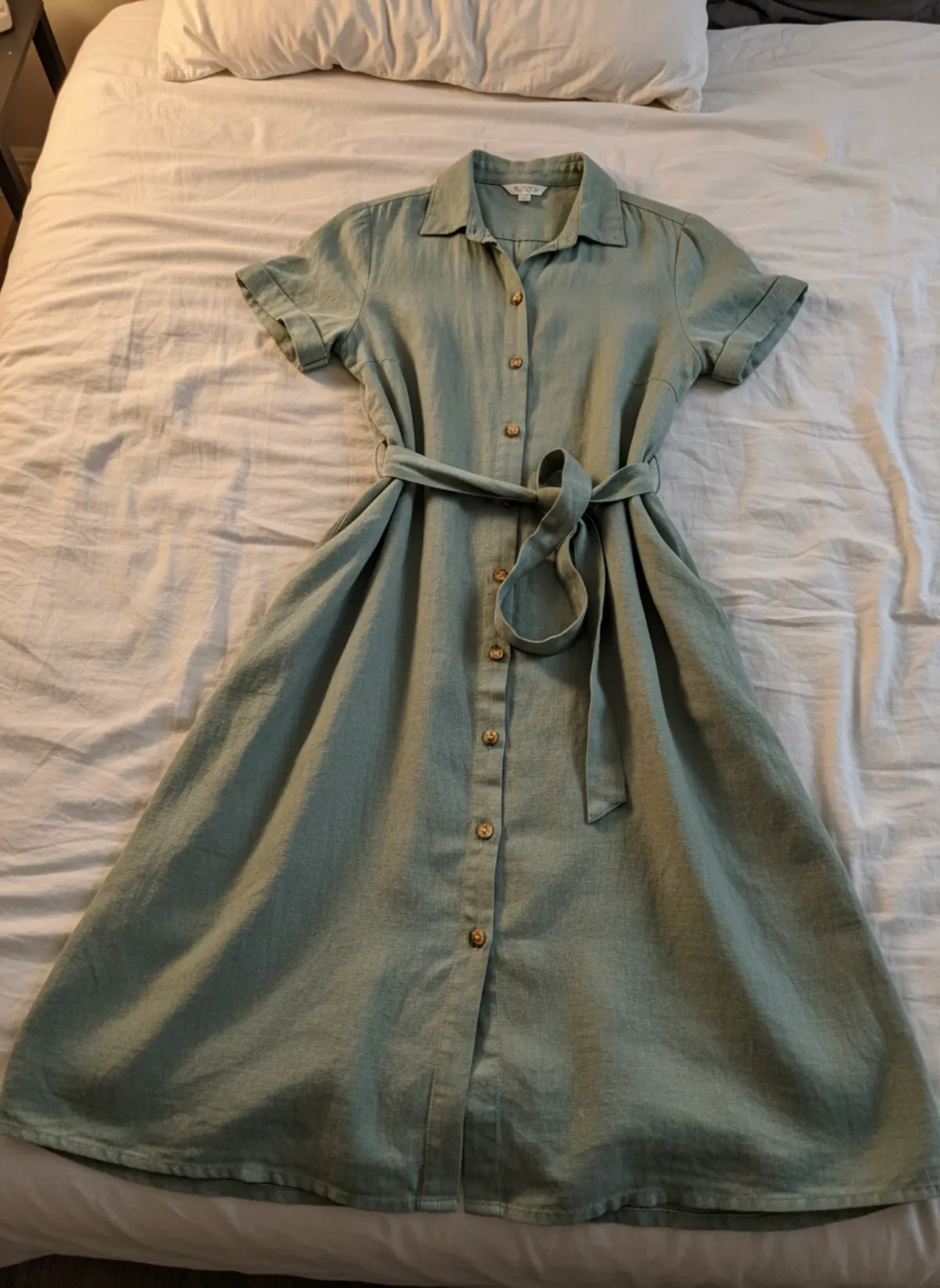
Create the evidence set first: front, three-quarter, back, close detail and one natural movement frame. Keep model scale, light and crop consistent. This gives the customer a stable comparison and gives the creative team a reference that cannot be negotiated away when the campaign becomes ambitious. If your source is a flat garment, convert the flat lay to a model image before building more elaborate scenes.
Choose one visual rule that the whole launch can recognize. It might be a cobalt rectangle, a hard afternoon shadow, low camera height or a monochrome palette. Repeat the rule without repeating the exact photograph. A coherent family feels more memorable than twelve unrelated trends, and it makes crops for different channels easier because color and composition already share a grammar.
Write a one-sentence concept: ‘Tailoring in motion, photographed in warm architecture with one cobalt accent.’ Then add what may never change: the burnt-orange fabric, double-breasted construction, button count, trouser shape and real fit. That line separates creative freedom from product truth. It is also a better brief for a photographer, stylist or AI model photoshoot than a mood board with no priorities.
Ideas 1–6: build the core image family
1. Tonal studio
Place the garment against a neighboring shade: burgundy on dusty rose or navy on blue-grey. Keep enough edge contrast and use it for collection covers.
2. The walking frame
A natural step reveals drape, trouser break and coat movement. Shoot a short sequence so expression and fabric both land cleanly.
3. Graphic shadow
Use window light or a cutter to create one strong shape. Keep the shadow away from important construction details and faces.
4. Material macro
Fill the frame with weave, stitching, hardware or print scale. Pair it with a full view so texture has context.
5. One piece, three layers
Style the same hero item for warm, transitional and cool weather. It communicates versatility without inventing a different product.
6. Front, back, three-quarter
Turn required catalog angles into a deliberate triptych. Match scale and pose rhythm so information itself becomes visual design.
Ideas 7–12: extend the campaign
7. Real-use location
Put workwear at a desk, activewear near motion and occasionwear in an evening threshold. The location must explain use, not merely decorate.
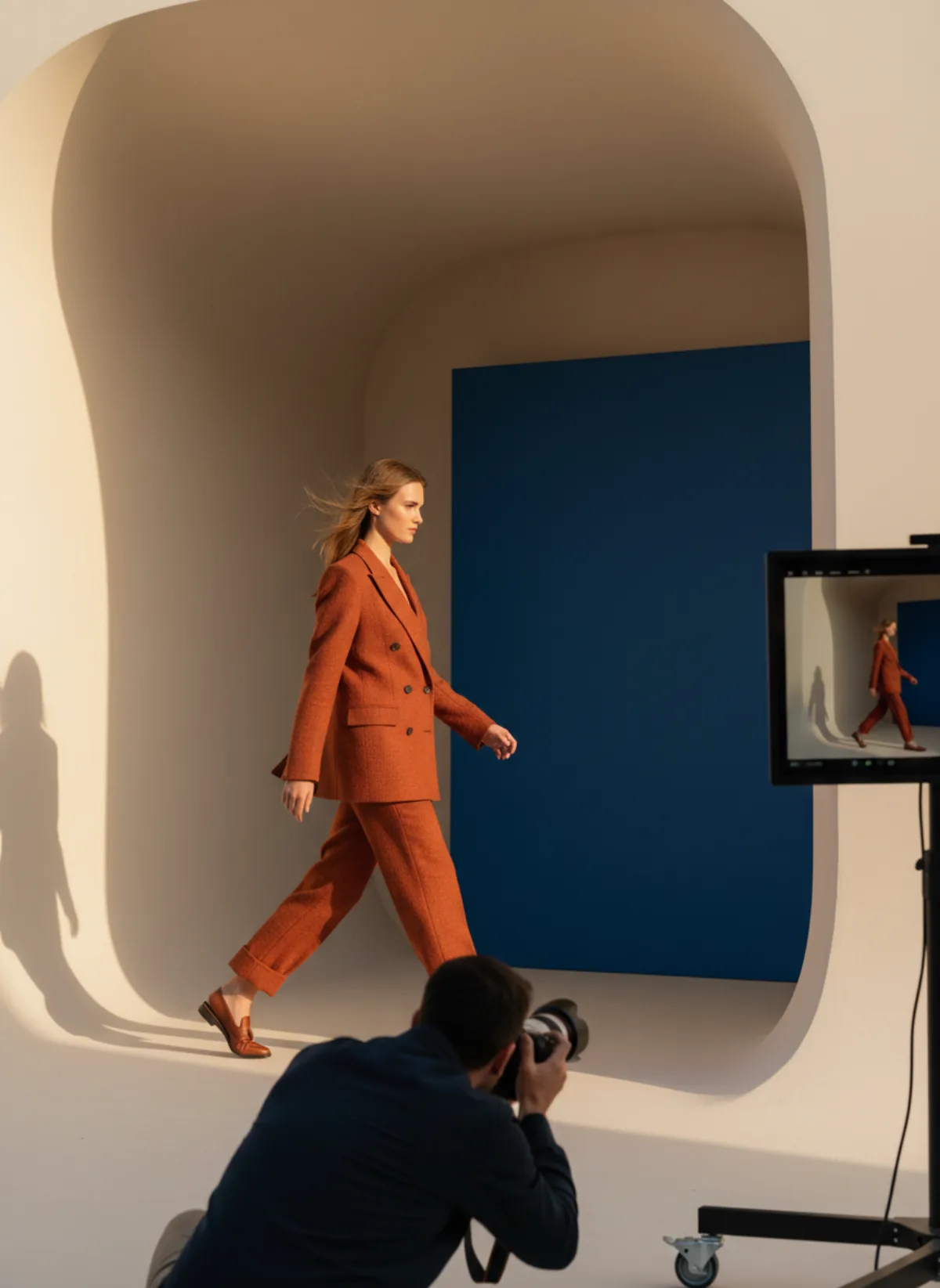
8. Architectural color block
Frame the model against one bold wall, doorway or panel. It produces memorable campaign crops without a crowded prop list.
9. Consistent cast
Show several SKUs on the same model or a deliberately selected cast. Repetition helps shoppers compare fit and builds a recognizable brand world.
10. Day-to-night pair
Keep the garment and framing stable while changing styling and atmosphere. The pair works well in carousels and email storytelling.
11. Native vertical crop
Compose a true 4:5 or 9:16 version rather than cutting a wide hero later. Leave safe space for interface and ad copy outside the product.
12. Behind-the-shot frame
Reveal the sweep, light or monitor around the finished look. It creates social context while the primary catalog image remains clean.
One suit, three campaign directions
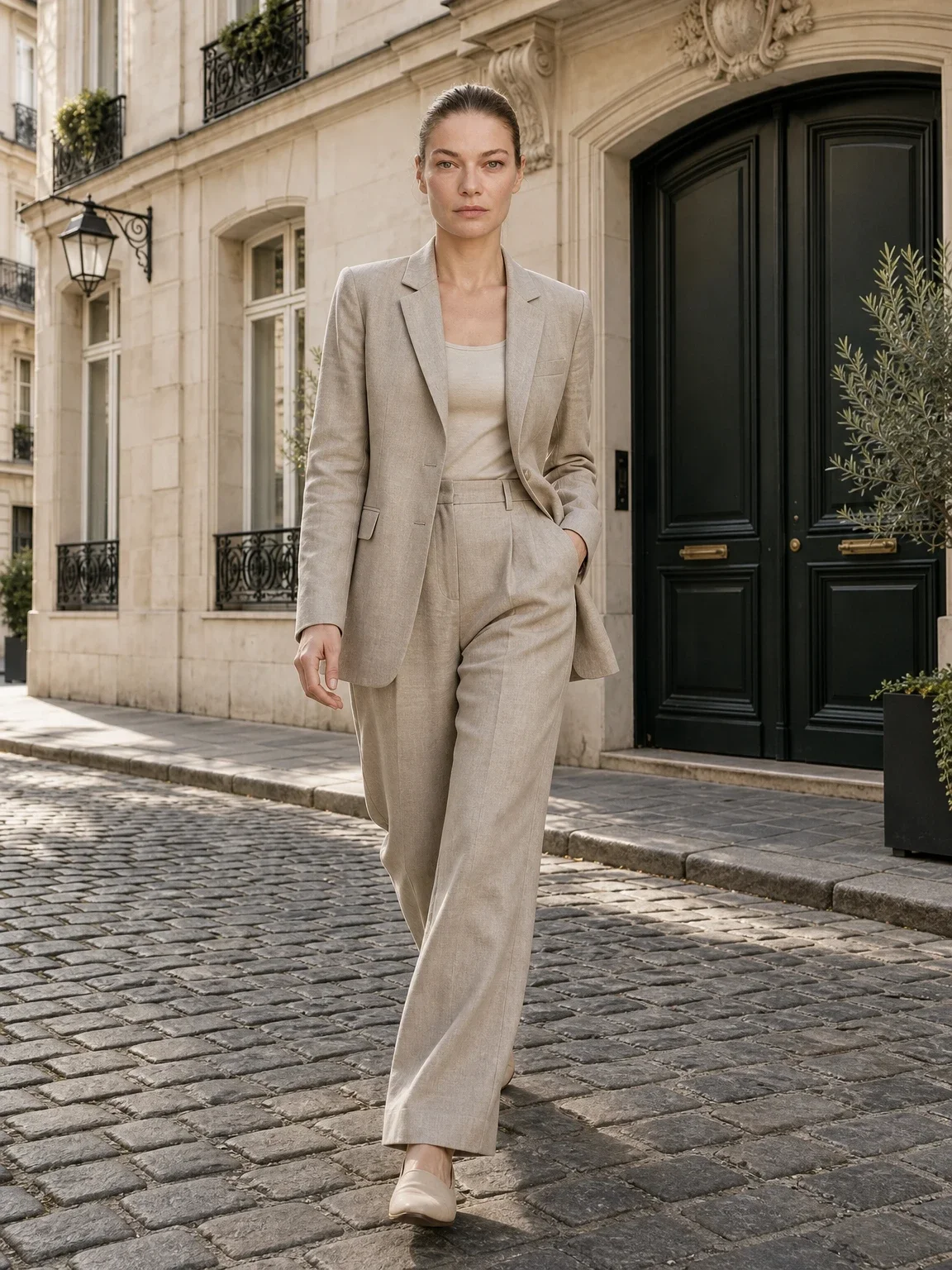
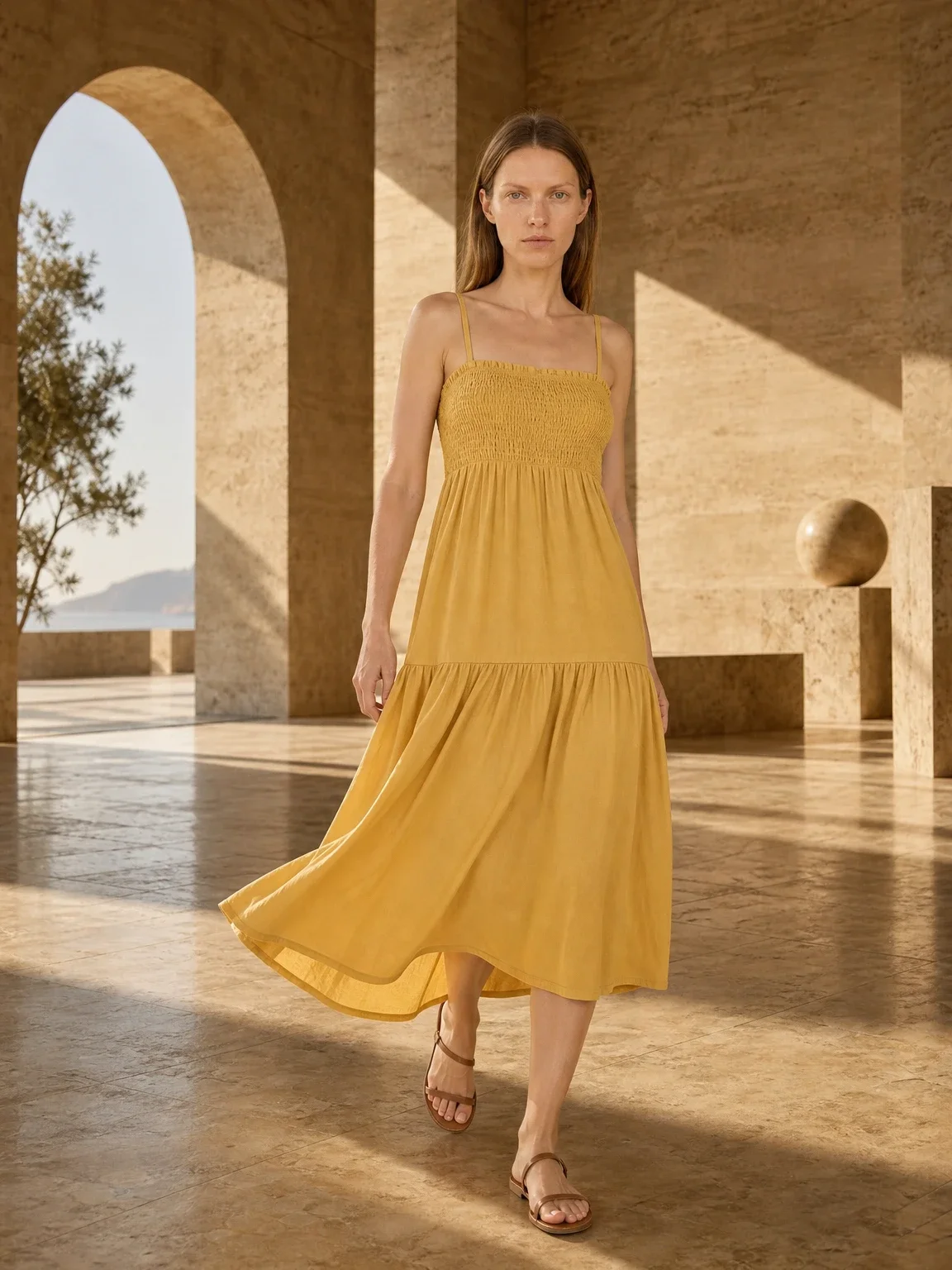
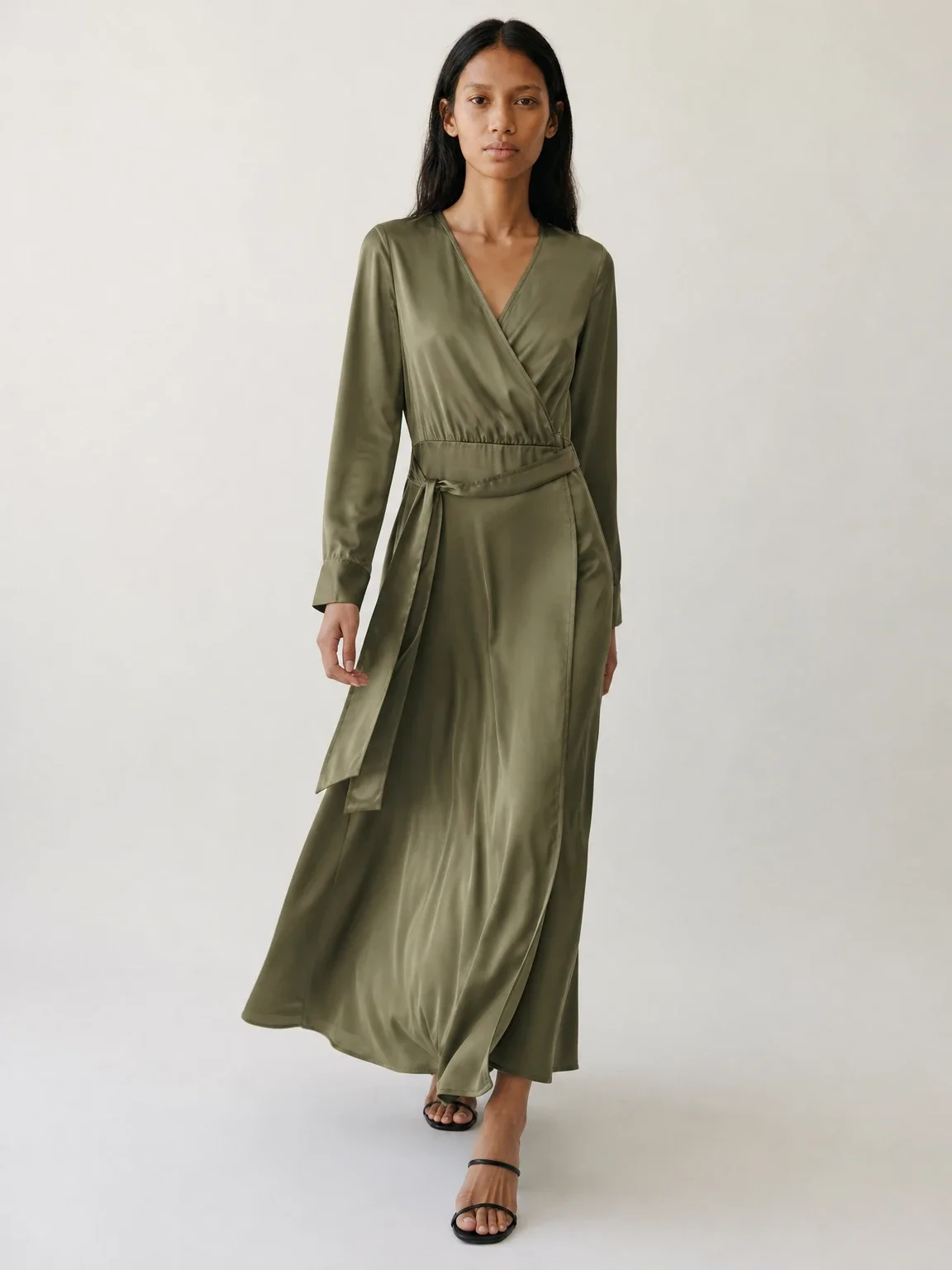
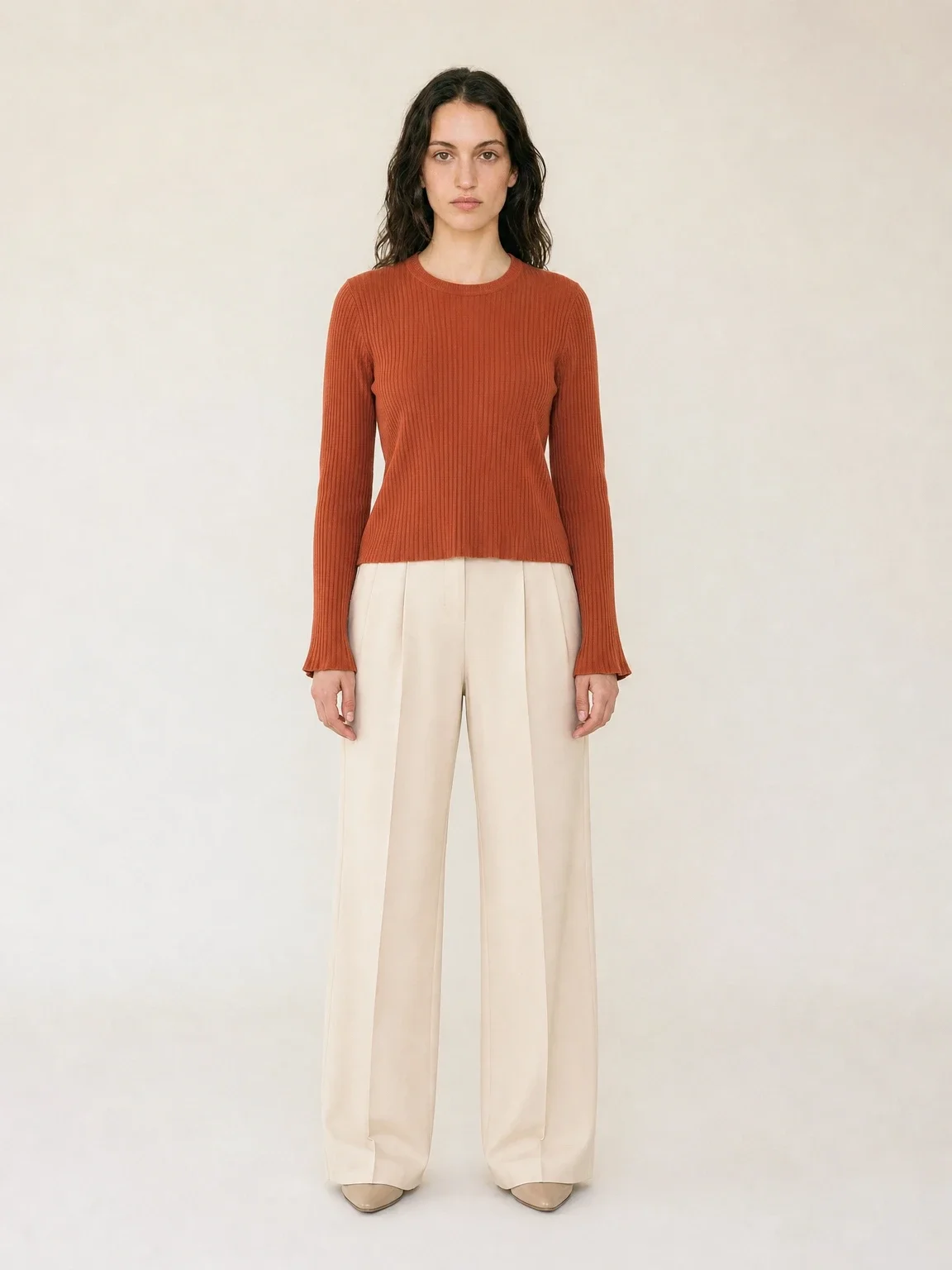
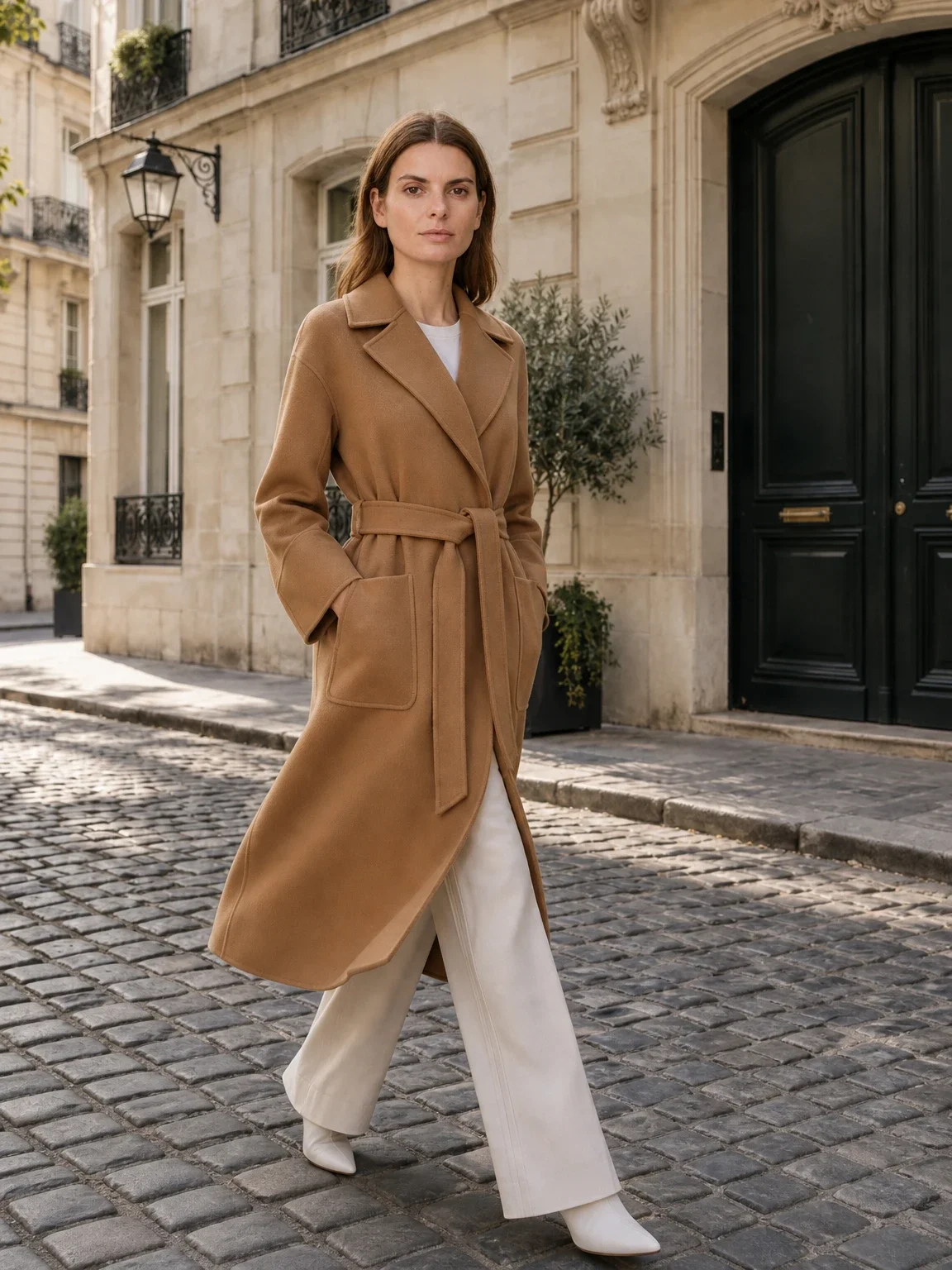
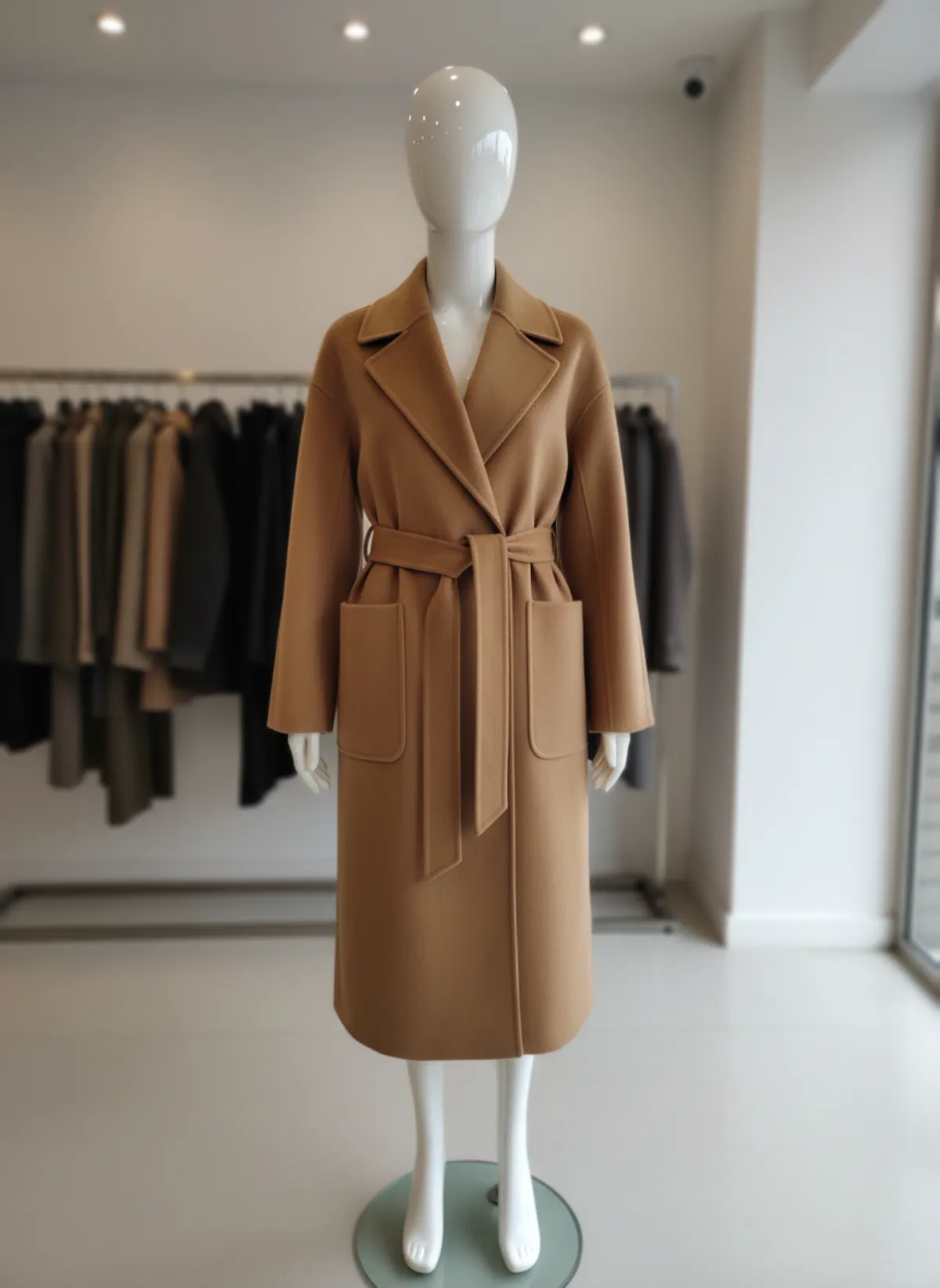
A clear source can support multiple settings without changing the garment's identity. The product reference remains the approval standard.
From source to studio, street and editorial
The same suit can serve a clean product page, a believable everyday scene and a stronger campaign frame. Notice how the channel changes while the item remains recognizable.
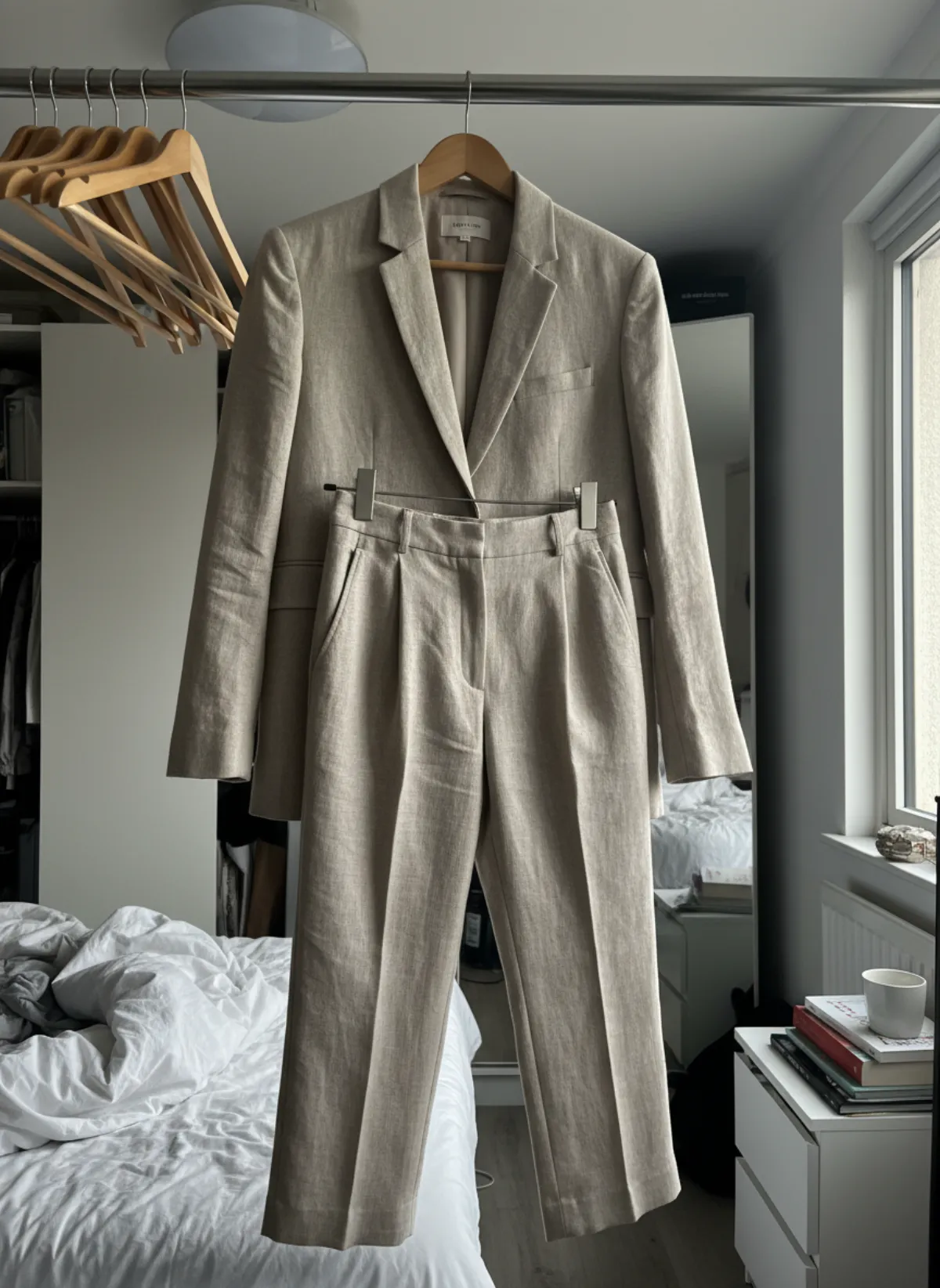 Your photo
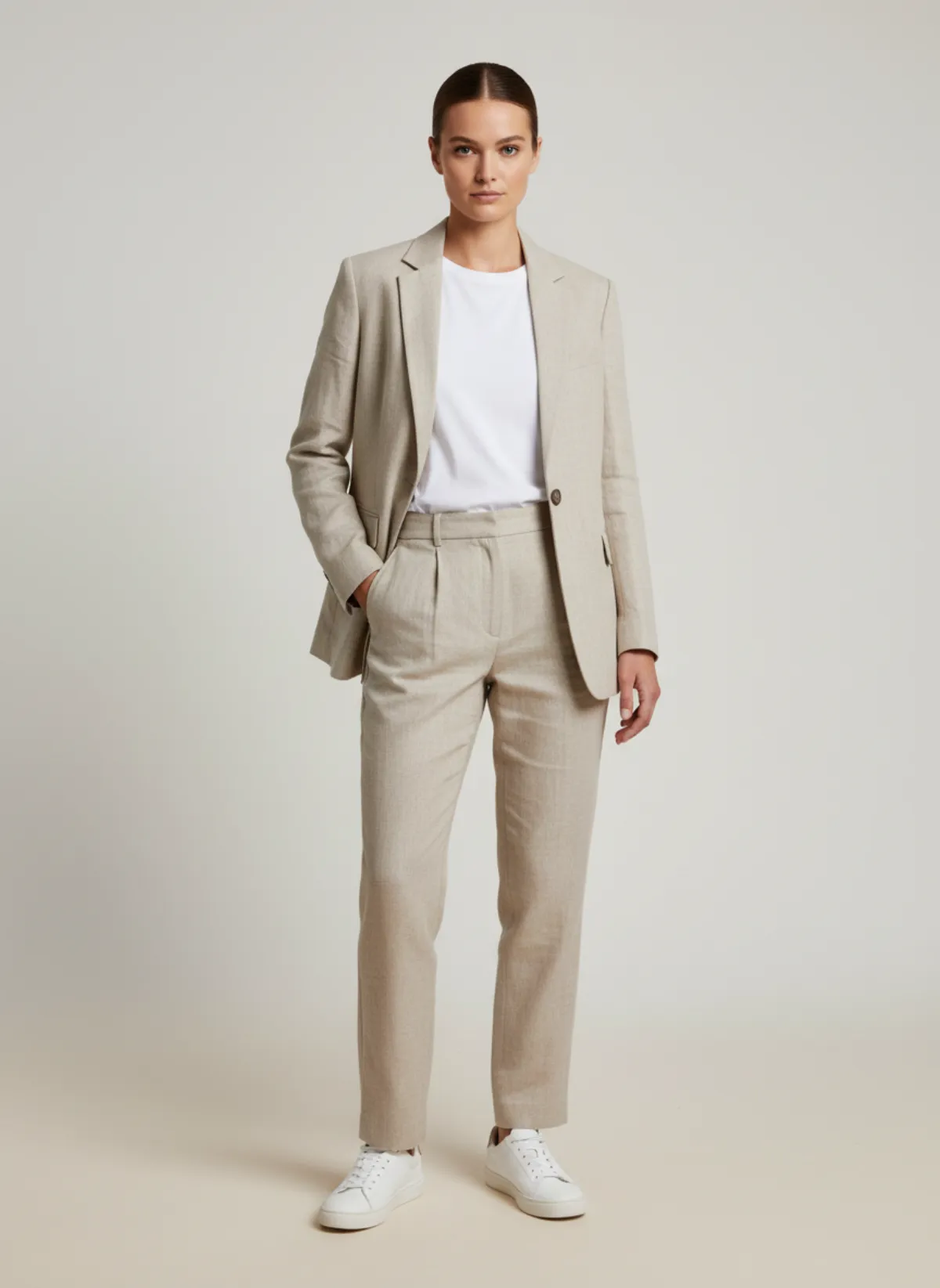
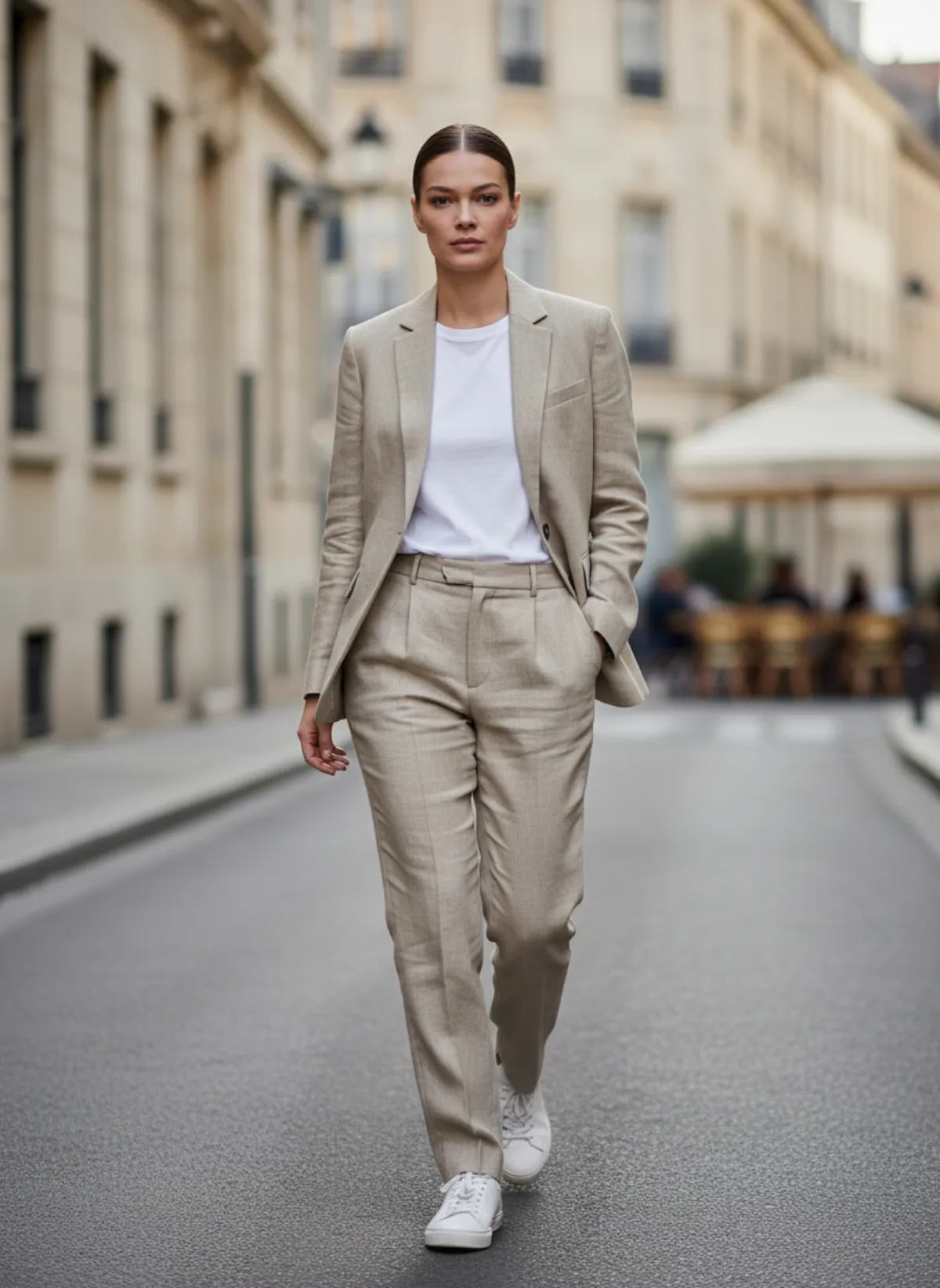
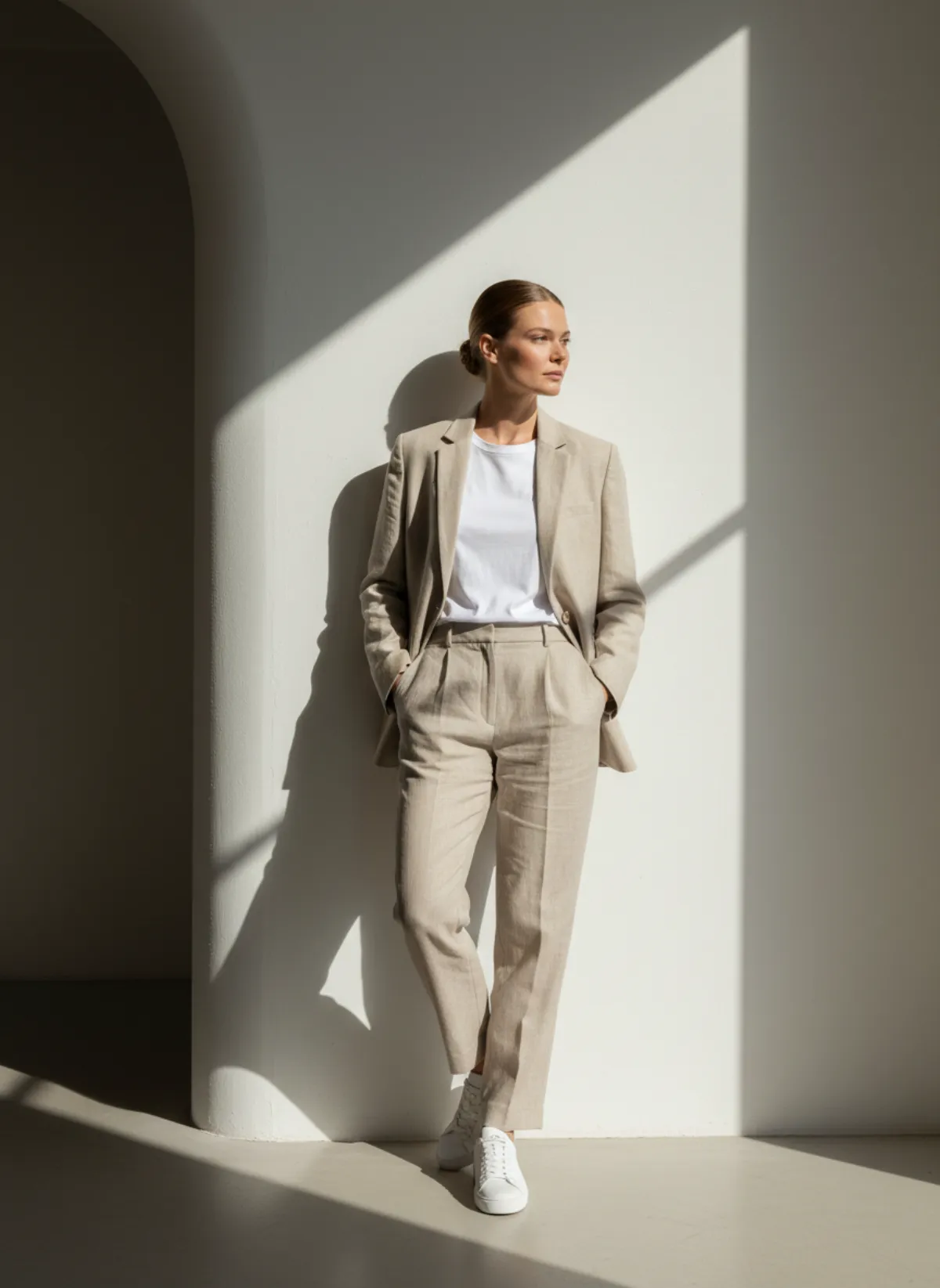
Turn the idea into a reusable shot list
Plan by SKU and by output. For every hero garment, list the non-negotiable catalog angles, one movement, two details and the campaign variations. Add target ratio beside each shot instead of deciding crops after production. A full-body 3:4 may be the master for the gallery, while 4:5 needs a slightly closer composition and 9:16 needs protected space above or beside the model for the interface.
Create continuity notes for camera height, lens feel, light direction, background tone, model distance and body position. Decide what changes across categories: tops may use a closer crop, dresses a full body, accessories a detail plus scale frame. The catalog photoshoot guide helps formalize those choices, while the Shopify product image size guide helps test the final canvas in a store theme.
Style for the product, not over it. Secondary garments should not hide the waist, neckline or sleeve construction of the hero. Props should support the story and remain easy to reproduce across a series. Photograph a continuity frame and record exact combinations. When a shoot spans days—or when generated scenes are added later—those notes prevent button states, trouser cuffs and accessory placement from changing unpredictably.
Review a contact sheet, not isolated favorites. Mark whether each frame communicates shape at thumbnail size, represents color honestly, shows real construction and leaves the required crop space. Select a balanced sequence: evidence first, variation second, persuasion third. This avoids a gallery containing five beautiful portraits but no clear back view or fabric detail. Creativity becomes more useful when the informational gaps are visible.
Produce more concepts with AI while protecting fidelity
Use the sharpest source available, with the full garment visible and minimal obstruction. Select a model whose pose and proportions make sense for the item, then keep that model consistent when comparison matters. The AI fashion model generator can establish the cast, while put clothes on an AI model handles the garment placement. Start with one approved test, not the whole collection.
For every concept, specify product invariants and scene variables separately. Invariants include hue, material, pattern repeat, silhouette, seams, buttons, pockets, logos and length. Variables include set, lens feeling, light, pose and mood. Compare the result with the source at high zoom and reject added seams, missing fasteners, distorted prints or a changed fit even when the overall image looks impressive.
Make the concept physically plausible. Movement should produce believable folds; feet should meet the floor; shadows must follow one light; hands should not merge with sleeves. For a series, compare outputs with each other as well as with the source. Model face, body scale, camera level and background architecture can drift gradually, making a collection feel synthetic even if every single frame is acceptable.
Keep factual source images in the product gallery and disclose generated imagery where the selling channel requires it. The AI product photography for clothing guide covers the fidelity review in depth. AI is most valuable here as a production system for testing art directions and extending approved concepts—not as permission to alter what the customer will receive.
Clothing photography idea questions
What clothing product photography ideas work for a small brand?
Start with a tonal studio, a walking frame, material close-ups and one real-use location. They can share one light and palette, so the set feels intentional without requiring many props.
How many images should I plan for each garment?
Plan enough to answer fit and construction: front, three-quarter, back, detail and movement are a strong base. Add one or two campaign images according to the channel and product complexity.
Can catalog and social images come from one concept?
Yes. Capture the clean evidence frames first, then movement, wider set views, vertical compositions and behind-the-scenes variations while the styling and light remain consistent.
How do I keep creative fashion photos accurate?
Write the garment features that cannot change, compare every result with the source and reject altered color, pattern, seams, hardware, proportions or fit. Keep factual views in the gallery.
Should every collection use a different photography style?
Not completely. Keep a recognizable brand grammar—light, framing or casting—then change one seasonal rule such as color, location or graphic shape. This creates novelty without losing recognition.