 Garmo team
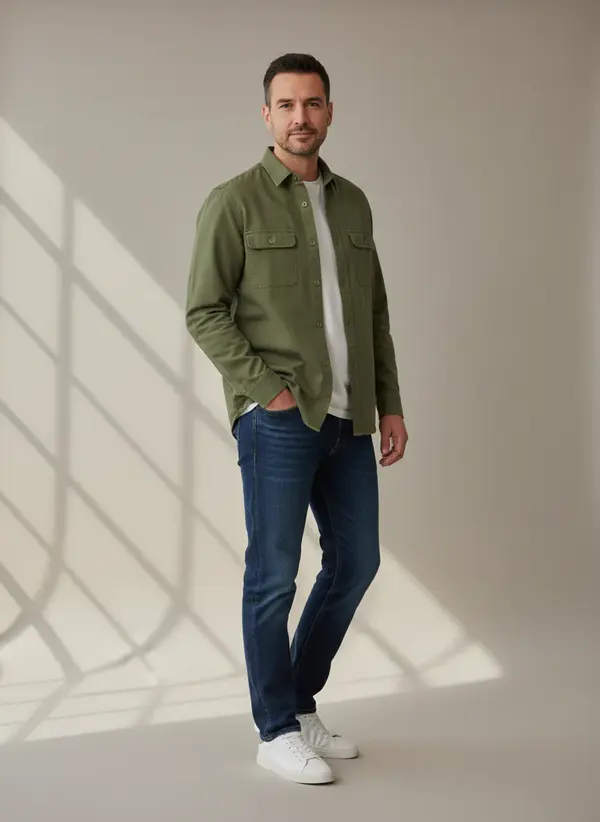
Which male model poses work for clothing photos?
Six poses cover almost every menswear listing: front, three-quarter, side, back, walking and seated. The front shows cut and length, the three-quarter shows depth, the side shows how a jacket or a trouser leg hangs, the back shows seams and pockets, walking shows movement, and seated shows how the fabric behaves when the body bends.
Most lists of male model poses are written for portraits, where the face is the subject. On a product page the garment is the subject, so the test for every pose is simple: can a shopper still see the collar, the placket, the hem and the pockets? If a pose hides one of them, it belongs in the campaign folder, not the listing.
You also don’t need a model in the room for every one of them. An AI pose changer turns one good standing photo into the other angles with the same man, outfit and light. For poses that are not specific to menswear, our list of 21 fashion model poses covers catalogue, lookbook and editorial frames.
Six standing male model poses for a listing
Shoot these in this order and a product page is covered. Keep the camera at chest height and the whole body, shoes included, in the frame.
1. Balanced front
Feet hip-width apart, weight even, arms loose with a small gap from the body so the side seams show.
2. Three-quarter turn
Turn the body about 45 degrees and bring the face back to the camera. Shows the chest, one sleeve and the depth of a jacket.
3. Side profile
Stand square to the side, arms slightly back. The frame for jacket length, trouser break and how a hem sits.
4. Direct back
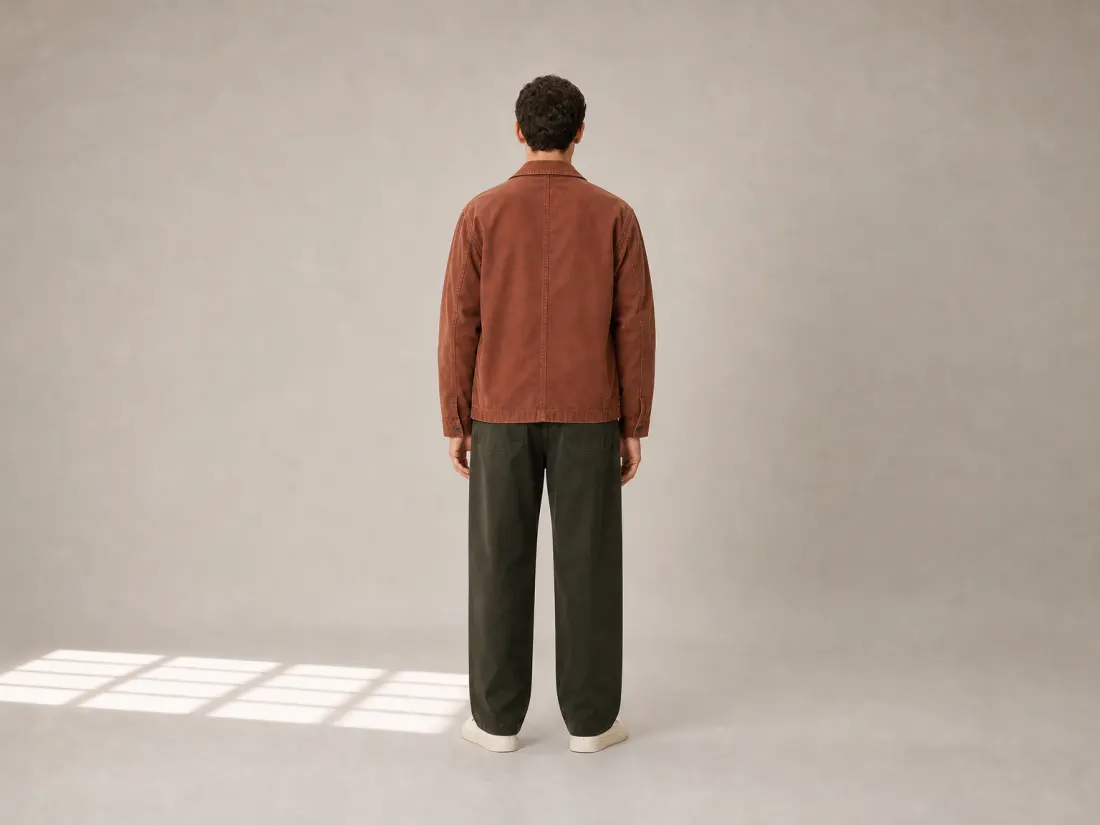
Same stance as the front, turned around. Yokes, vents, back pockets and prints need this frame.
5. One hand in a pocket
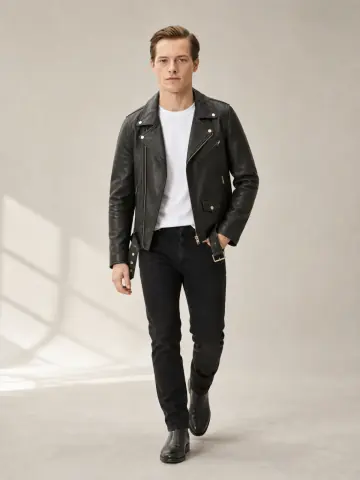
One hand in the trouser pocket, thumb out, the other arm relaxed. It loosens the shoulders without covering the top.
6. Walking
A normal step towards the camera, front heel just landing. Shows how trousers and open jackets move.
What do male models do with their hands?
Give each hand a job, and never let both jobs cover the garment. Hands are the reason standing poses look stiff: with nothing to do they hang like weights or curl into fists. One hand in a trouser pocket with the thumb outside, the other holding a jacket edge, a cuff or nothing at all, solves most frames.
Three hand positions are safe for product photos. A hand in the pocket shows the pocket exists and where it sits. A hand on the lapel or the open edge of a jacket points at the fabric. A hand adjusting a cuff or a watch draws the eye to the sleeve. All three keep the chest, the placket and the hem clear.
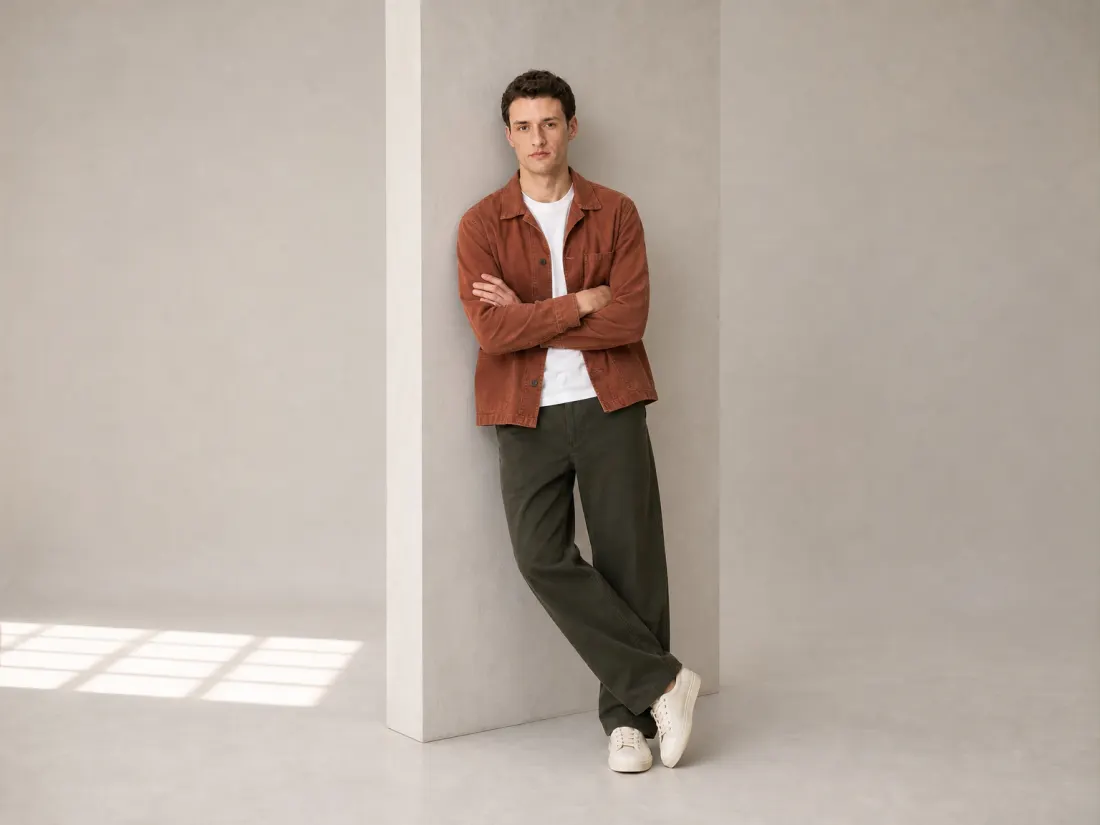
Crossed arms are the one to watch. They read as confident, which is why portrait guides love them, but they cover the buttons, the chest pocket and most of a print. Use them for a brand image, and keep them out of the listing set.
Sitting, leaning and street poses for men
Use one or two of these after the listing basics. They add character and show how a garment behaves off the hanger.
7. Seated, leaning forward
On a stool or a cube, forearms on the thighs, hands loose. Shows the shoulders of a jacket and how trousers sit at the knee.
8. Seated upright
Back straight on the front edge of the seat, one foot forward. The calmer option for suits and shirts.
9. Leaning on a wall
One shoulder on the wall, hips away, hands in pockets or one at the collar. Keep the arms off the chest.
10. One foot on a step
A low block or a stair under one foot bends the knee and shows trouser width and the shoe.
11. Low crouch
Heels down or one knee up, elbows on the knees. A streetwear frame for trousers, trainers and outerwear.
12. Look back
Body turned away, face over the shoulder. The back of a jacket with a face in the same frame.
Male model poses with a suit, a jacket, jeans or a T-shirt
Pick the pose from the garment. A suit needs the front, a side and one seated frame: unbutton the jacket before sitting, or the fabric pulls into an X at the button. A jacket or coat needs the front open and closed, plus the back; you can see that set made from one hanger photo on the jacket on model AI page.
Jeans and trousers are judged from the waist down, so the side profile and the walking frame matter more than the front. Keep the top short or tucked so the waistband and the rise are visible, as on the pants on model AI examples. T-shirts and knitwear need calm arms: the balanced front and the three-quarter turn show the sleeve length and the fit at the chest, and a print should never sit under a forearm.
For streetwear the crouch, the step and the lean do more work, because the brand’s attitude is part of the product. Our streetwear photoshoot ideas go through those frames and the locations that suit them.
One photo, eight poses: what a Garmo test showed
Both sets below started from a single standing photo. Every other frame was made from it in Garmo’s pose changer, with the same model, outfit and studio.
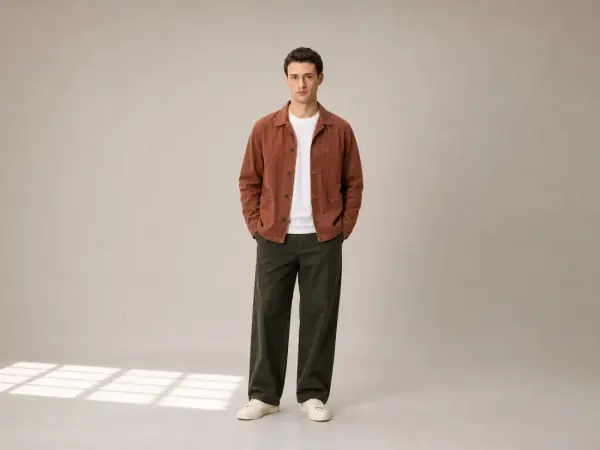
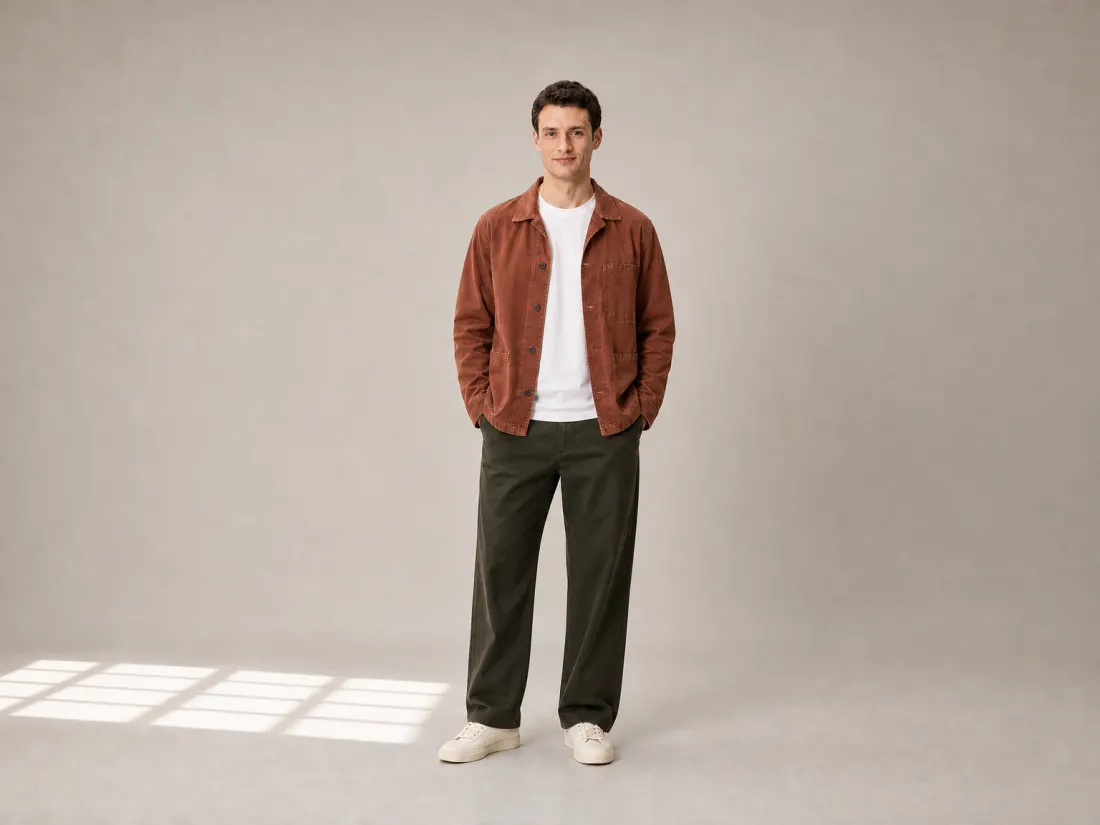
A chore jacket outfit, eight poses
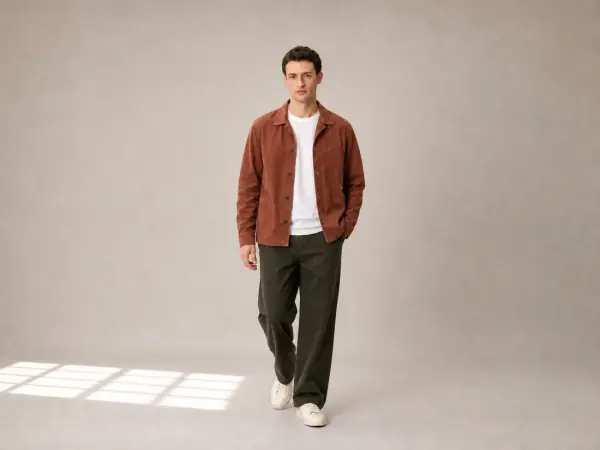
We made standing, three-quarter, side, back, walking, seated, hands-in-pockets and leaning frames from the first photo. Across all eight the rust jacket, the white T-shirt, the green trousers and the white sneakers stayed the same. The leaning frame crossed the arms over the jacket front, so it is the one we would keep out of a listing.
Your photo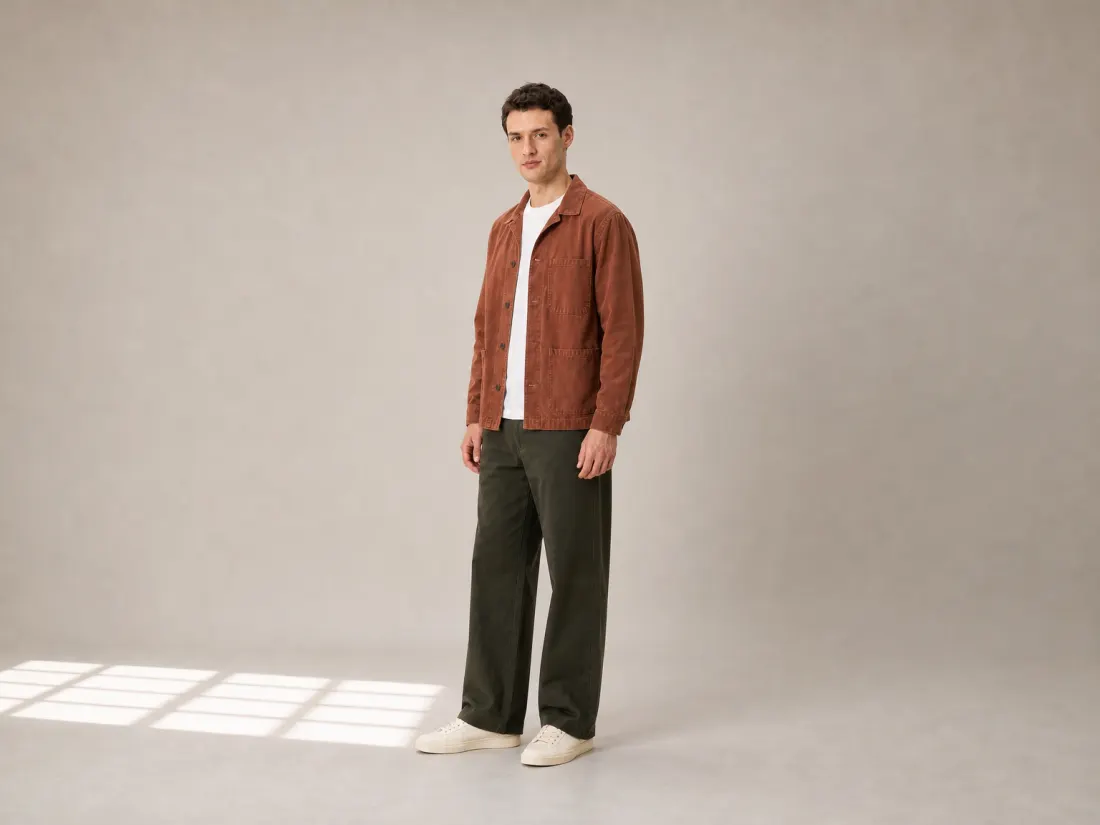
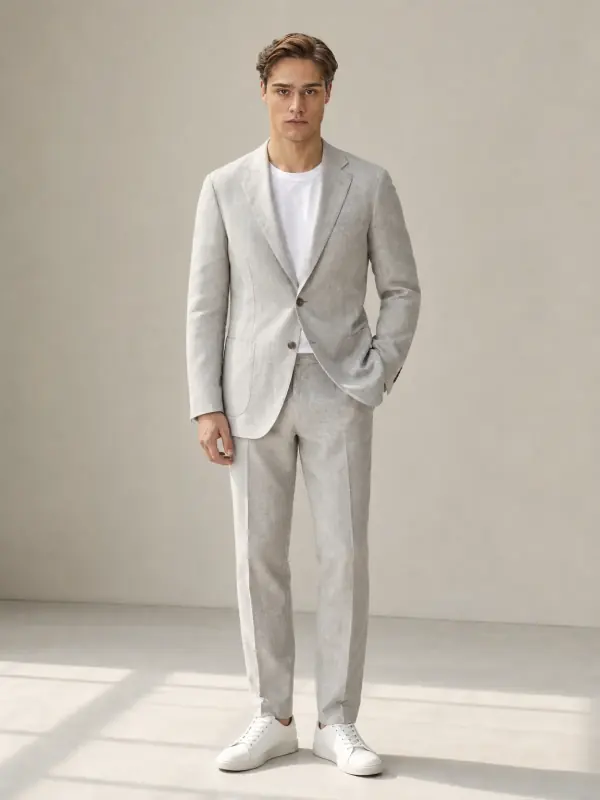
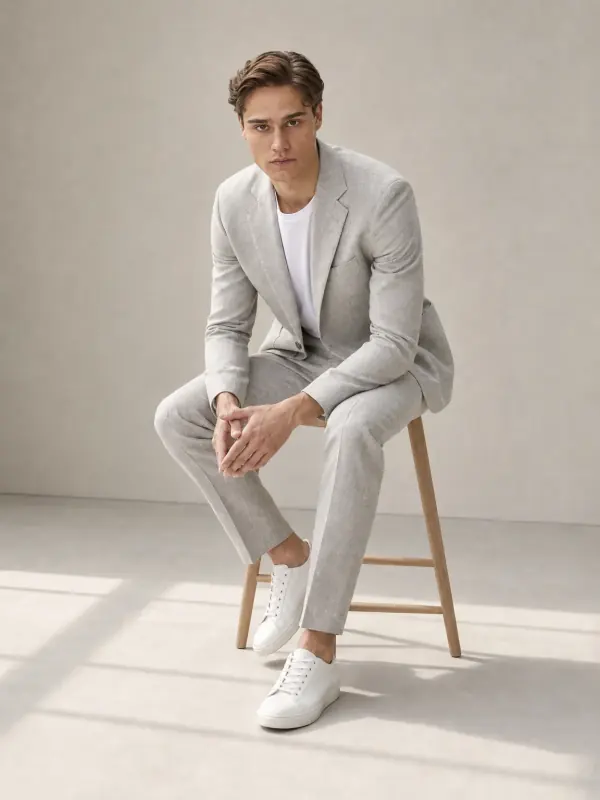
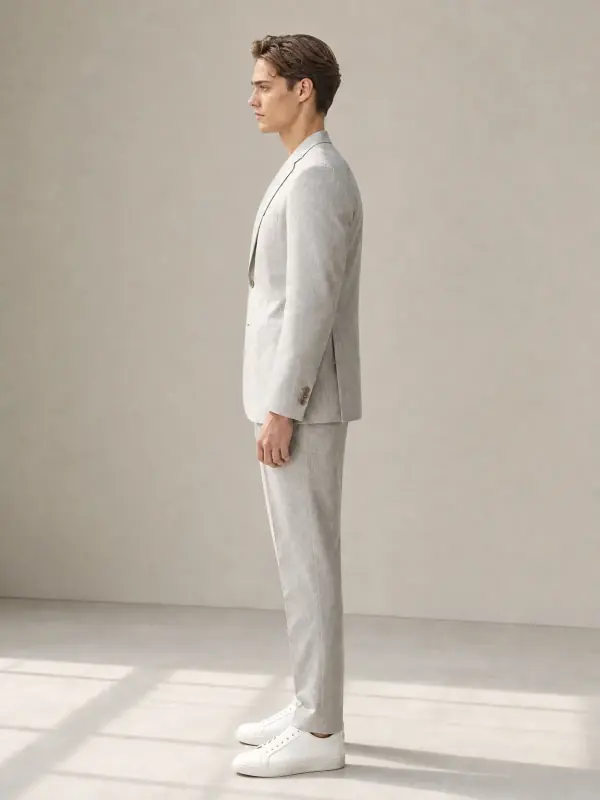
A linen suit, standing to seated
The seated frame shows what a standing photo can’t: how the trousers break at the knee and how the jacket opens when the model leans forward. The side frame gives the jacket length.
 Your photo
Five posing mistakes that make menswear look worse
Standing square and locked. Knees locked and shoulders squared make any jacket look a size too big. Shift the weight to one leg and drop that shoulder a little.
Both hands pushed deep into the pockets. It drags the trousers down, opens the pocket bags and creases the front. Thumbs out, or only the fingers in.
Shooting from below. A low camera lengthens the legs but shortens the torso and hides the collar. For product photos keep the lens at chest height.
Sitting in a buttoned jacket. The cloth pulls around the button and the collar lifts off the neck. Open it before every seated frame.
Cropping at the ankles. Shoes finish the outfit and show where the trousers end. Leave floor under the feet in every full-length frame.
How to get these poses without a model in the room
You can start from the product itself. Upload a flat lay, hanger or mannequin photo to Garmo, choose one of the 42 ready-made models, and the AI model photoshoot offers seven base poses for clothing: front, three-quarter, walking, back, side, seated and detail. The men in the examples on this site, such as Kerem, Andre and Jonas, are ready-made models you can pick; the AI fashion model generator page shows them.
If you already have one good on-model photo, the pose changer makes the rest: standing, three-quarter, side, back, walking, seated, in pockets and leaning. Each new pose is one image, and the first 3 images are free. Check hands and the back of the garment in every result; the back is built to match the front, so a print or a vent there needs a second look.
A seated frame deserves its own planning. The guide to sitting poses for a photoshoot covers stools, benches and steps for men and women.
Male model pose questions
What is the best pose for a male model on a product page?
The balanced front pose. Feet hip-width apart, arms relaxed with a small gap from the body, camera at chest height. It shows the cut, the length and the colour without distraction, and every other frame in the set is compared with it. Add a three-quarter turn and a back view before anything more creative.
How do male models pose standing?
They shift their weight to one leg, drop that shoulder slightly and give each hand a task, such as a pocket or a jacket edge. The feet stay about hip-width apart, and the body turns a little away from the camera while the face comes back to it. That small turn removes the stiff, passport-photo look.
How should a male model pose in a suit?
Front with the jacket buttoned, three-quarter with it open, a side profile for the jacket length and one seated frame with the jacket unbuttoned. One hand in the trouser pocket is the classic suit gesture. Avoid crossed arms: they crease the sleeves and hide the buttons and the lapels.
Which sitting poses work for male models?
Seated on a stool leaning forward with forearms on the thighs, and seated upright on the front edge of a chair with one foot ahead of the other. Both keep the jacket front and the trouser legs visible. Low sofas and deep chairs fold the body and hide most of the outfit.
How many poses does a menswear listing need?
Four to six. Front, three-quarter or side, back and walking cover the product; a seated or leaning frame adds character. Marketplaces allow more, but extra frames should add information, such as a detail or the lining, and not repeat the same angle.
Tools for menswear model photos
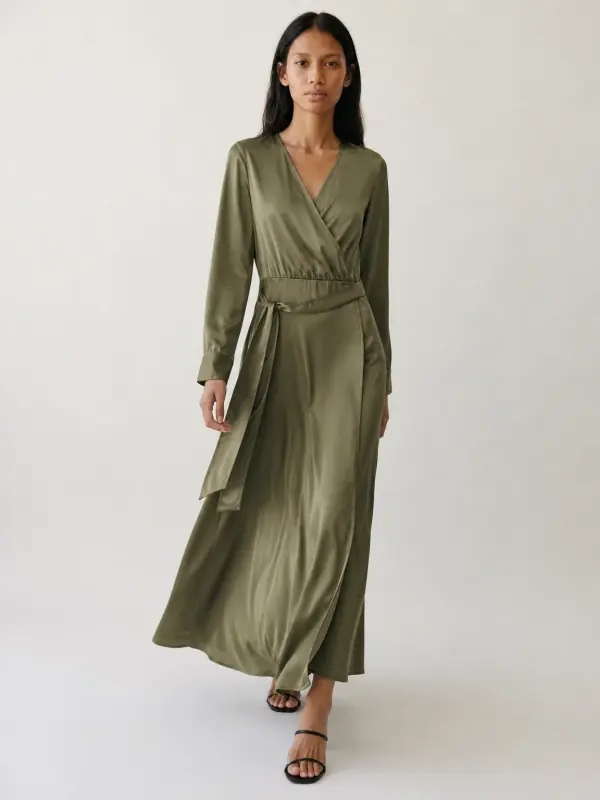
 AI fashion model generatorChoose from 42 AI fashion models, or create your own from photos, and keep the same face across every product you sell.
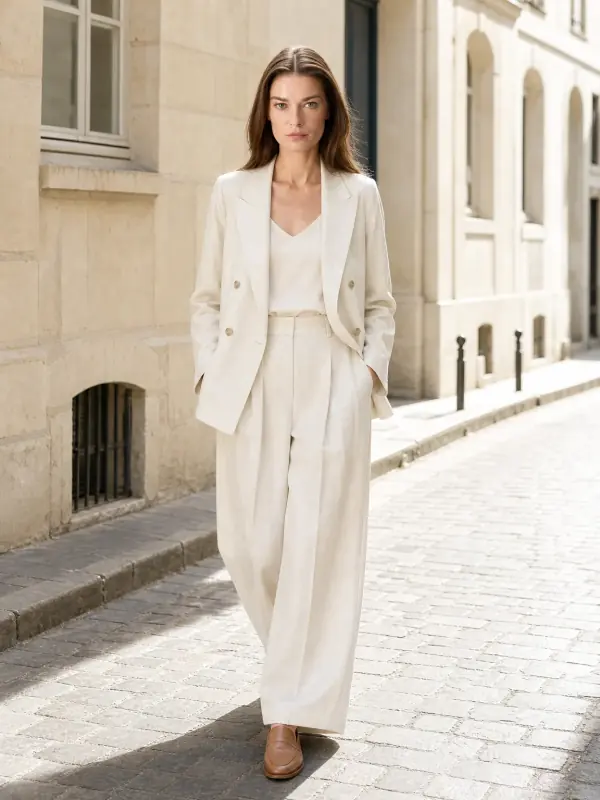
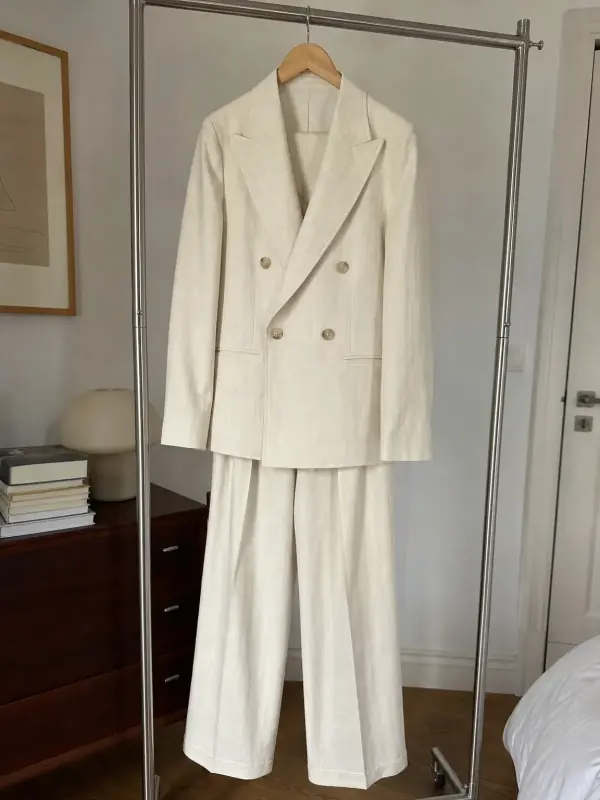 AI model photoshootTurn one product photo into a full photoshoot with a model: studio, street, editorial or a scene you describe, with up to six angles.
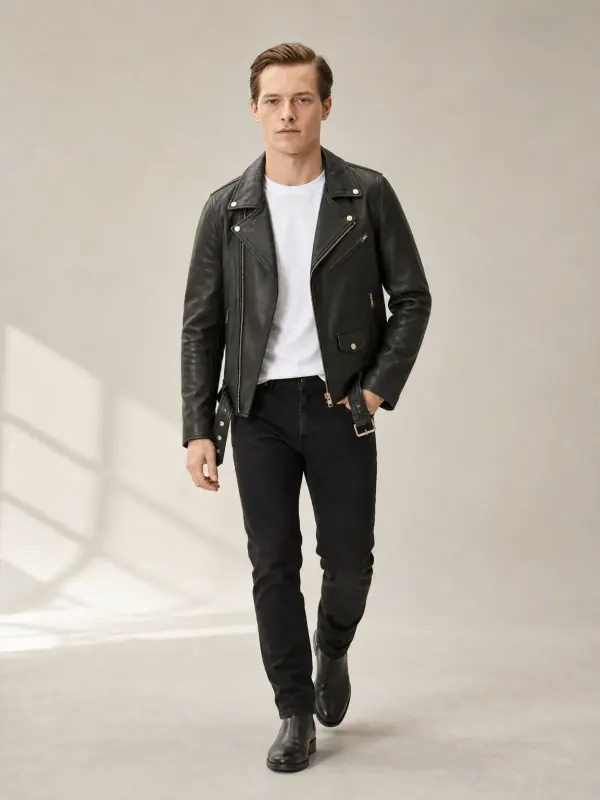
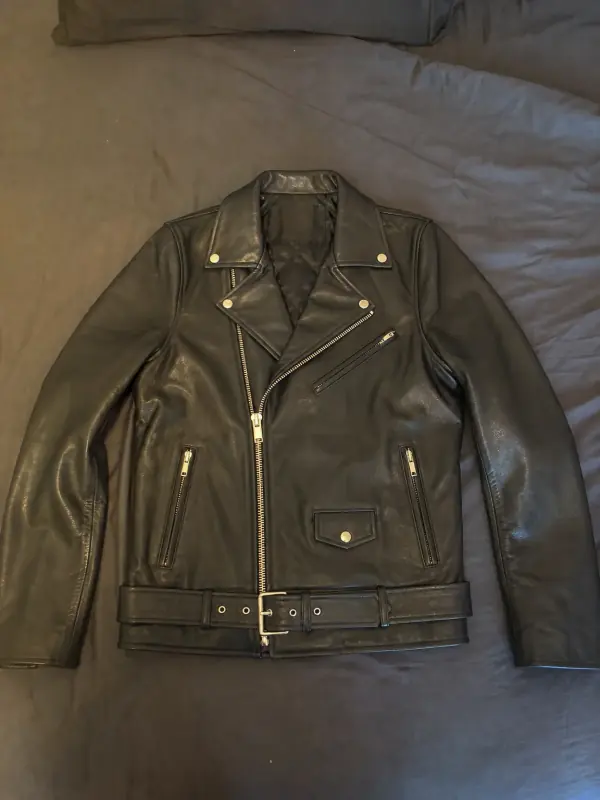 Jackets and coats on modelLeather jackets, trench coats and fleeces worn by a model, styled over simple layers.
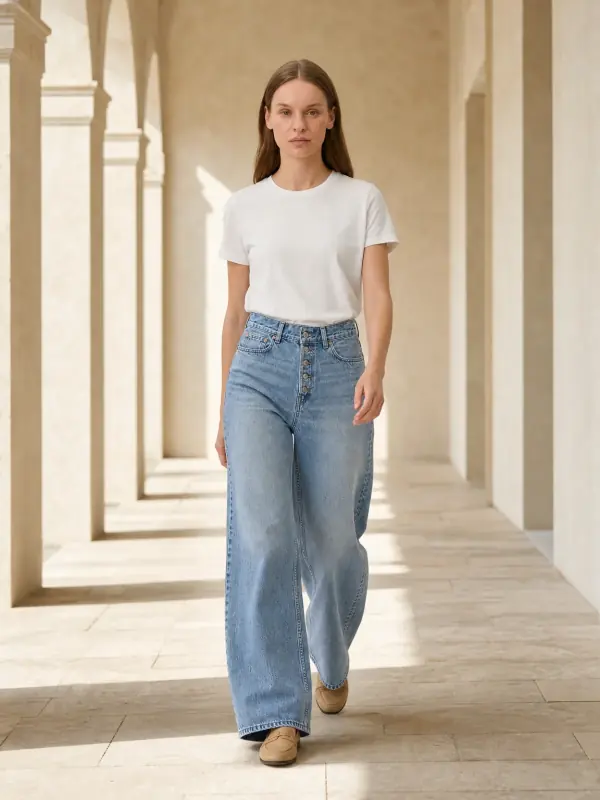
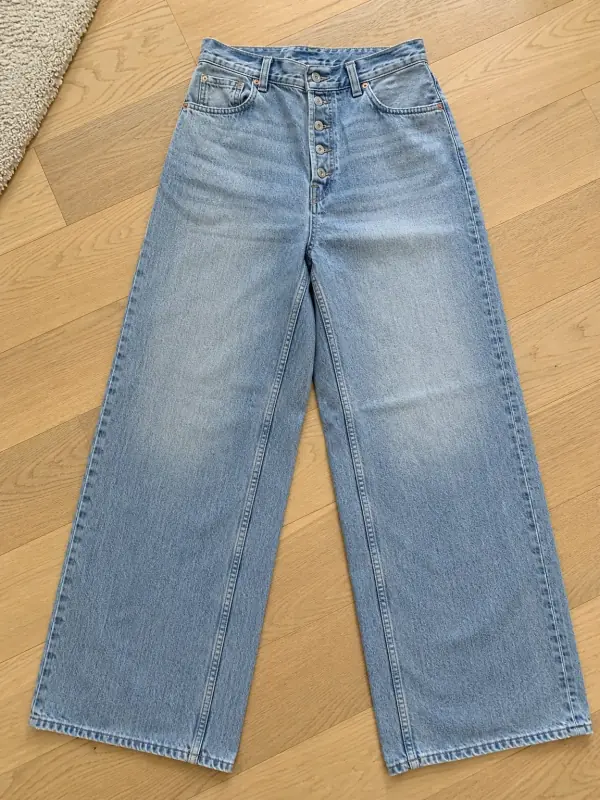 Pants and skirts on modelJeans, trousers and skirts on a model, with front, side and walking frames that show the cut of the leg.
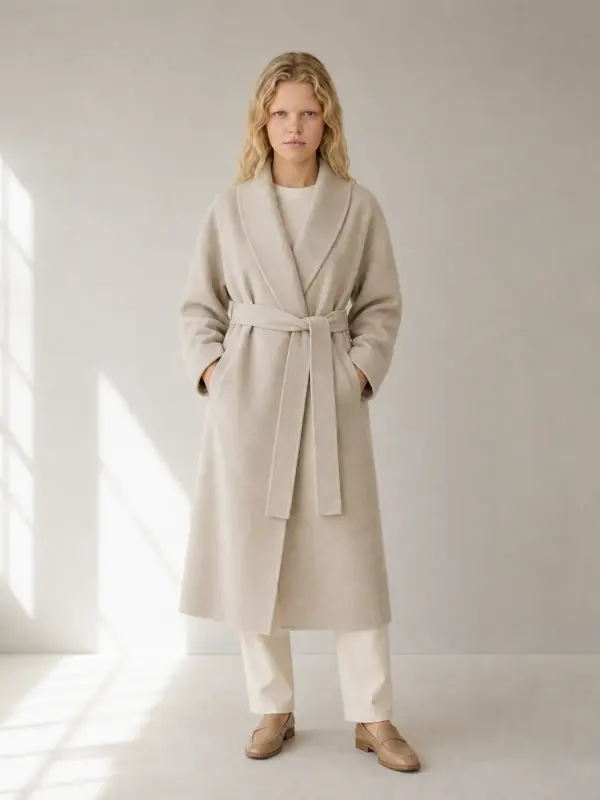
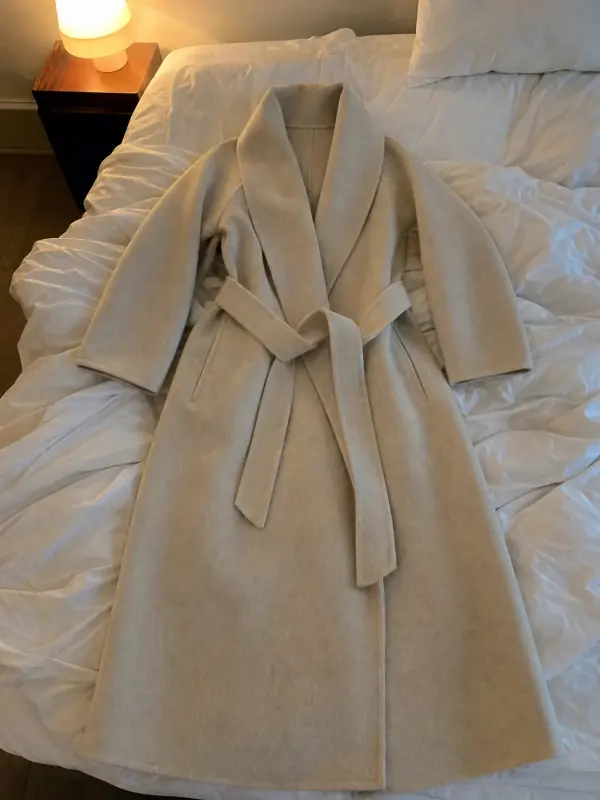 Flat lay to modelLay the garment flat, take one phone photo and get it worn by an AI model from three angles.
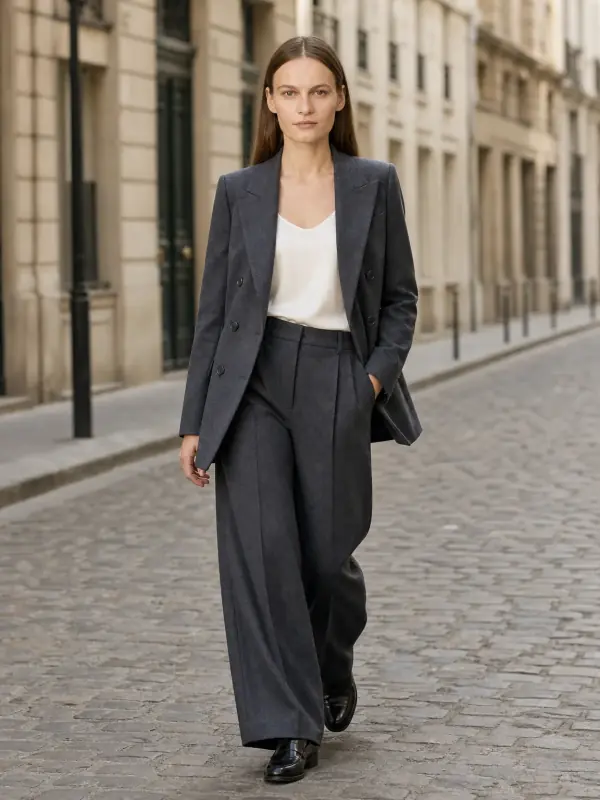
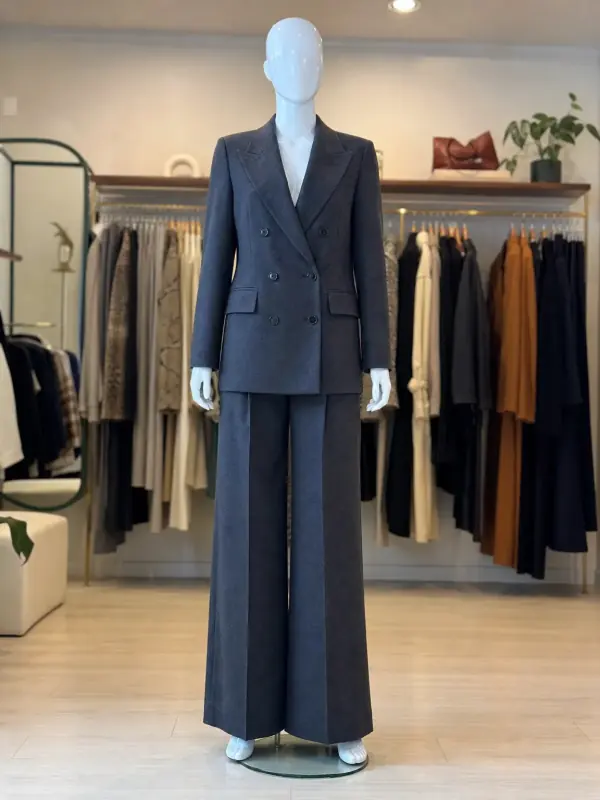 Mannequin to model AIAlready shoot on a mannequin or dress form? Upload that photo as it is and get the same piece worn by a model.