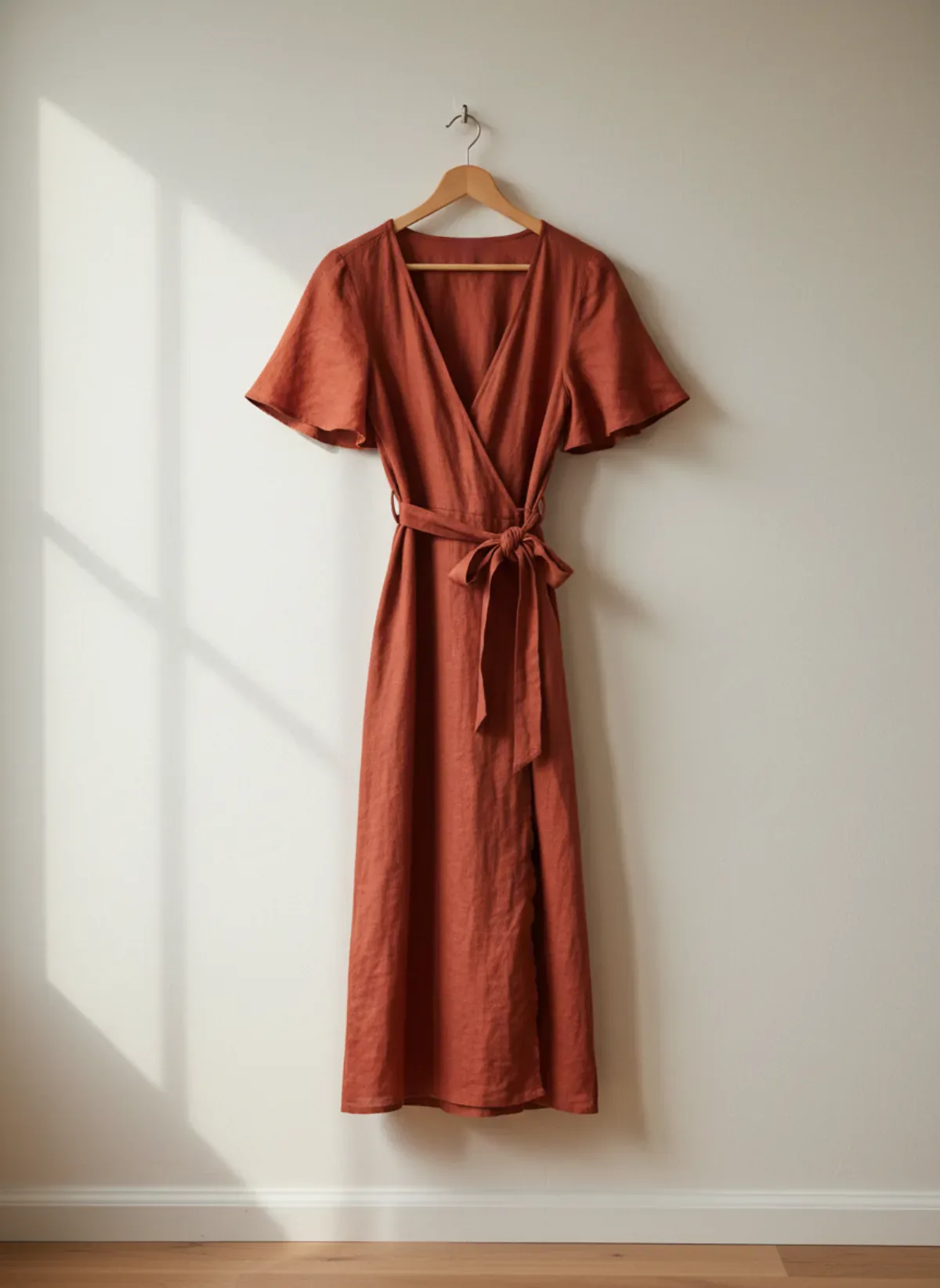
Prep: steam, straps, belts and slips
A dress shows creases more than any other garment, because there is so much uninterrupted fabric from the bodice to the hem. Steam it on the hanger, working from the top down, and pay special attention to the skirt front, where fold lines from storage are most visible. Linen and cotton can take a warm iron; satin, chiffon and viscose are safer with steam held a few centimetres away.
Then go over the small things buyers notice. Roll a lint roller over dark fabrics, tuck loose threads in or cut them, and close every zip, button and hook. Tie belts and wrap ties into a neat bow at the waist, or photograph them separately if they are detachable. Adjust thin straps so both sides sit at the same length.
If the dress is sheer, hang a slip or a plain underskirt in the same colour behind it, or say clearly that it is sheer and show that in one photo against the light. Buyers prefer a clear answer to guessing from a blurry picture.
Setup: hang it against a plain wall
The simplest answer to how to photograph dresses for sale at home is a hook and a plain wall: for most dresses, hanging works better than laying flat, because the skirt falls the way it does on a body. Use a slim wooden or velvet hanger, never a wire one, and hang it from a hook, a door frame or a curtain rail in front of a plain, light wall. Leave at least a hand's width of wall below the hem, so the length reads.
Put the dress next to a window, with daylight coming from the side and no direct sun. Turn off ceiling lights, which add a yellow cast. Stand back and shoot with the phone at the height of the waist, held straight, so the dress is not distorted into a triangle. Use the 1x lens rather than the wide one, and step back until the whole dress fits.
If the hanger leaves shoulder bumps or the straps slip off, pin the shoulders to the hanger from behind with clothes pegs. More on choosing hangers and fixing sagging shoulders is in how to photograph clothes on a hanger.
How to photograph long dresses in one frame
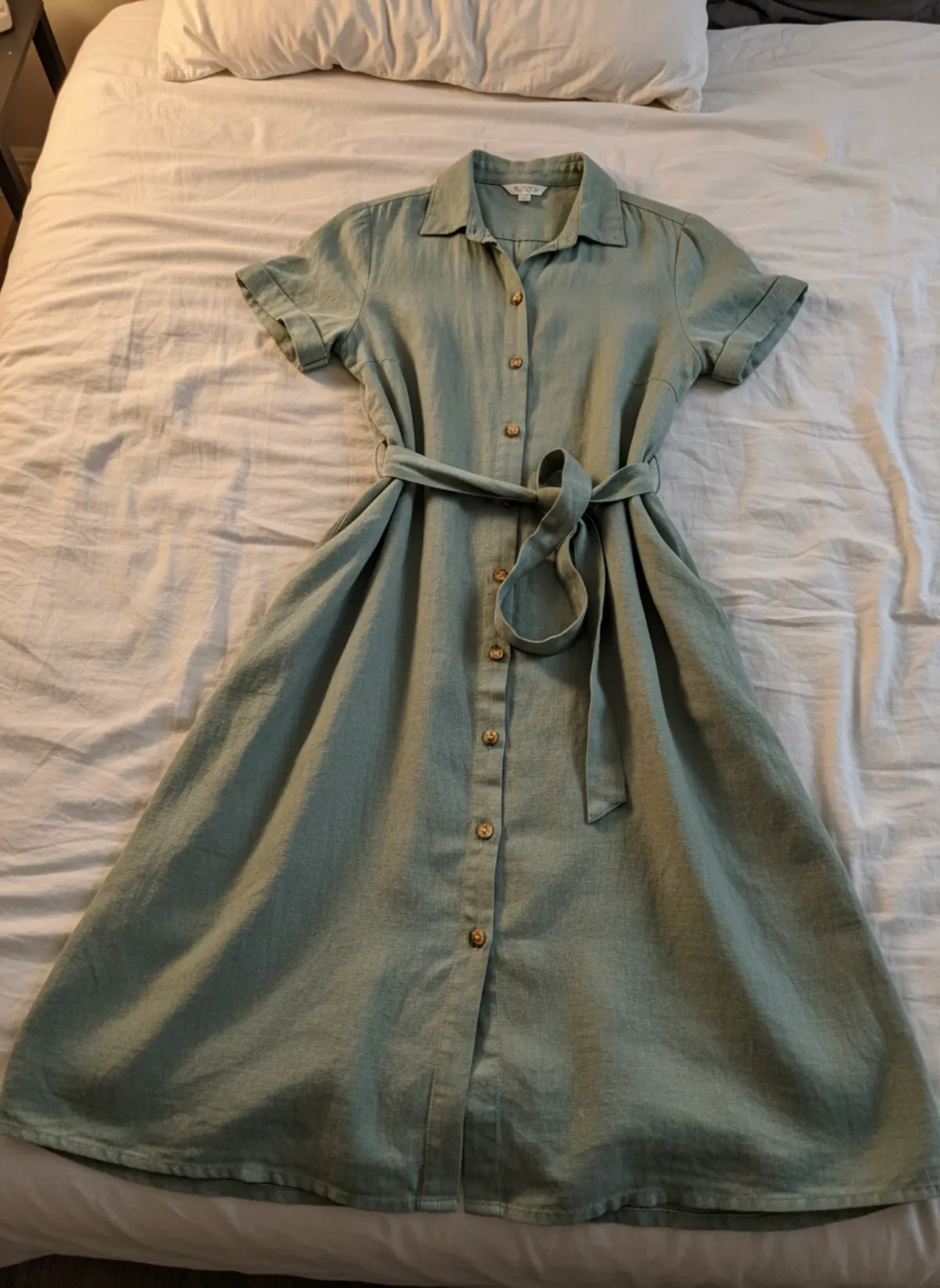
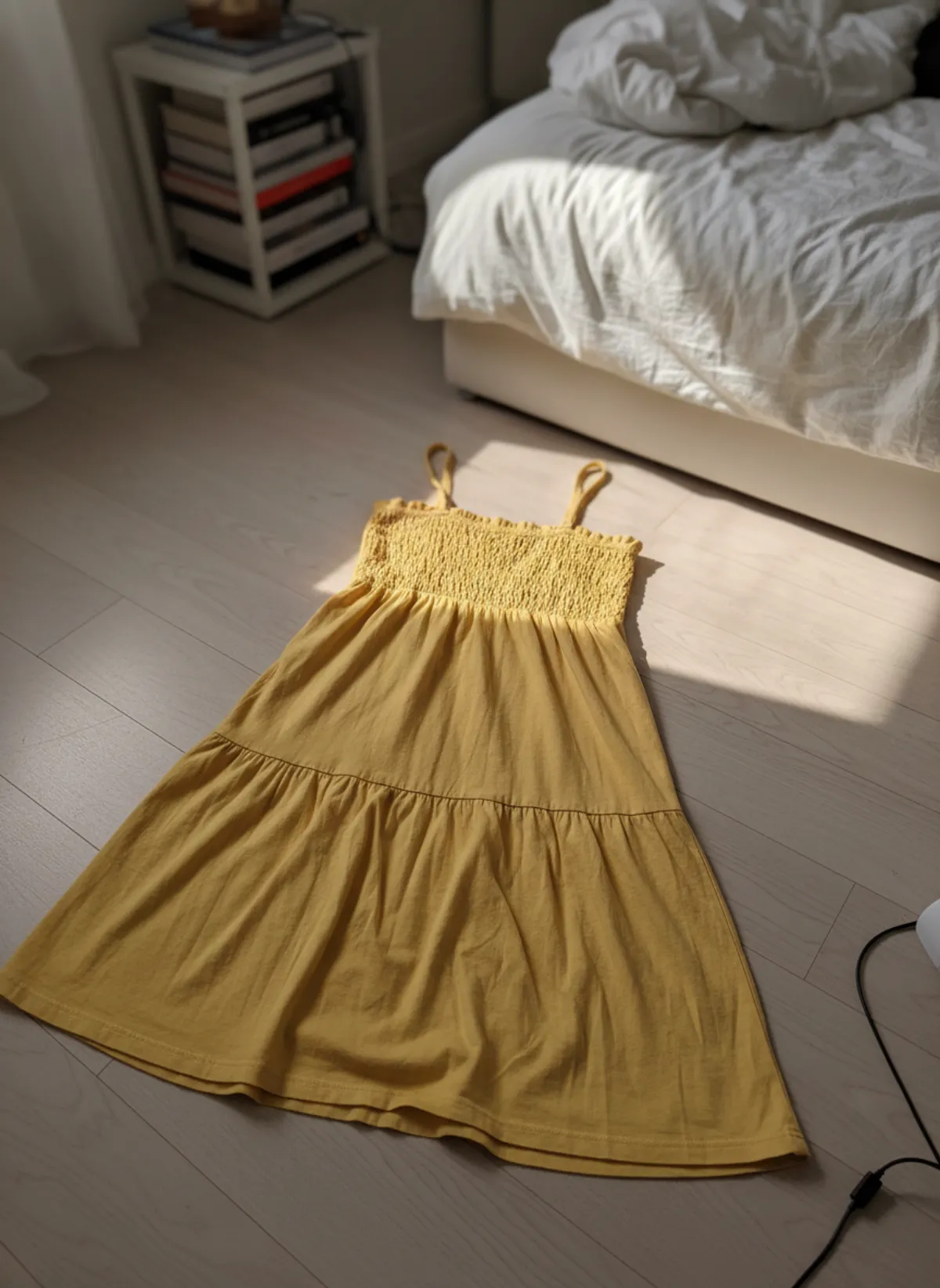
A maxi dress is often longer than the wall space you have, and cutting off the hem hides the one thing buyers want to know: the length. If it does not fit when hanging, lay it flat on the floor instead. Choose a large, smooth, plain surface, such as a pale floor or a sheet pulled tight, and straighten the dress from straps to hem.
Shoot from directly above by standing on a sturdy chair, with the phone parallel to the floor. If you still cannot fit it, use the 0.5x lens from higher up and crop a little afterwards. Spread tiered or full skirts slightly so each tier or pleat is visible, but do not pull them into a fan wider than the dress really is.
Long dresses sell on eBay and other marketplaces just like short ones, but buyers check the length more. Write it in centimetres or inches, measured from the highest point of the shoulder to the hem, and add a worn photo so they can see where it falls on a body.
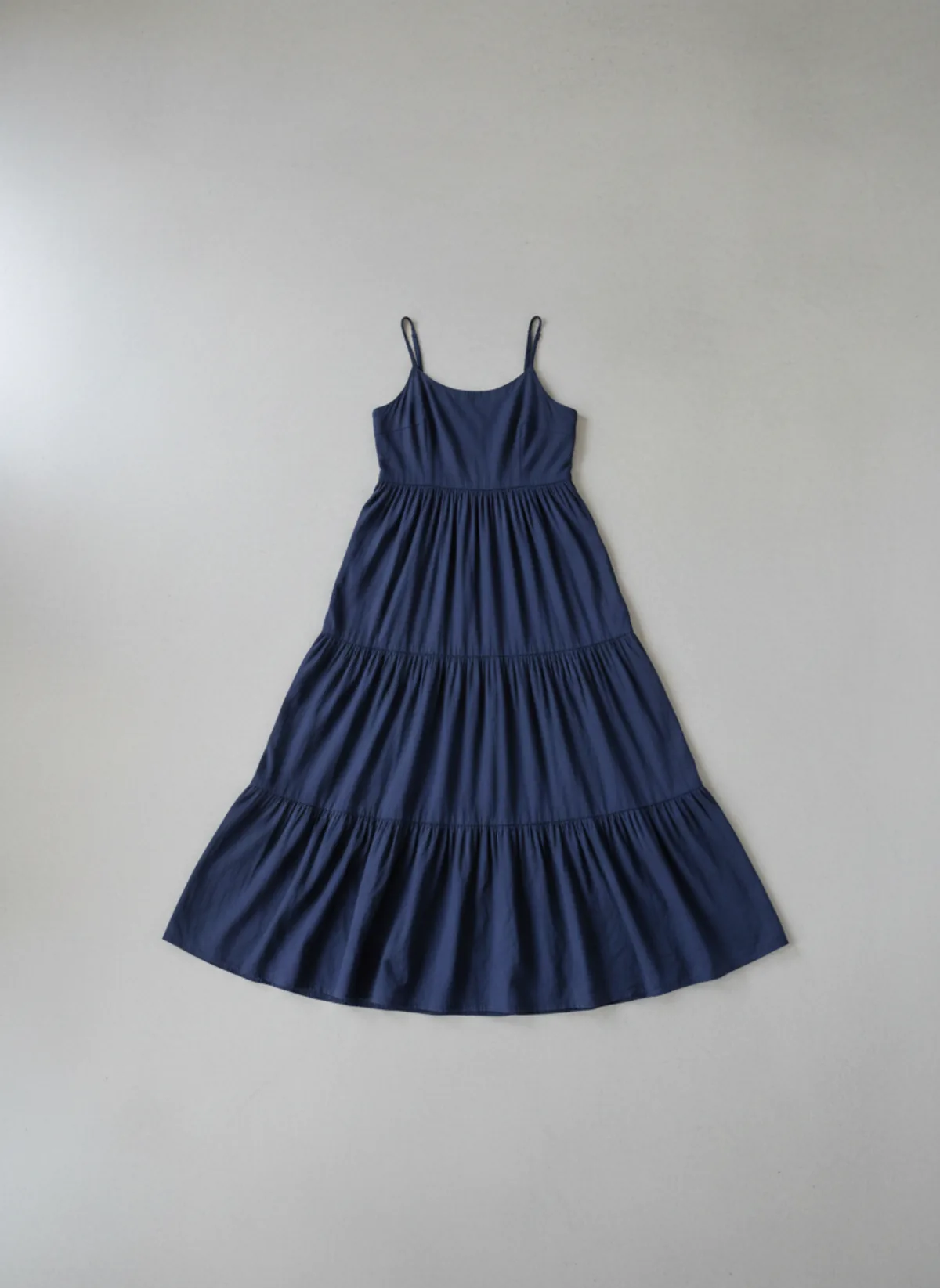
How to photograph dresses for sale: eight shots
Take them in the same order for every dress. Buyers then find the length, the fabric and the condition in the same place in every listing.
Front, whole dress
The full dress from straps to hem, hanging or flat, square to the camera. This is the cover photo.
Back
Turned around in the same position. Shows the back neckline, zip, open back or ties.
Neckline
Close on the neckline and the shoulders: the cut, the straps and any lining.
Fabric close-up
Weave, print, lace or knit filling the frame in side light, so the material is clear.
Closure
The zip, buttons or wrap tie, closed and working. Buyers check here for damage.
Label
The size and fibre label, readable. Brand, size and fibre content help it sell.
Hem and any flaw
The hem up close, plus every pull, stain or repair in its own photo in the same light.
Worn
On a person or a model, front and side, so the length and the drape are obvious.
Measurements and fabric details
Part of how to photograph dresses for sale is not a photo at all: sizes vary between brands, so measurements sell a dress better than the size on the label. Lay it flat without stretching and measure the chest from armpit to armpit, the waist straight across at its narrowest point and the length from the highest point of the shoulder to the hem. For wrap and stretch dresses, say whether the waist is adjustable or elastic.
The fabric close-up answers the questions a hanger photo cannot: is it linen or polyester, is the print woven or printed, is the lace lined? Shoot it in low side light, so the weave and any gathers have depth. Include a seam or the edge of a button in the frame, so the scale is clear.
Write what you photographed: "100% linen, covered buttons, gathered skirt, unlined". If the label is missing, say so and describe the feel instead of guessing the fibre.
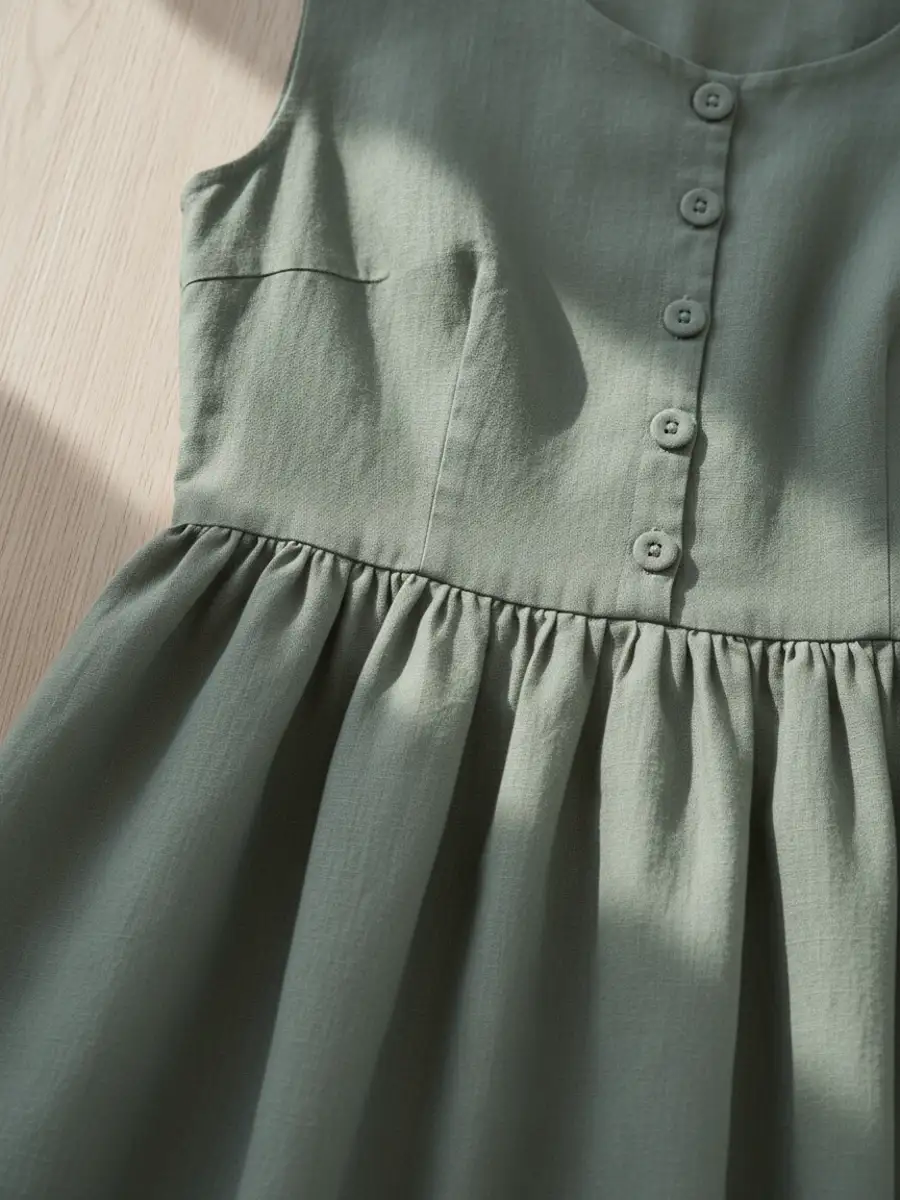
Satin, knit, white and black dresses
Satin and silk reflect light, so every crease turns into a bright line. Steam them carefully and avoid strong side light; soft, even window light works better. Knit dresses stretch on a hanger, so lay them flat and show them worn: on a body the rib looks completely different from flat on a bed.
White dresses disappear against a white wall. Hang them against a light grey or beige surface instead, and check that the white still looks white, not blue or yellow. Black dresses lose their detail fastest; use stronger side light and lift the shadows only slightly, as explained in how to photograph black clothing.
Printed dresses need one photo where the print is not cut off at the seams, so buyers can see the repeat. Keep the colour true in all of them: compare the photo with the dress on screen before uploading.
Worn photos without a model
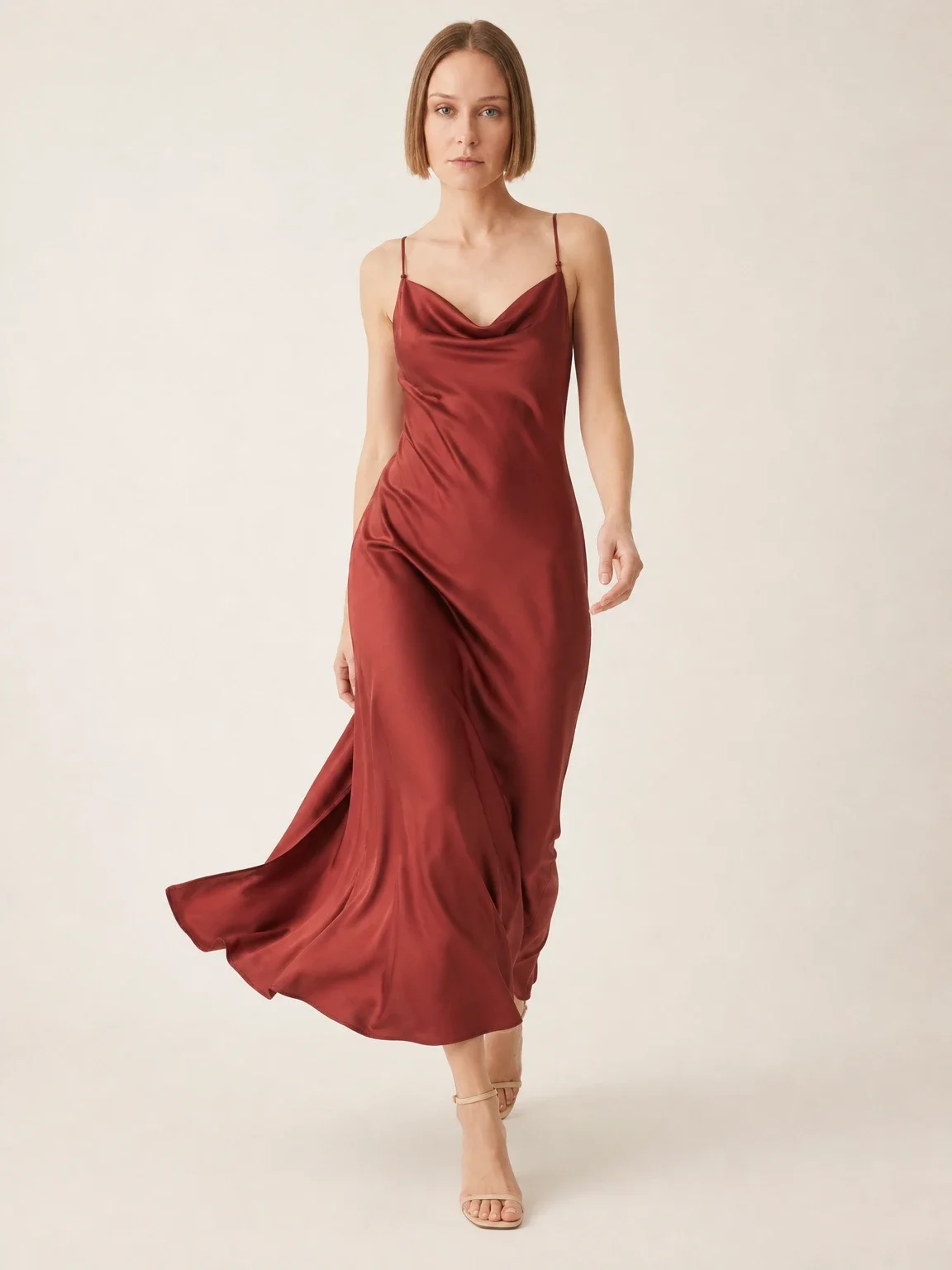
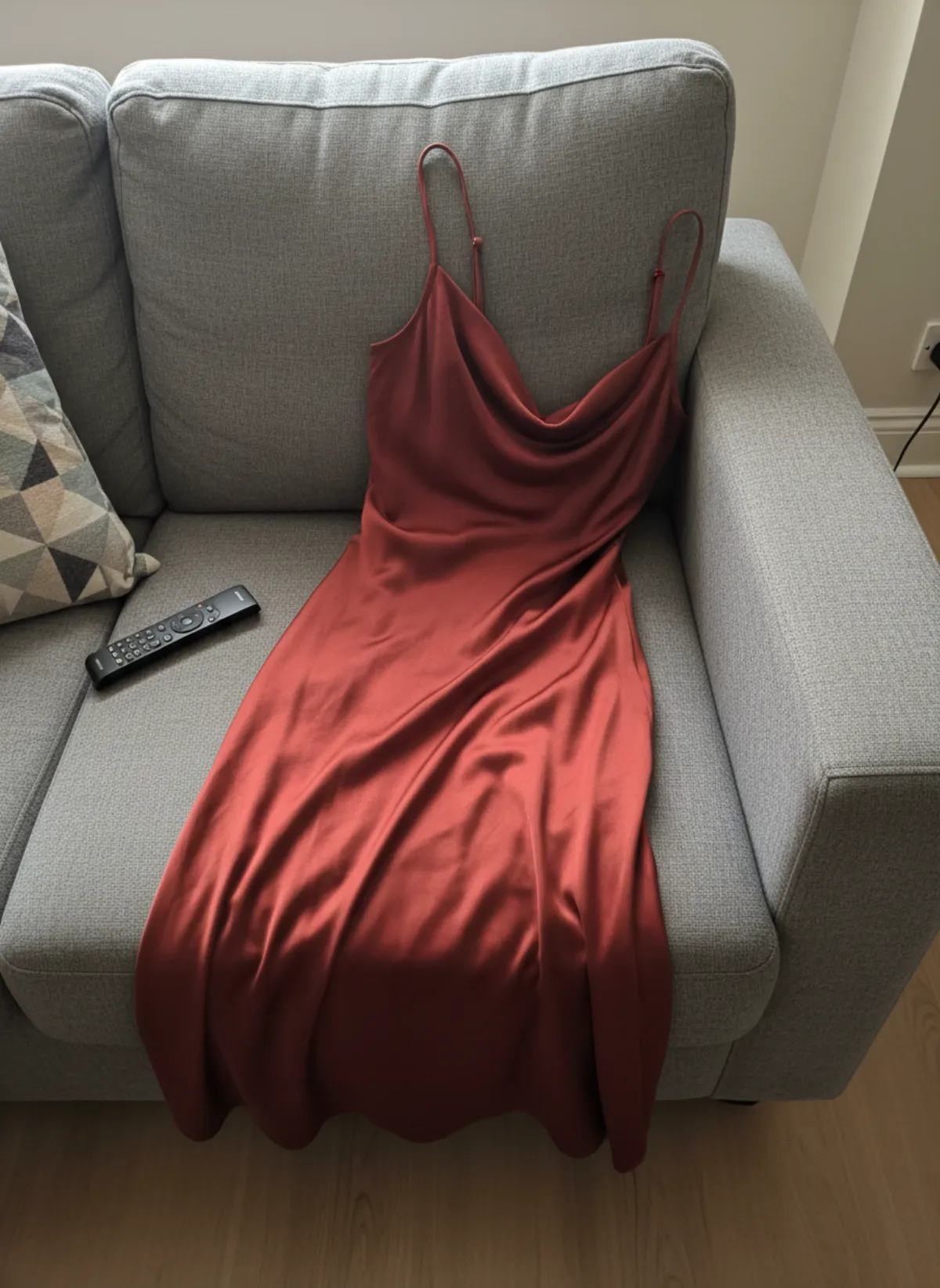
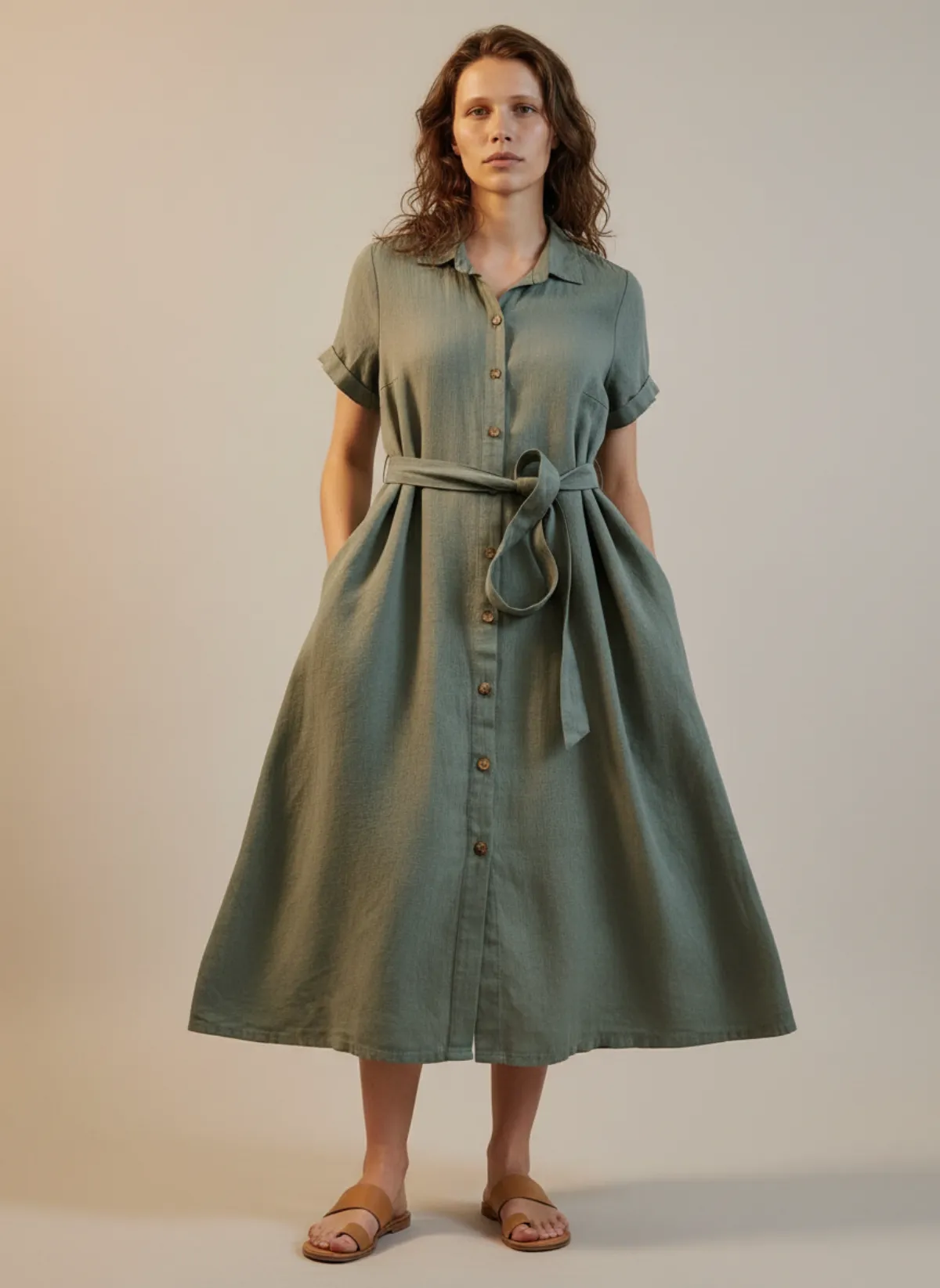
A hanger shows the shape, but only a worn photo shows the length on a body, how the waist sits and how the skirt moves. Upload your hanger or flat photo to dress on model AI, and Garmo puts the same dress on a model in front, three-quarter and walking frames, in about a minute. You choose from 42 ready models (22 women and 20 men), a studio, street or editorial setting and the ratio your shop uses.
Garmo keeps the colour, the neckline, the print and the length from your photo. Fine lace, small prints and logos are where any image tool can slip, so compare them with the real dress and render again if a detail is off. Keep the measurements in the listing, because the model photo shows the style, not your exact size.
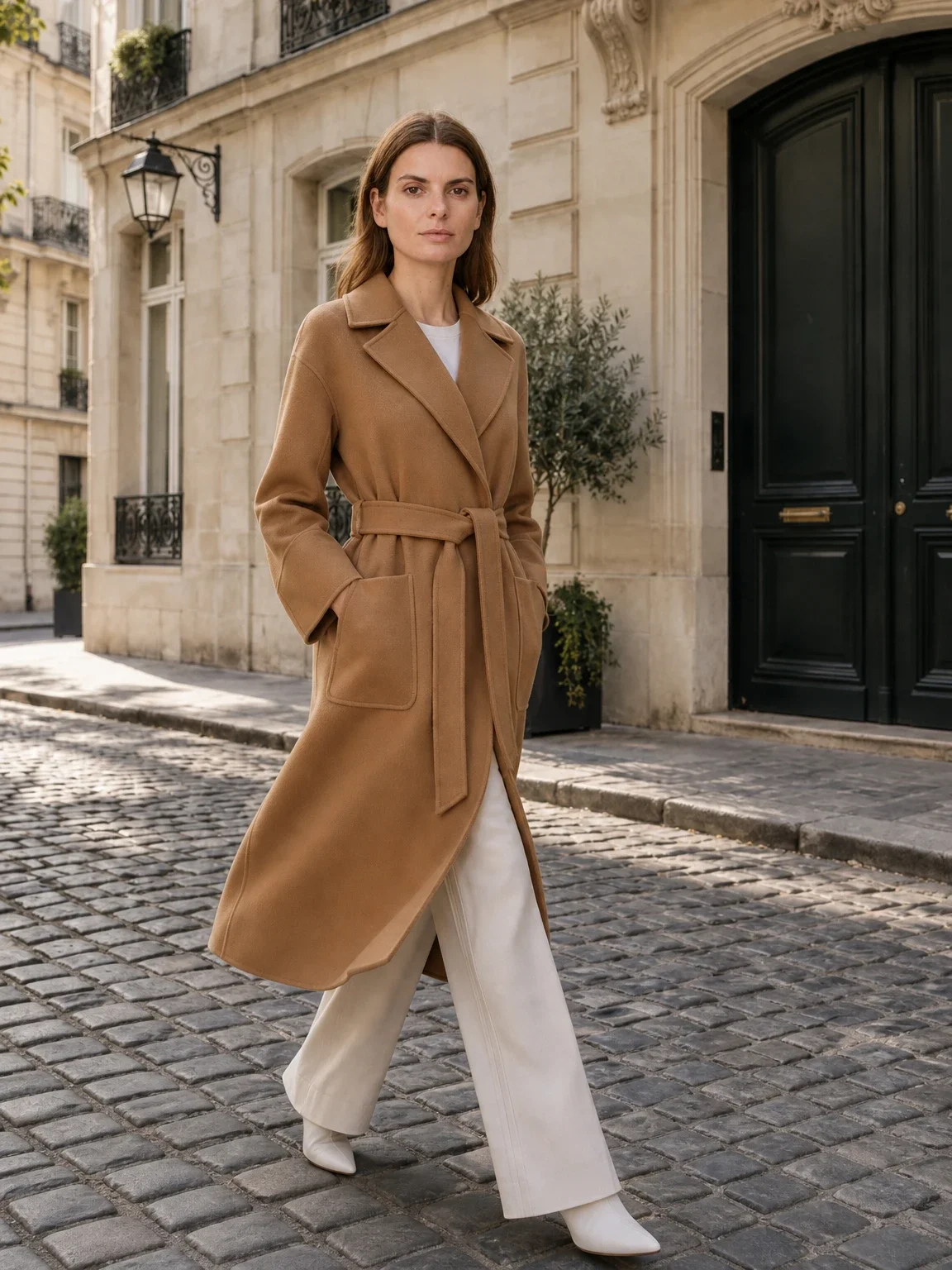
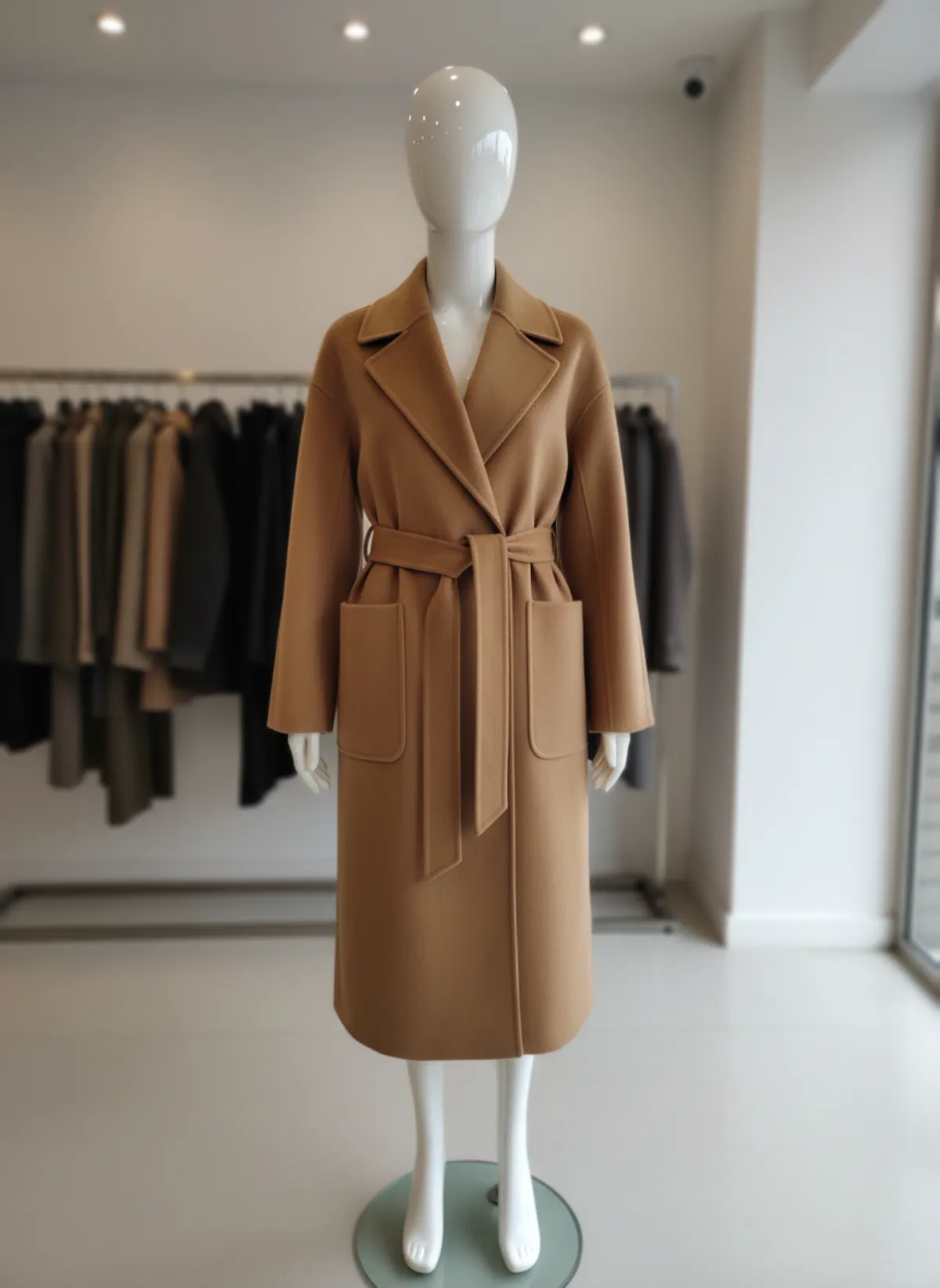
If the dress is on a shop mannequin or a dress form, start from that photo with mannequin to model AI. And for a dress photographed on a door or a rail, hanger to model works directly from that shot. More ways to show clothes without a mannequin are in how to take pictures of clothes without a mannequin.
From a wardrobe door or a bed to a dress on a model
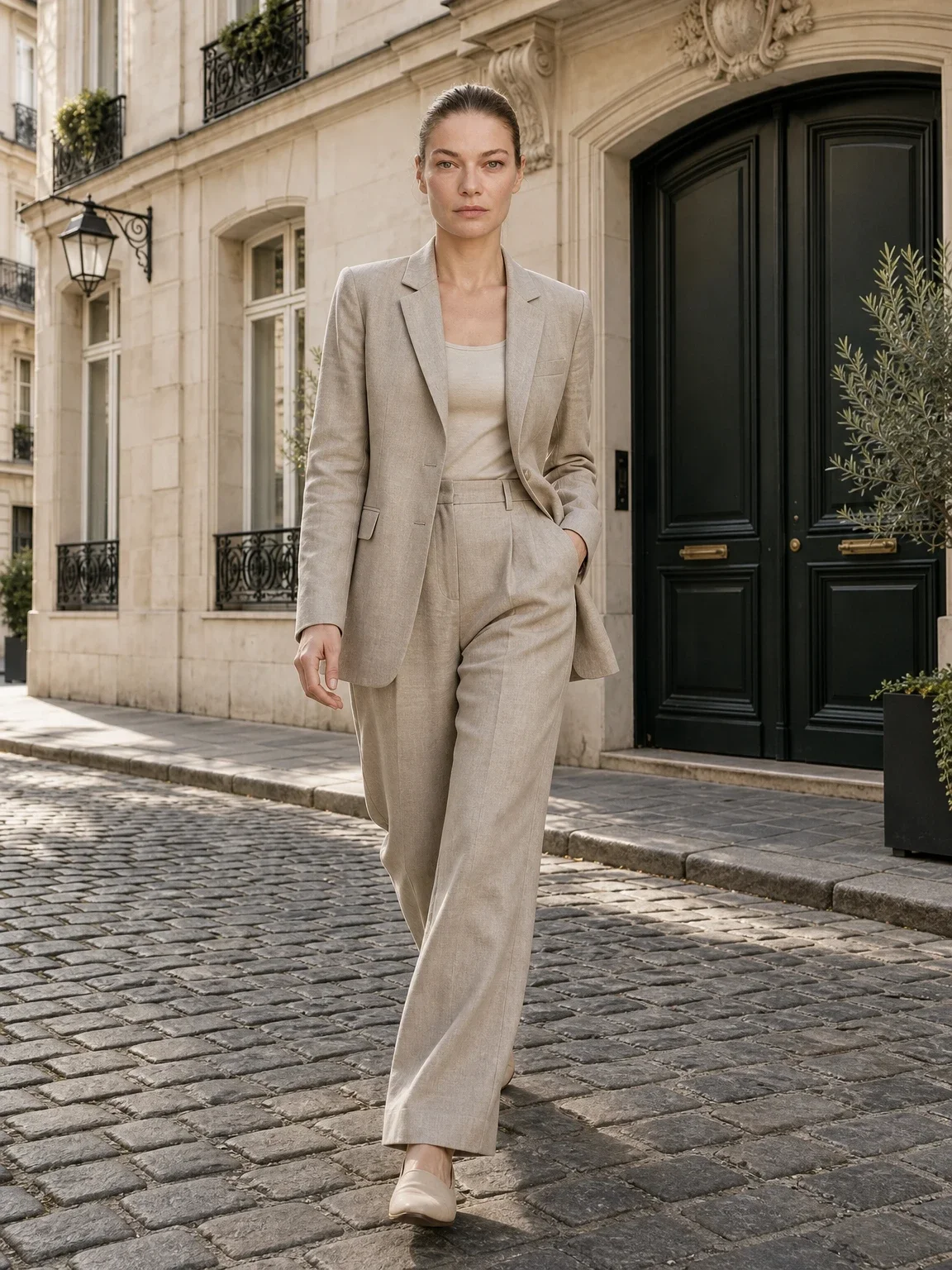
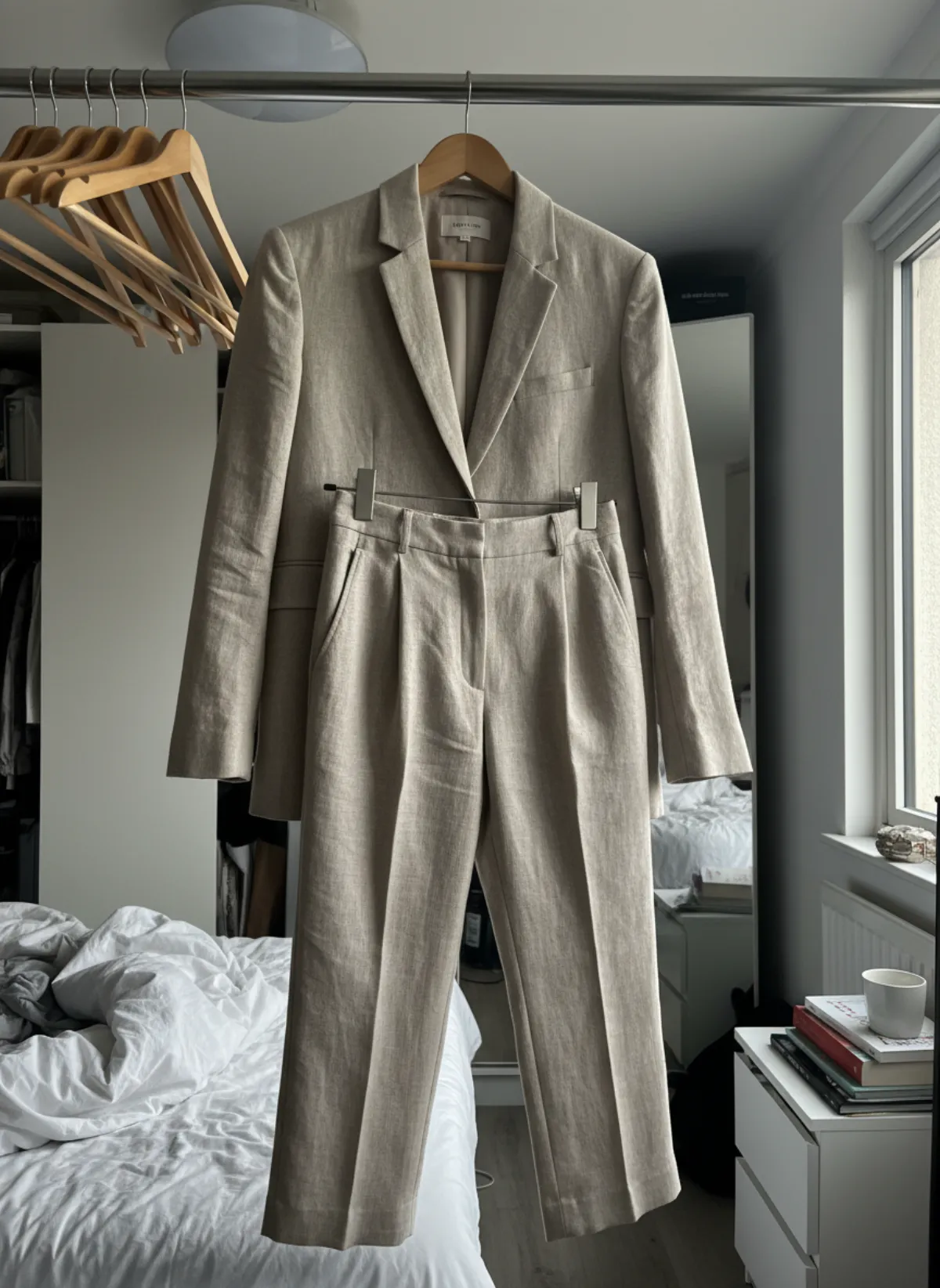
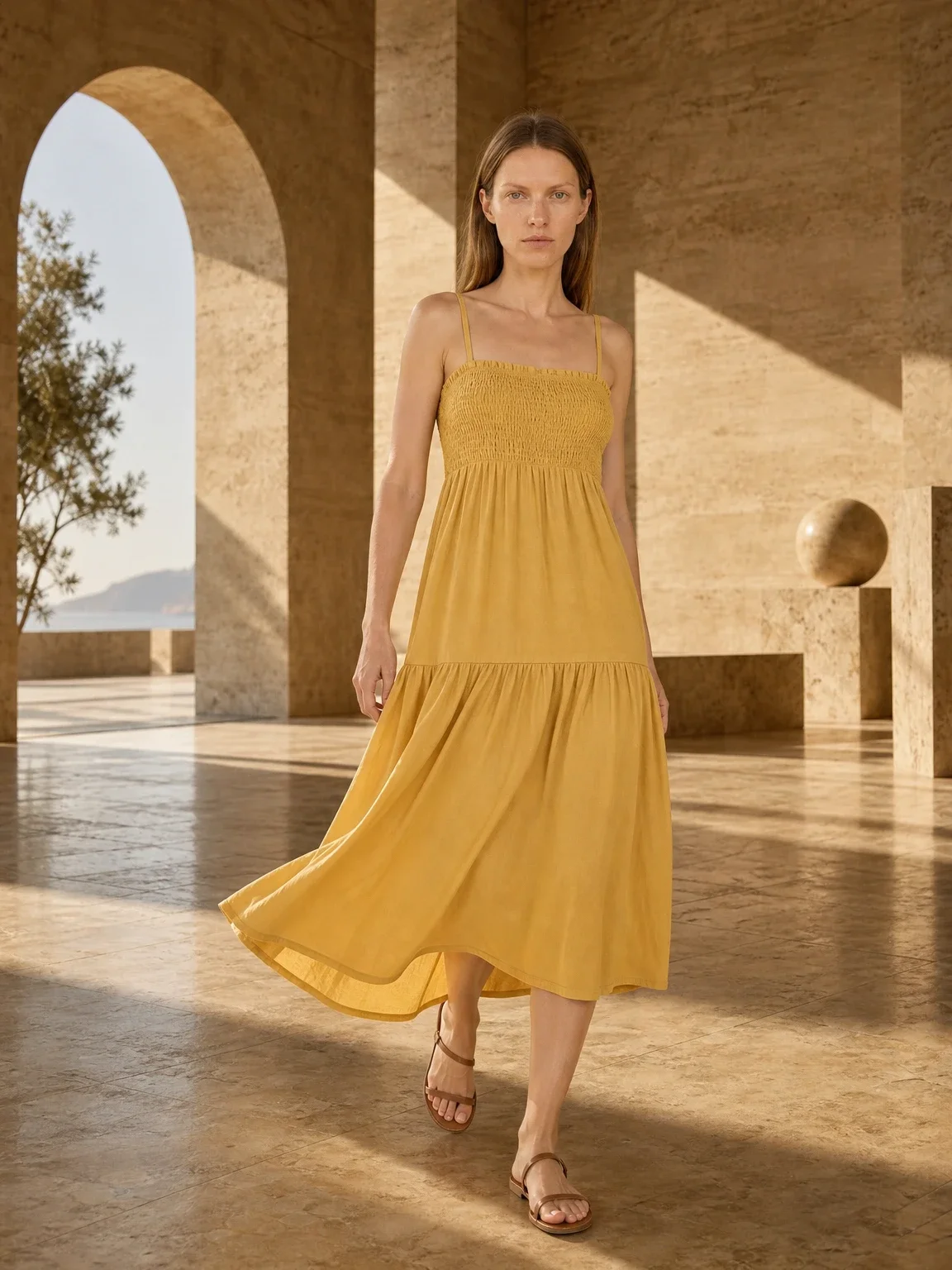
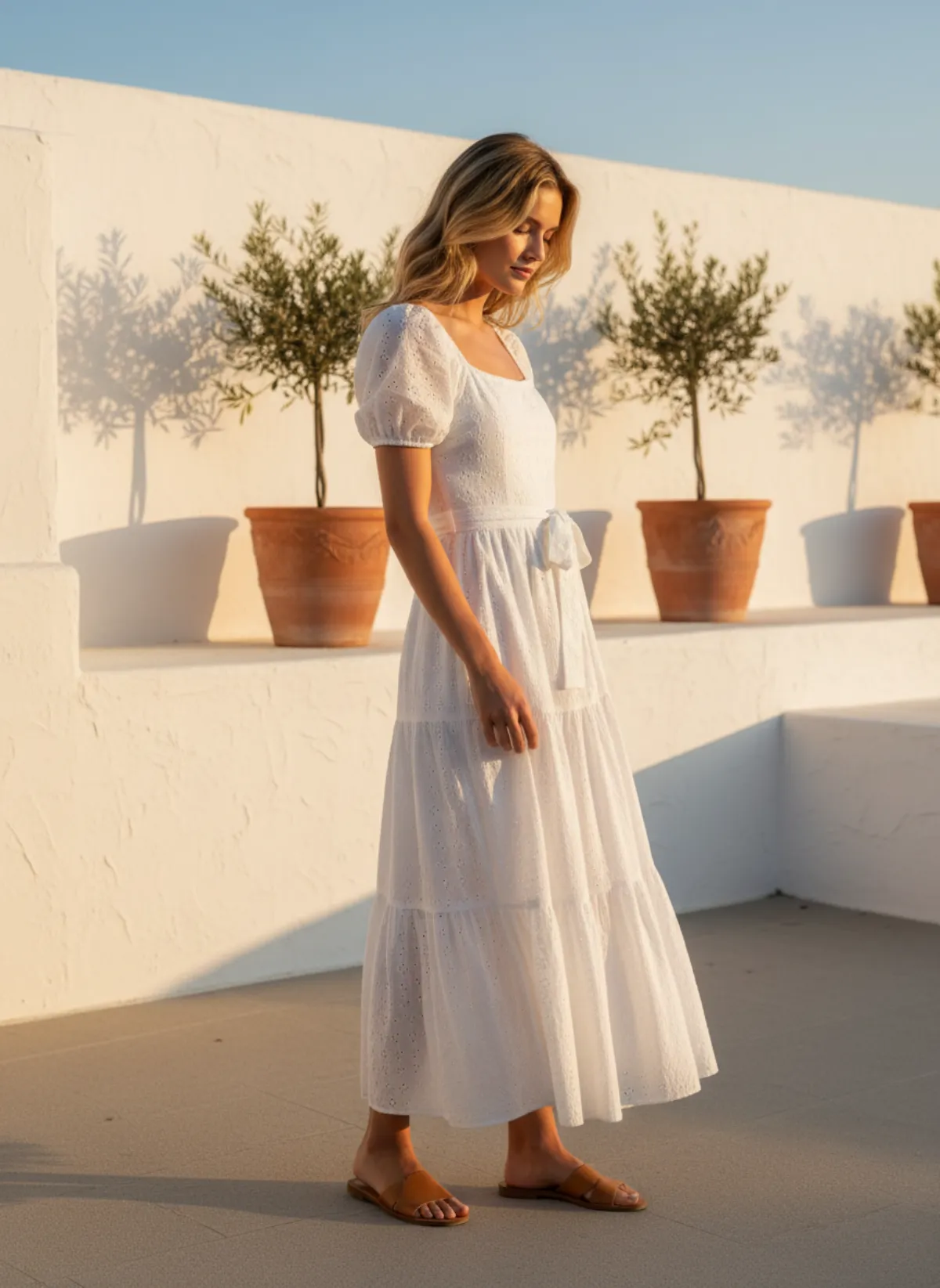
Both dresses were photographed with a phone where they were: one on a wardrobe door, one on a bedspread.
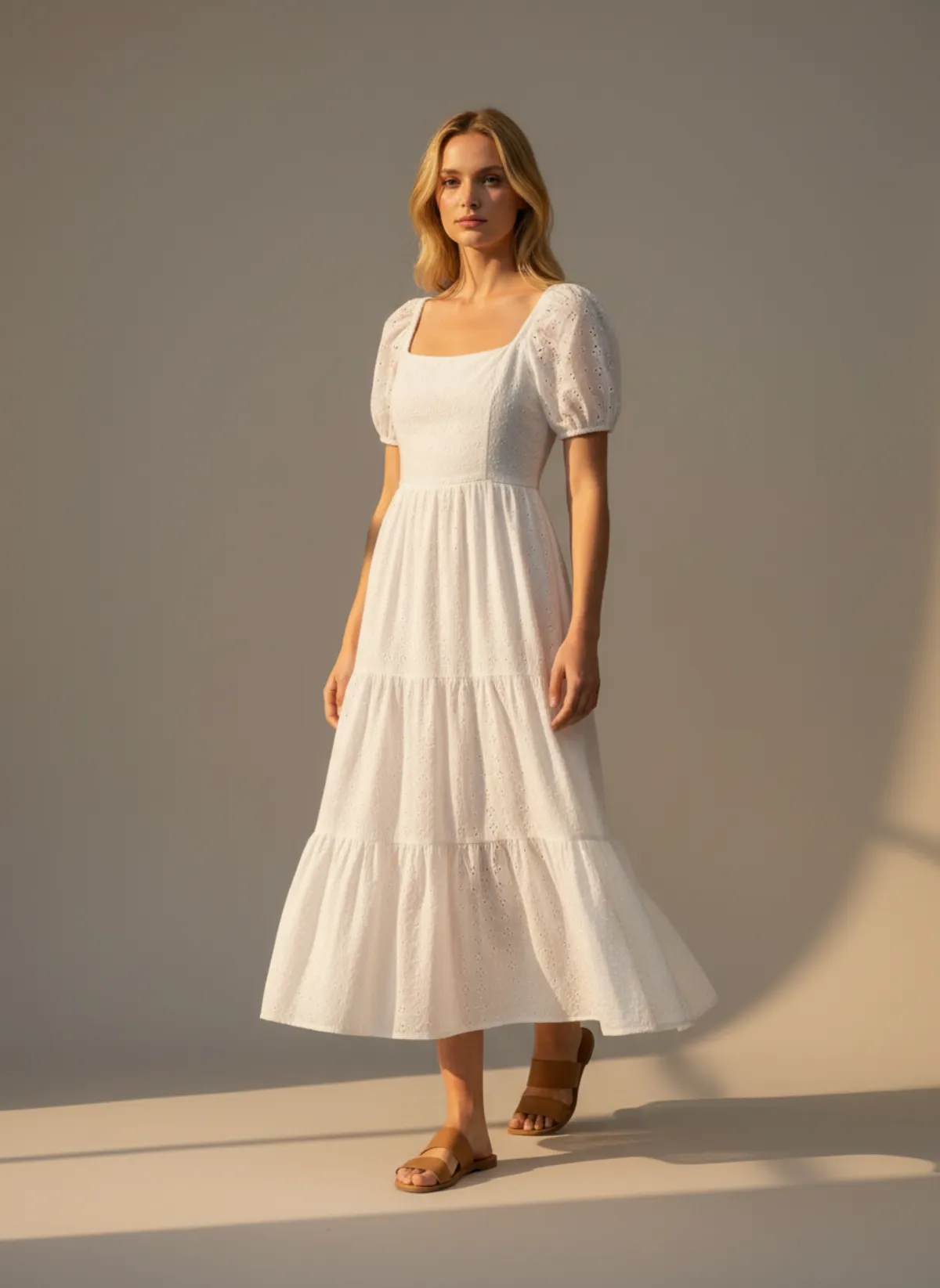
An eyelet maxi on Emma
Hung on a wardrobe door, the dress was a flat white column. On the model, the tiers, the puff sleeves and the full length to the ankle are clear, on a terrace and in the studio.
 Your photo
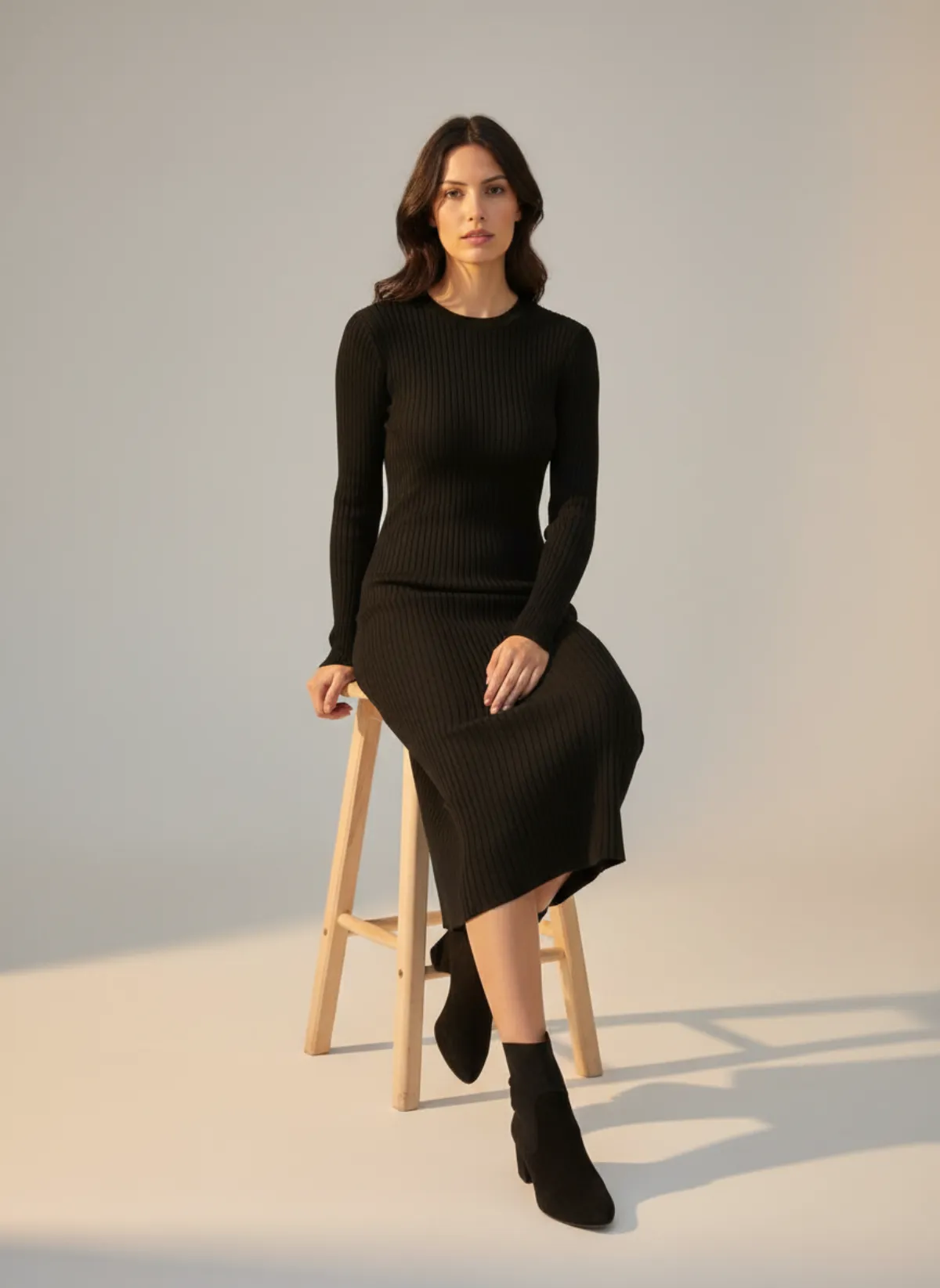
A ribbed knit, standing and seated
Laid flat on a bed, the knit looked shapeless. Standing and seated frames show the line of the rib on a body and how it behaves when you sit.
 Your photo

Questions about photographing dresses
What is the best way to photograph dresses for sale?
Hang the dress on a slim hanger against a plain light wall, in side window light, and shoot the whole dress from waist height. Add the back, neckline, fabric, closure, label, hem and a worn photo.
How do you photograph long dresses for eBay?
If a maxi dress does not fit hanging, lay it flat on a large plain floor and shoot from directly above, standing on a chair. Keep straps to hem in the frame and give the length in the listing.
How do you photograph dresses for Vinted?
The same way: one clear cover photo of the whole dress on a plain background, then the back, details, label and any flaw. A worn photo helps buyers judge the length and fit.
Should I photograph a dress hanging or flat?
Hanging, for most dresses, because the skirt falls as it does on a body. Lay knit dresses and long dresses that do not fit the wall flat, and photograph satin in soft, even light.
Can I show a dress on a model without hiring one?
Yes. Upload a clear hanger or flat photo to Garmo's dress on model AI and the same dress appears on a ready model in front, three-quarter and walking frames. Check fine lace and prints before publishing.