What we tested and how
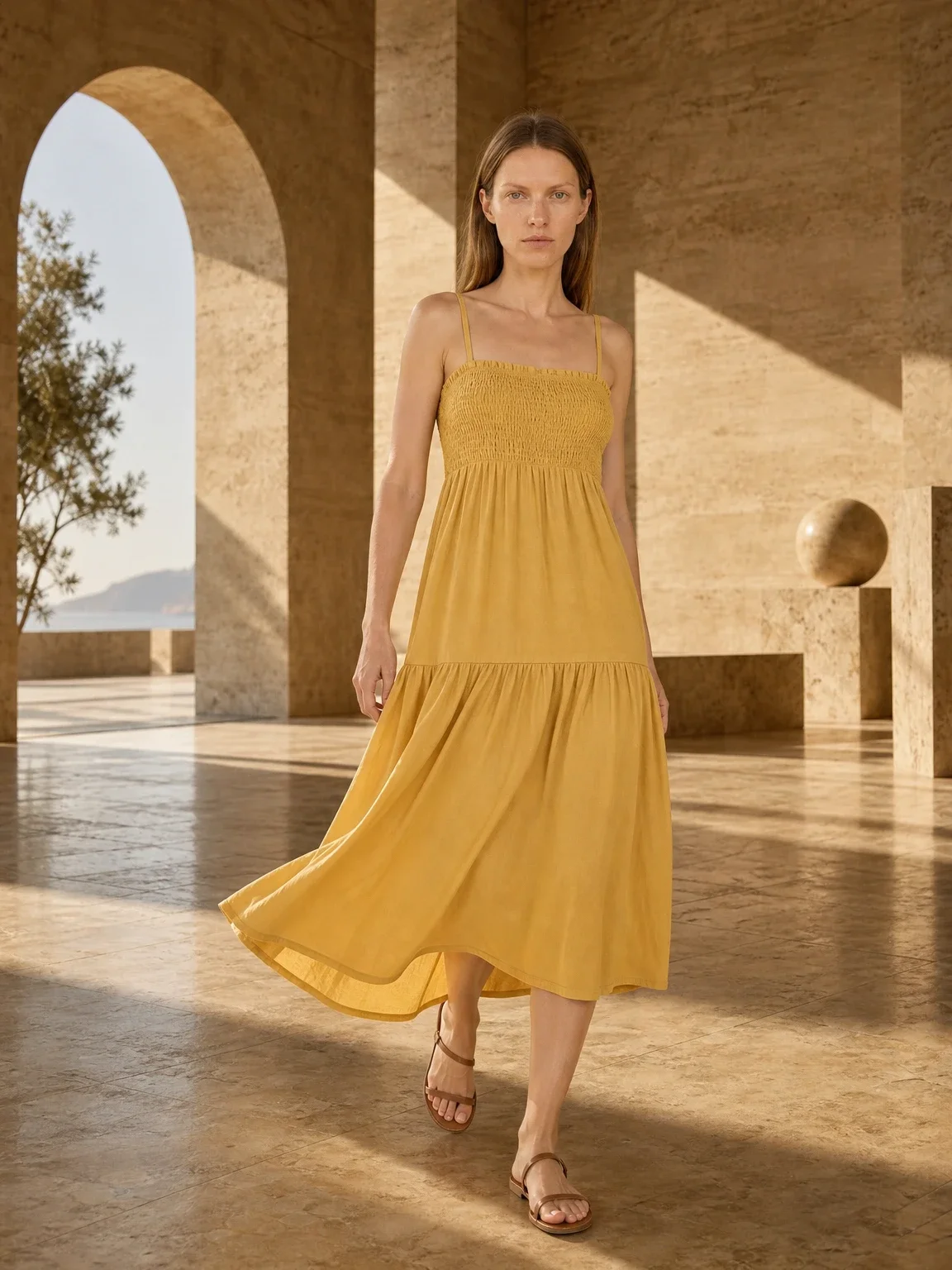
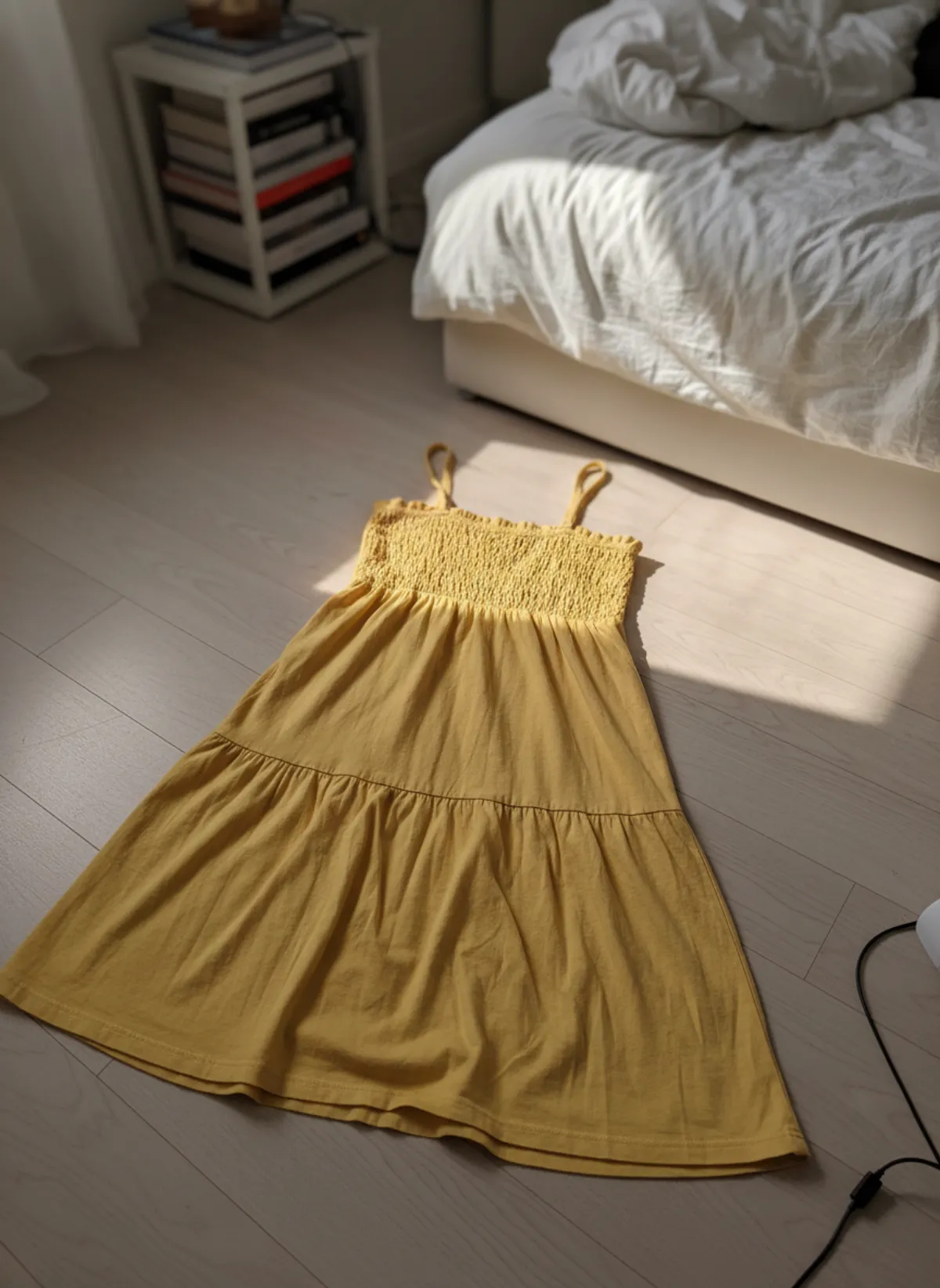
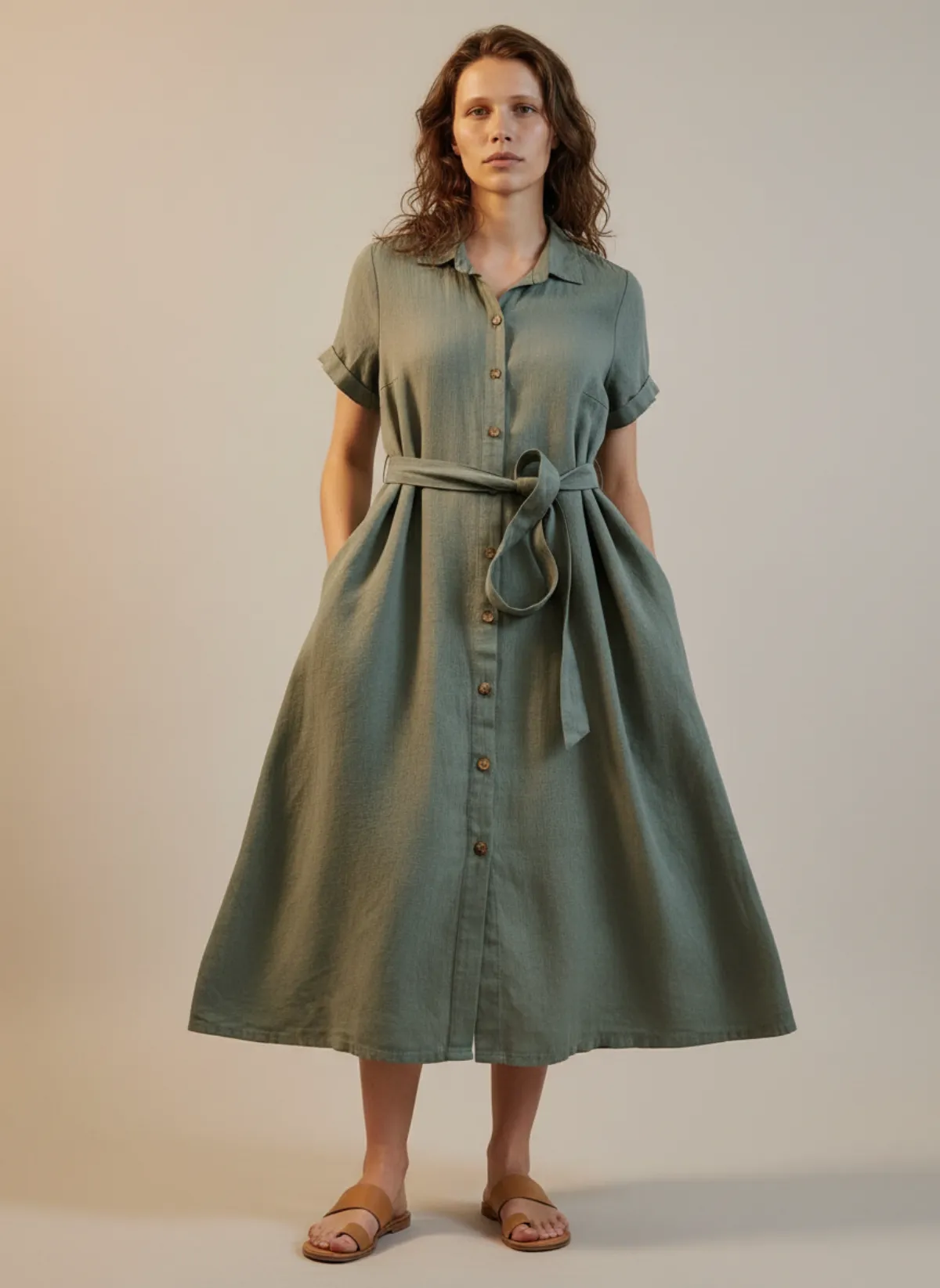
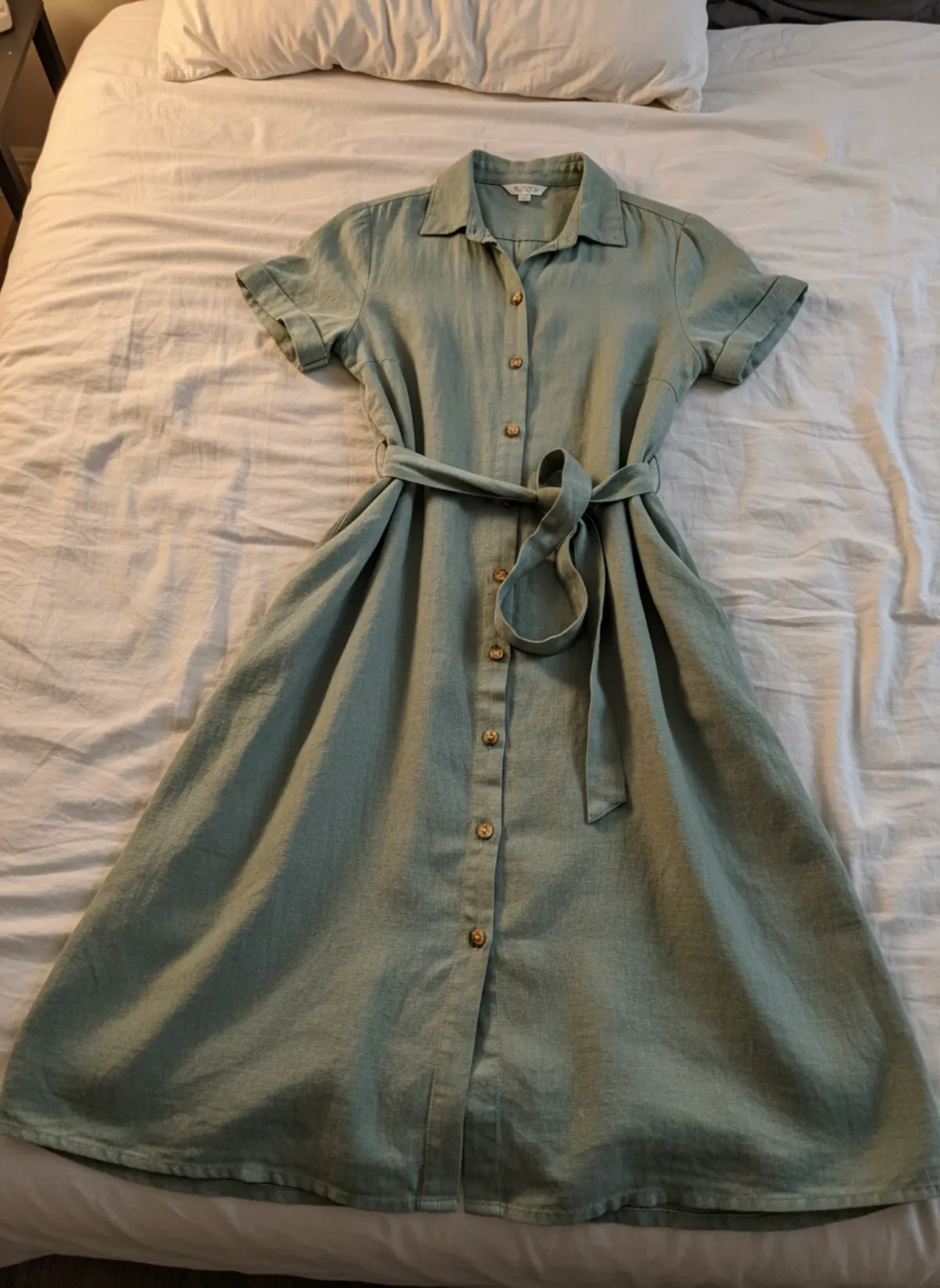
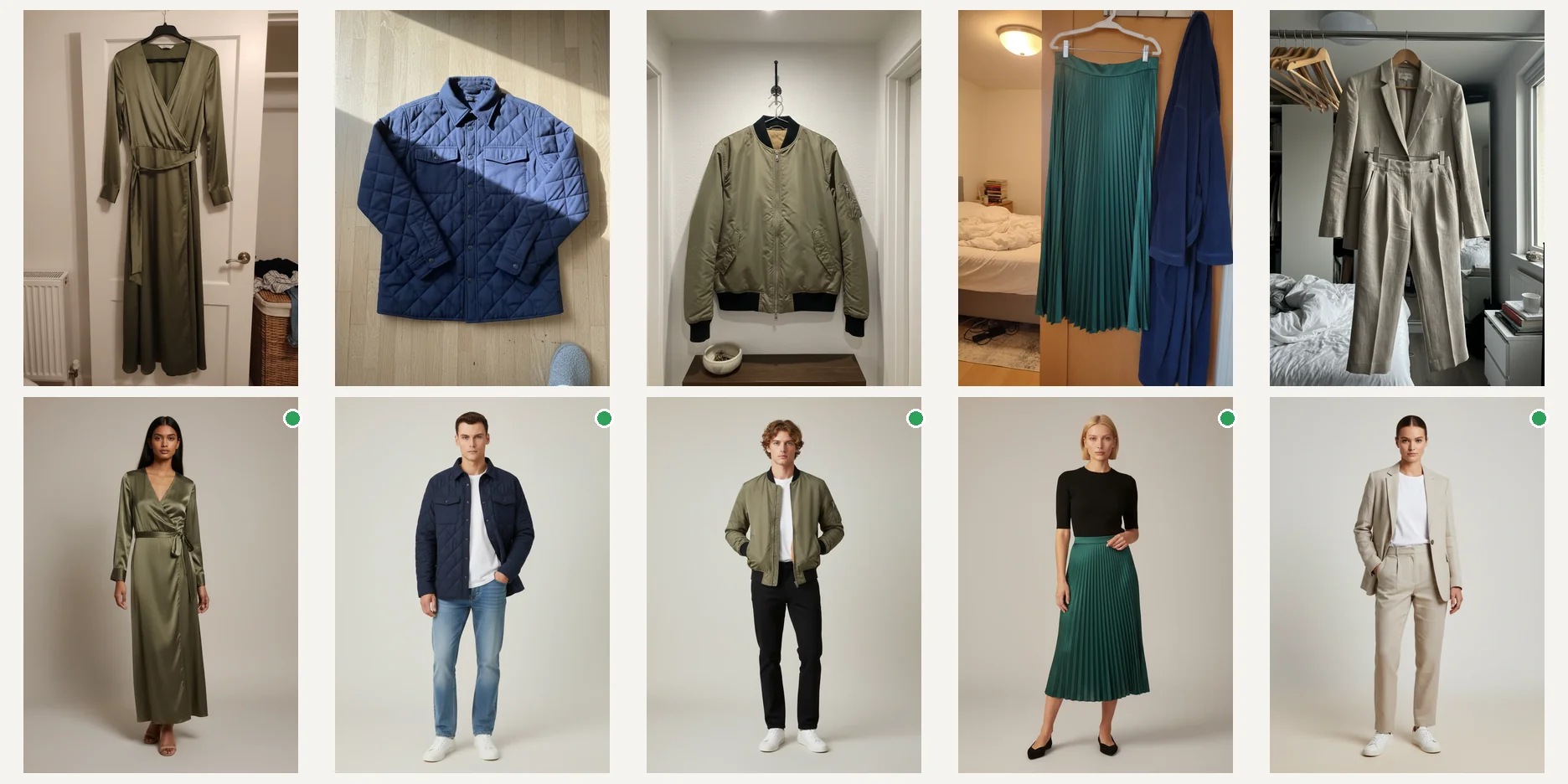
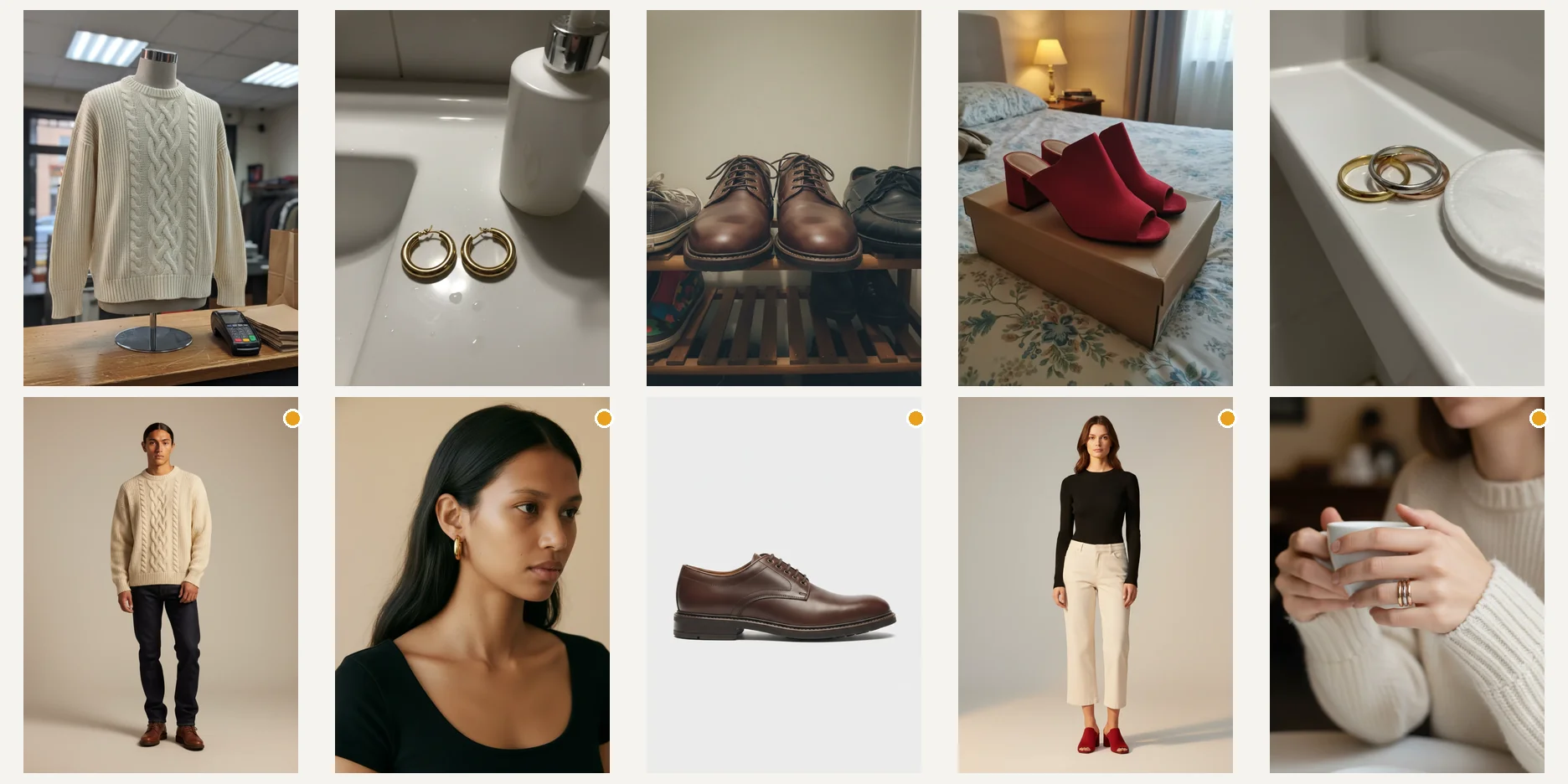
The sample contains six garments, two jewelry items and two shoes, all already used as public examples on Garmo's tool pages: an olive satin wrap dress, a navy quilted overshirt, an olive bomber jacket, a green pleated skirt, a sand linen suit, a cream cable-knit sweater, a pair of gold hoop earrings, a brown leather derby shoe, red suede mules and a stack of three thin rings. For each product we opened one source photo and one result at full size and compared them side by side.
Five checks decided the verdict: colour and material; silhouette and proportion; construction such as seams, pockets, closures and soles; the count and placement of distinctive details; and whether anatomy or styling could mislead a buyer. Pass means suitable for normal catalog use after the routine human approval every listing should get. Review means the product identity looks right, but one small detail has to be compared with the real item before the image is published. Reject means the product itself changed.
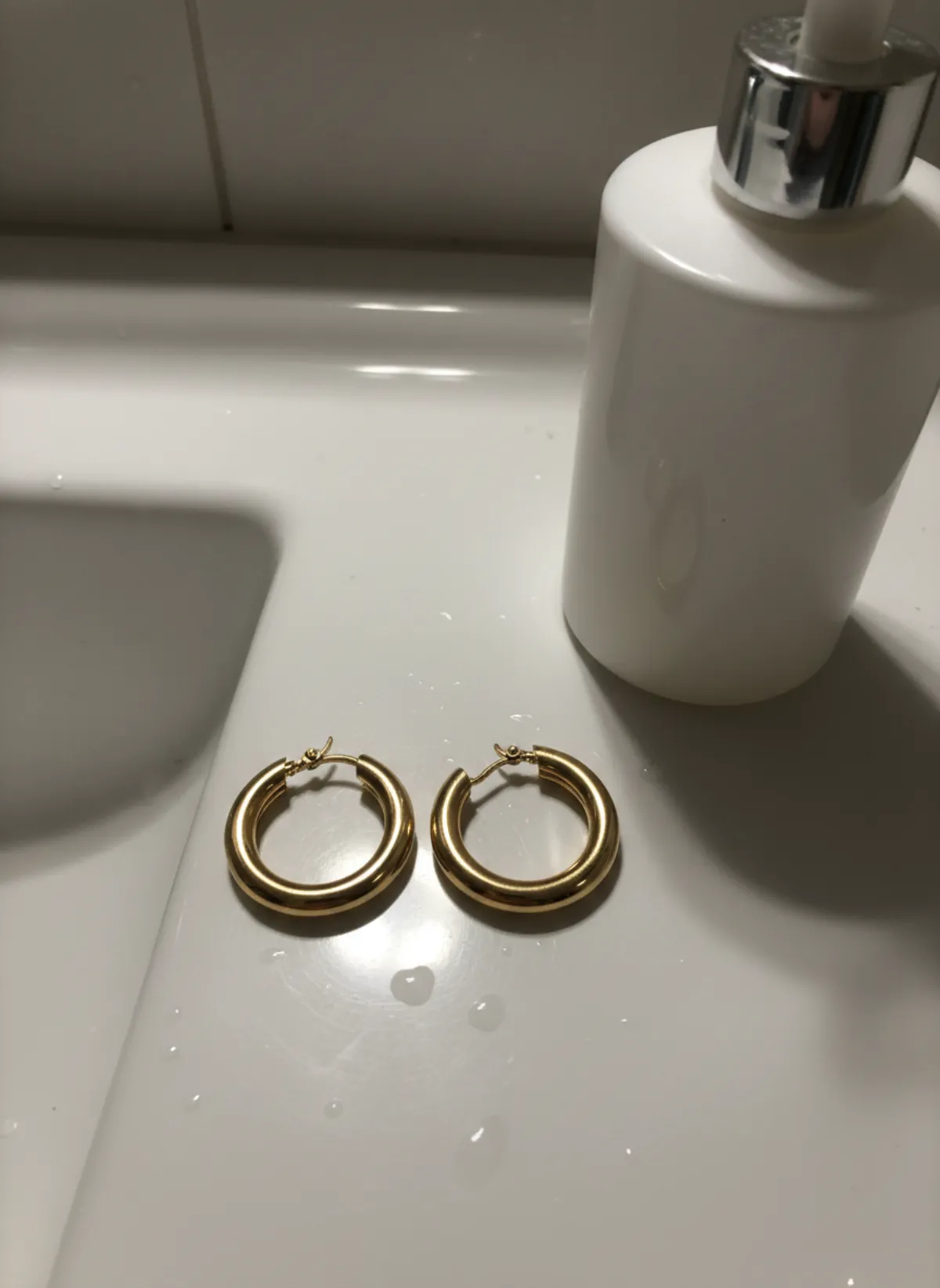
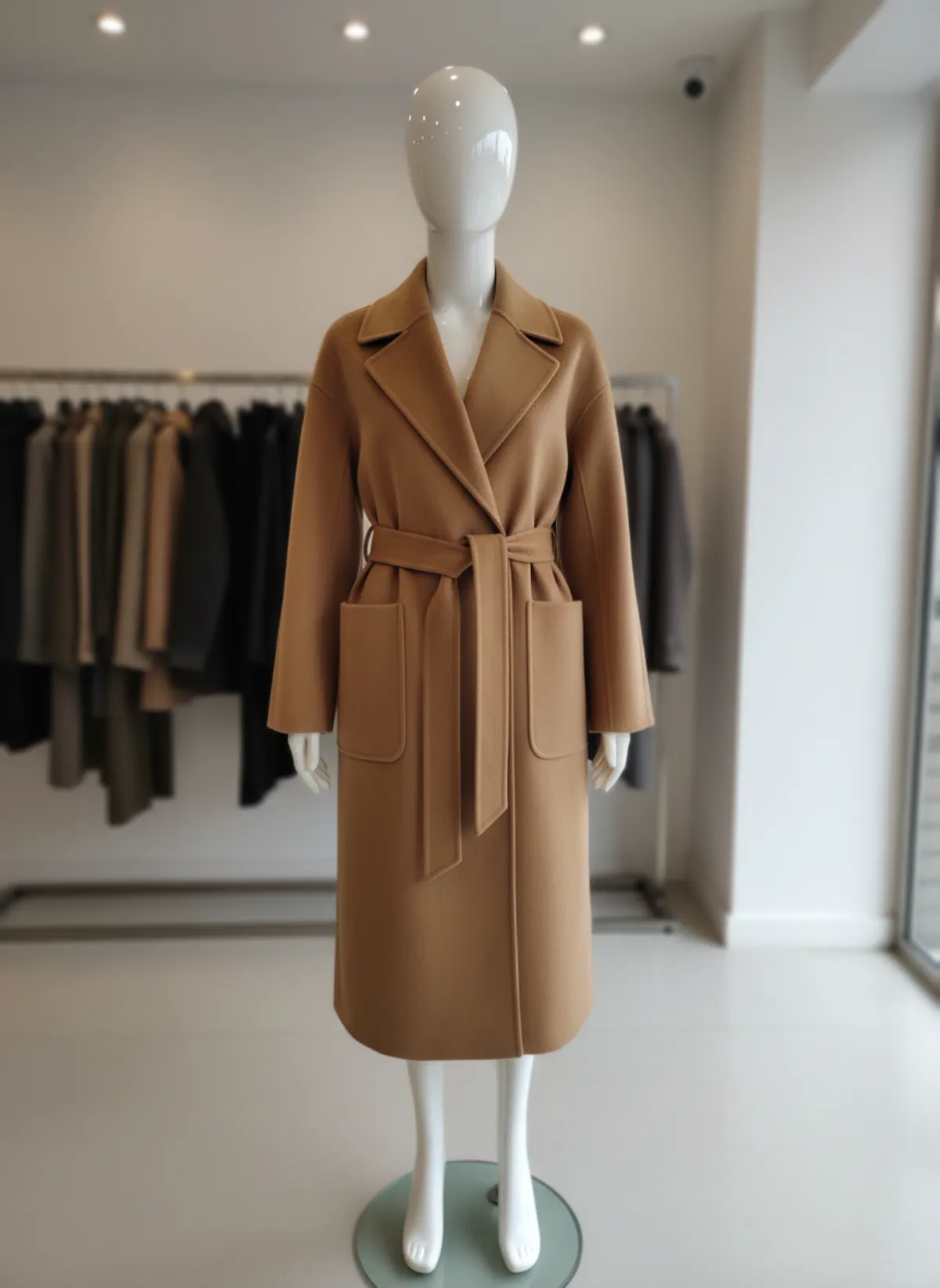
The source photos are deliberately ordinary: a hanger on a bedroom door, a jacket on a wooden floor, earrings on a wet sink, shoes on a rack. That is what small sellers actually have. It also means some results were judged against a source that was itself hard to read, which is exactly the situation a seller faces.
This was not ten new generations run under identical conditions. It cannot give a universal success rate, compare models or measure how often a retry is needed. What it does show is why every AI product photography workflow needs a visible source photo and a recorded approval decision. Before you spend time writing prompts, see why AI prompts for clothing brands are often unnecessary for product photos.
The 10-product result
Five passed
Wrap dress, quilted overshirt, bomber, pleated skirt and linen suit kept colour, silhouette and recognisable construction.
Five need a closer look
Cable-knit sweater, hoop earrings, derby shoe, red mules and stacked rings keep the product identity, but one small detail each has to be checked against the real item.
None rejected in this sample
No result changed the product itself. That is a statement about these ten sets only, not a promise about the next ten.
The pattern
Large garment structure survived best. Small metal, soles, counts of thin parts and fine knit proportions asked for the most checking.
The five sets that passed
The olive wrap dress kept the crossover neckline, the tie belt at the waist, the long sleeves with their cuffs and the maxi hem, and the satin sheen still reads as satin. The navy overshirt kept its diamond quilting, both chest flap pockets, the snap front and the collar, even though the source was photographed flat on a floor in harsh sun. The olive bomber kept the ribbed collar, cuffs and hem, the centre zip and the small zip pocket on the sleeve.
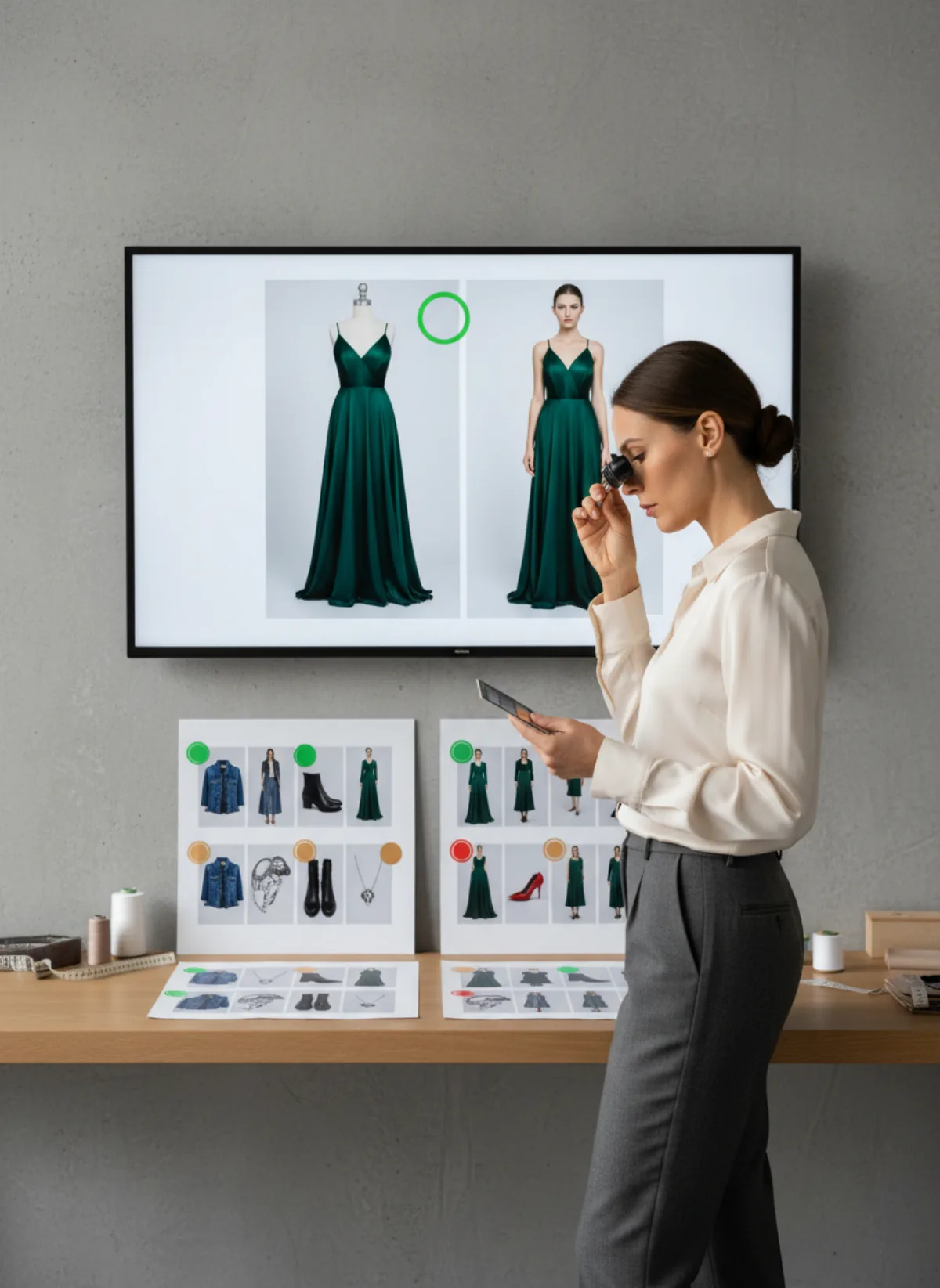
The green pleated skirt held its knife pleats, waistband and midi length, and the sand linen suit kept a single-breasted blazer with notch lapels beside pleated trousers in a believable linen texture. In all five cases a buyer comparing the real item with the model image would find the same product. The green dot on each result in the picture marks a pass. Routes matter here: the dress, skirt and bomber started from hanger or flat sources, which garment to model and flat lay to model are built for.
The five sets that need a closer look
Cable-knit sweater. The cable panel on the model reads narrower than on the sweater on its form, and the cream looks a little warmer than the source white. A shopper would still recognise the garment, but a knit's proportions are part of what is being sold, so compare the panel width and the colour before publishing.
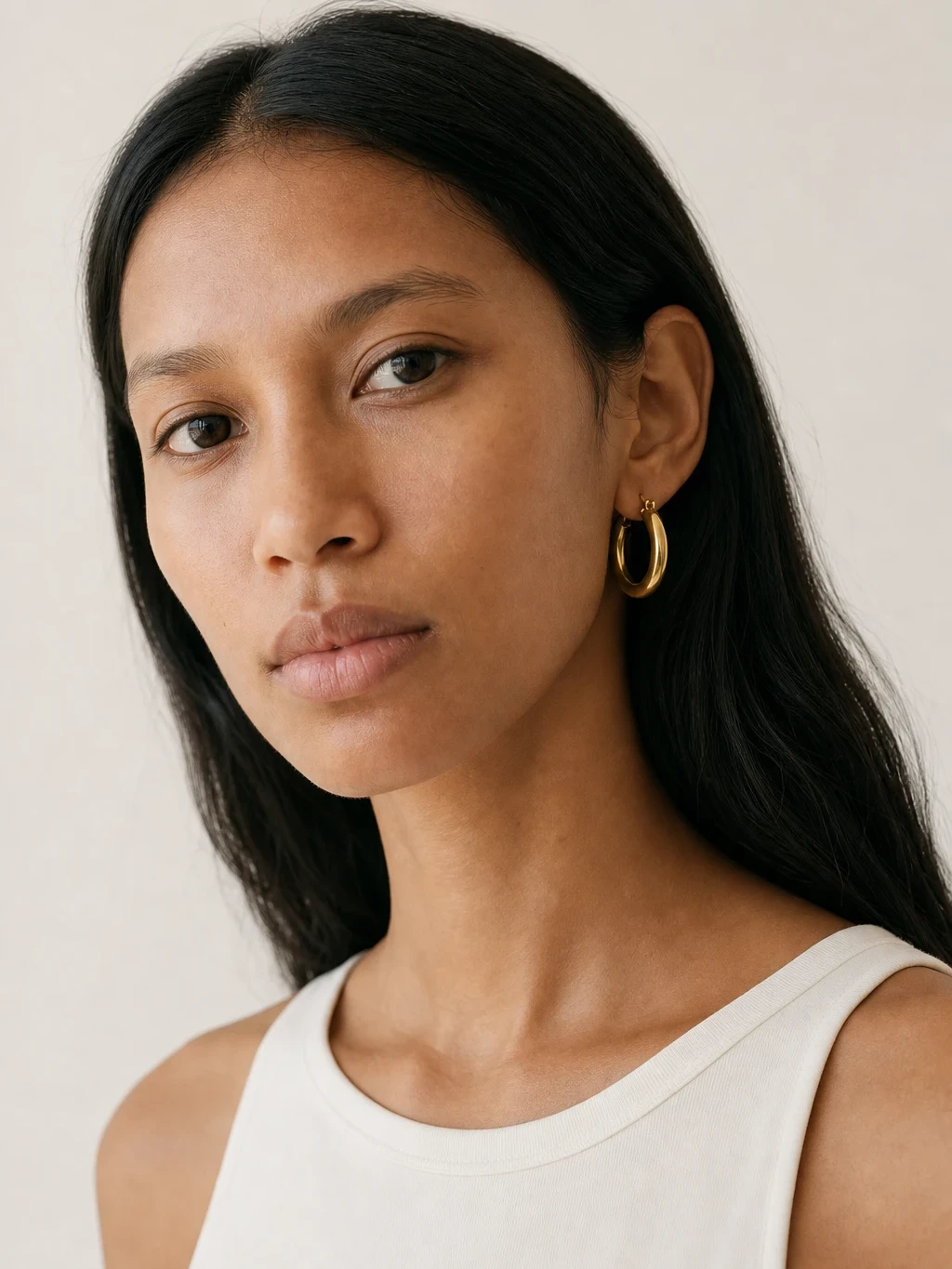
Gold hoop earrings. The result shows one hoop in profile on the ear, which is a good way to show scale. It does not show the pair or the hinged clasp that is visible on the sink, so thickness and closure must be compared with the real earrings, ideally with a close source photo.
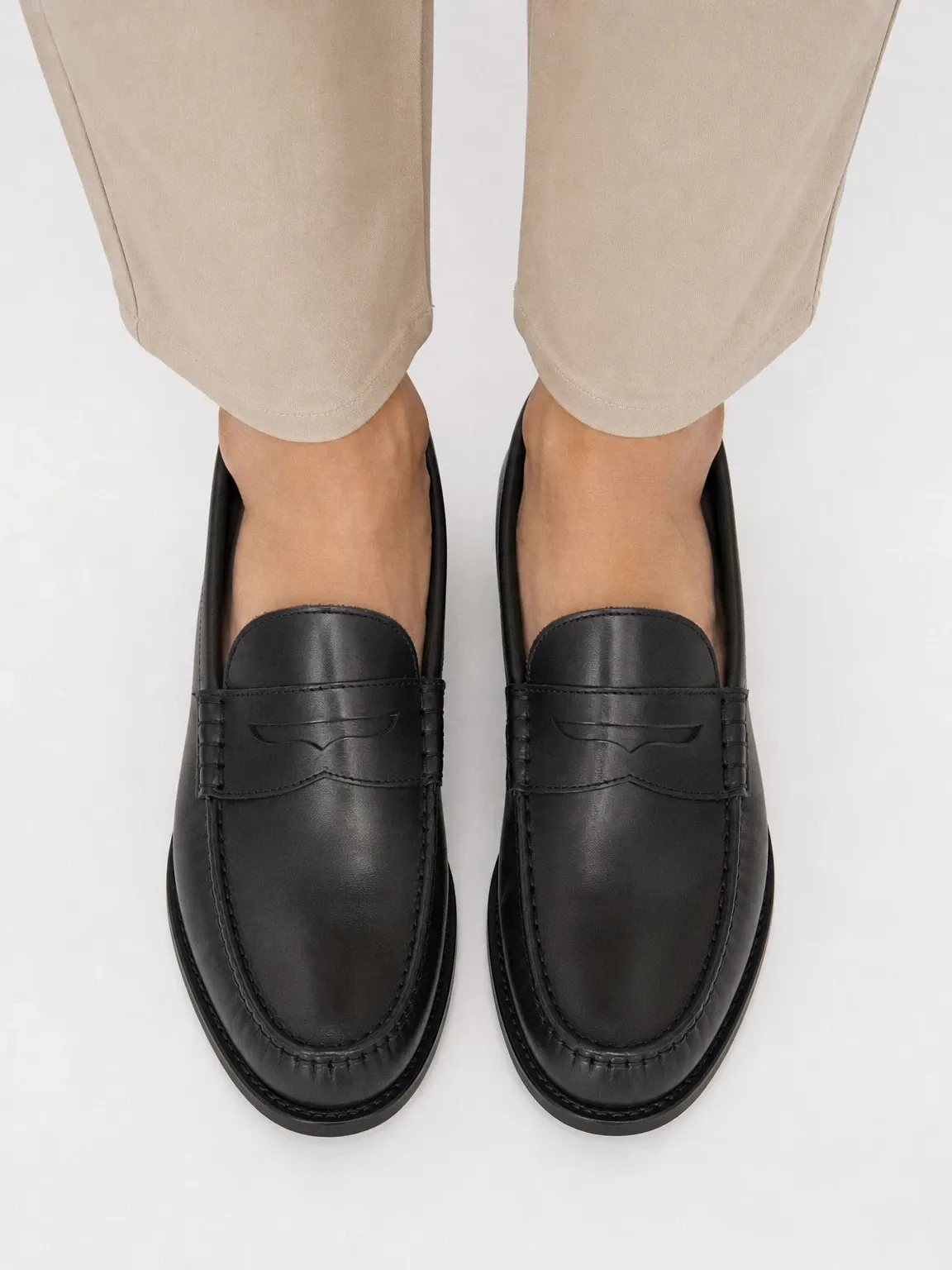
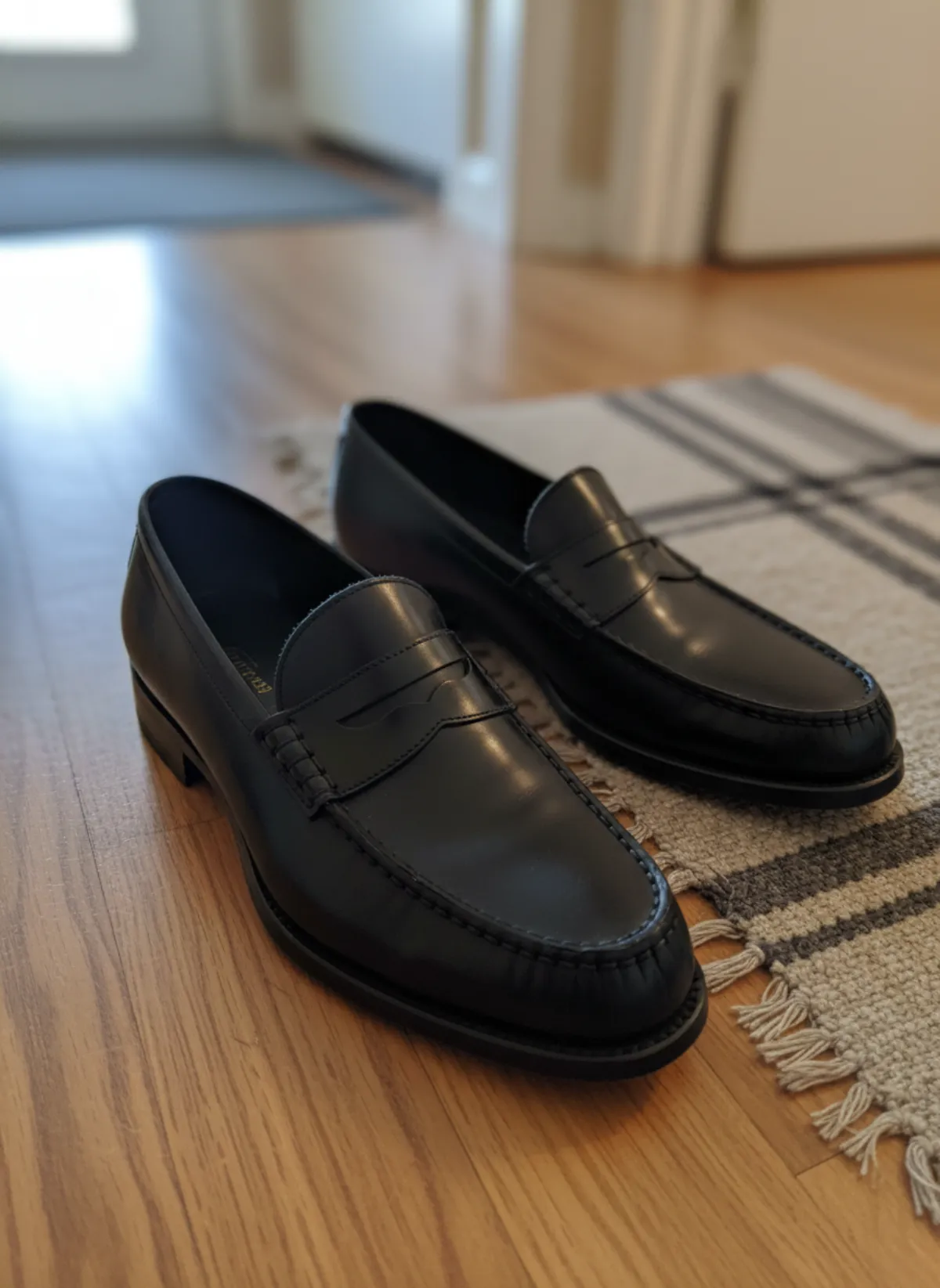
Brown derby shoes. The side-profile catalog frame is clean and the shape is right. Count the lace eyelets and check the sole thickness against the source: shoe construction is easy to simplify, and the scuffed leather on the rack became new leather in the result.
Red suede mules. Colour, suede texture and the open toe are right, and the feet-and-legs frame shows them in a believable outfit. At full-length scale the block heel is small, so confirm its height and the toe opening against the box photo before approving.
Stacked rings. The source shows three interlinked bands in gold, silver and rose. On the hand the stack reads as warm-toned bands and the silver is hard to separate. For jewelry, count and metal colour define the product, so this is the set where a missing band would be a real problem. An amber dot marks each of these results in the picture.
What the audit teaches a seller
First, approve product identity before aesthetics. A beautiful pose cannot rescue a changed ring, an invented button or a wrong heel. Compare the exact buying features, not the overall mood. Second, photograph difficult evidence separately. If the buckle, stone setting, print repeat or back closure is commercially important, provide a close source photo instead of asking the system to infer it.
Third, use risk-based review. A plain overshirt with large visible panels can be checked quickly; jewelry, logos, patterned fabric, lace, fine knits and footwear construction deserve zoomed inspection. Pick the route by what the source shows: flat lay to model for complete flat evidence, garment to model for a hanger source, mannequin to model for a shop form, and the dedicated jewelry on model and AI shoe photography workflows for their scale.
Finally, keep a log, including the amber cases. A gallery that only shows successes teaches nothing about risk. Record product, source quality, result, decision and reason. After twenty products the log tells you which inputs need another angle and which categories deserve a physical shoot. The product photography cost guide shows how to put that review time into a cost per approved image.
Accuracy test questions
Does five passes out of ten mean Garmo is 50% accurate?
No. This small, selected audit is not a controlled benchmark and cannot estimate a universal rate. The five "review" sets did not fail; they kept the product and ask for one detail check. It reports decisions for ten existing public sets only.
Why were no images rejected?
In these ten published sets no result changed the product itself. Published examples are also chosen to be representative, so do not read this as a guarantee. Every new generation still needs its own comparison with the source.
Which products need the strictest review?
Jewelry, logos, small hardware, repeating prints, lace, fine knits, transparent fabric and shoe construction. Their commercial identity depends on small details.
What does "review" mean in practice?
Open the source and the result at full size, compare the one flagged detail, and either approve, regenerate or add a close source photo. The frame stays unpublished until someone signs it off.
Can I run the same test on my own products?
Yes. Choose representative products, define the checks before generating, compare source and result at full size, record pass, review or reject, and keep the failures as production data.
Do I need to show the original product photo on the listing?
It is a good habit. The real photo shows the actual item, while the model frames add proportion and context. Keep measurements and condition in the written listing.