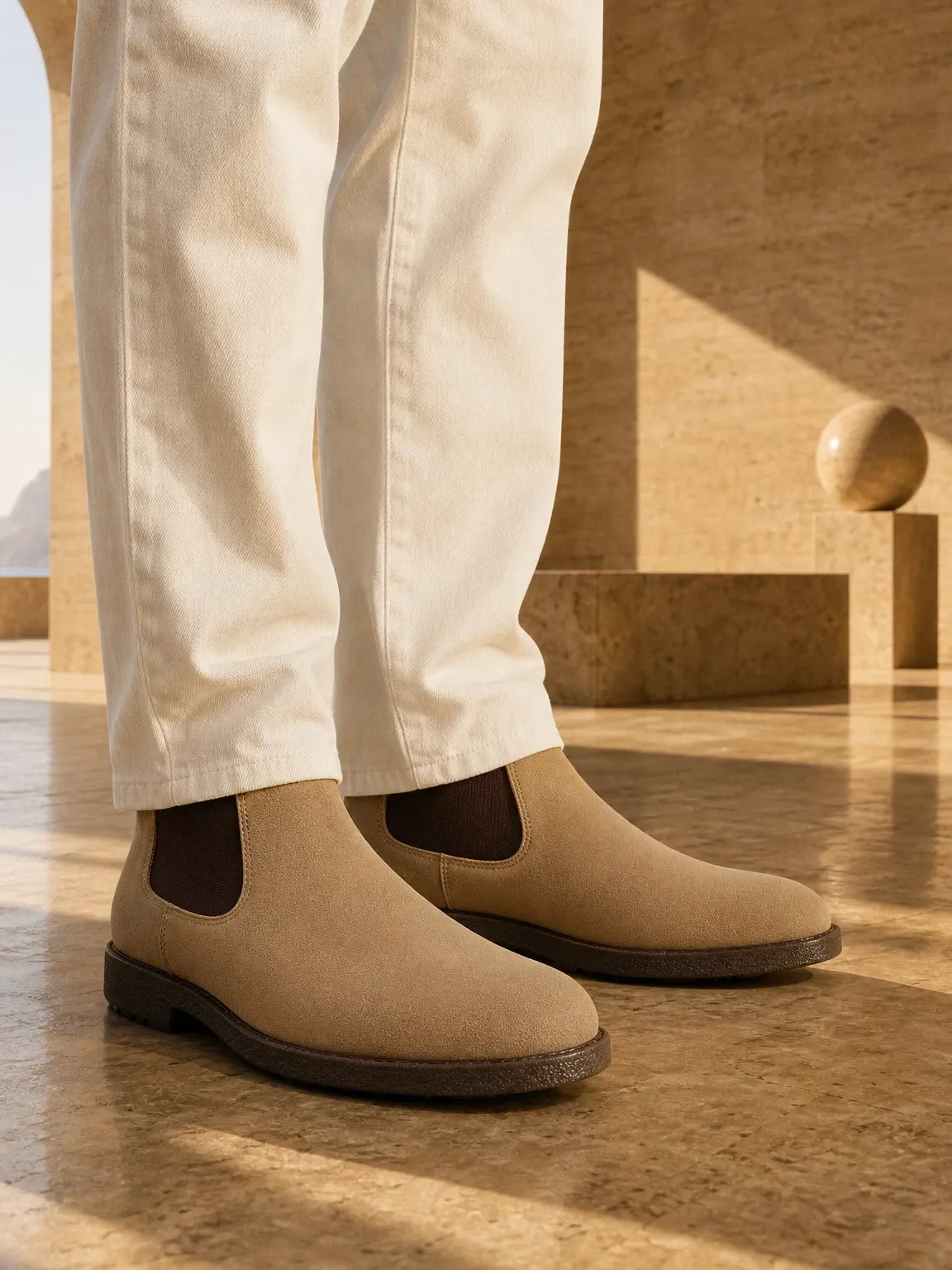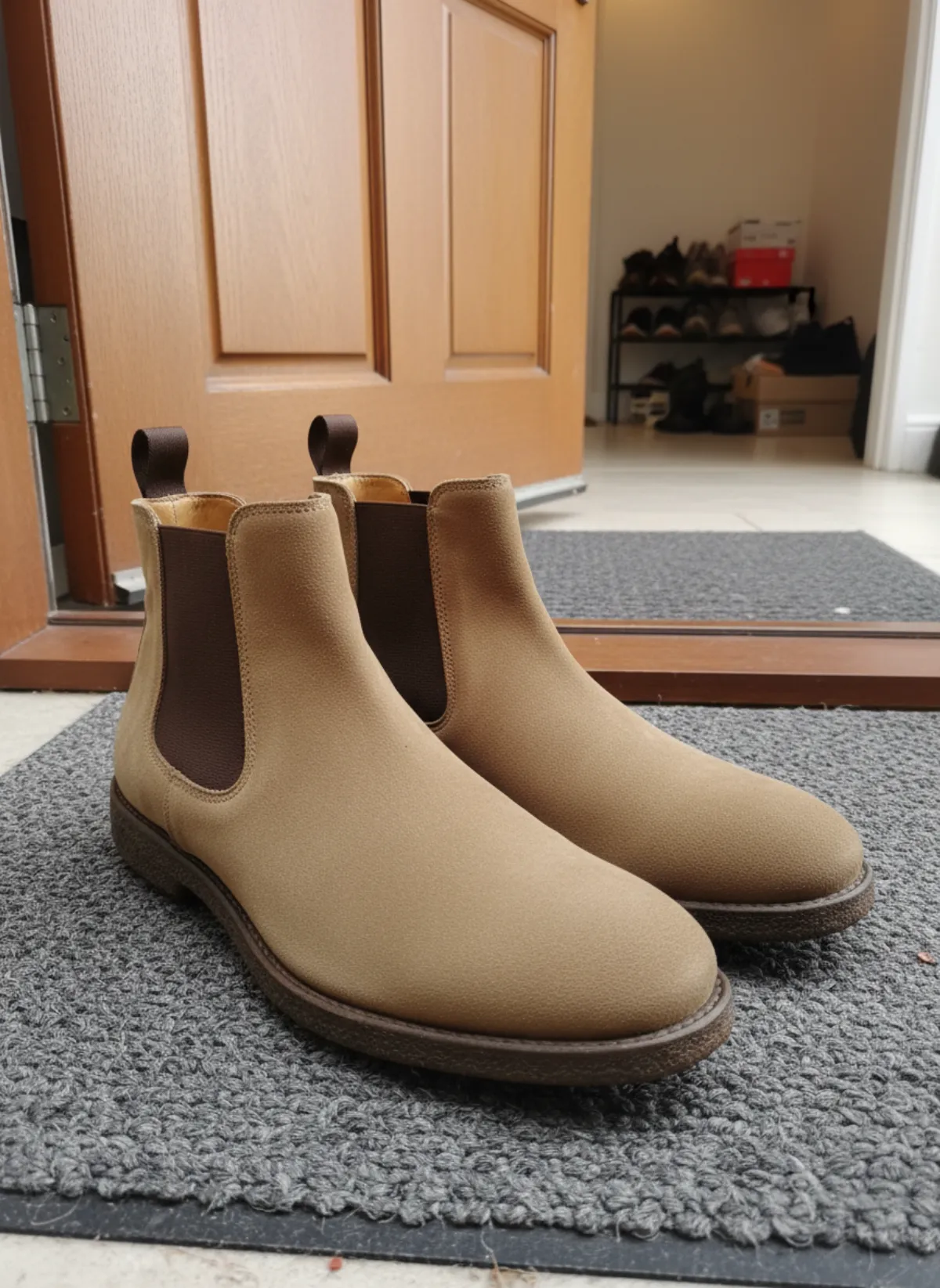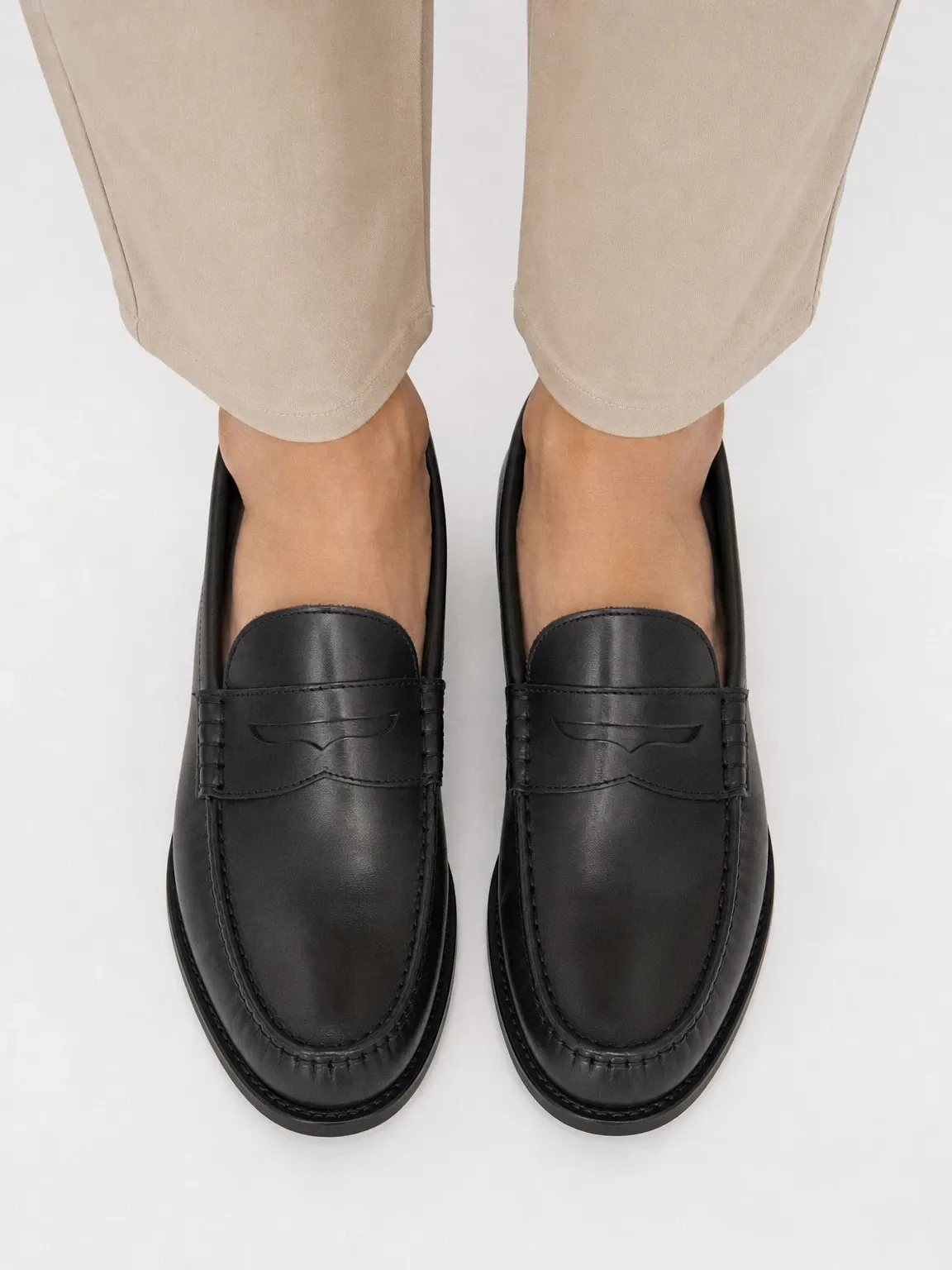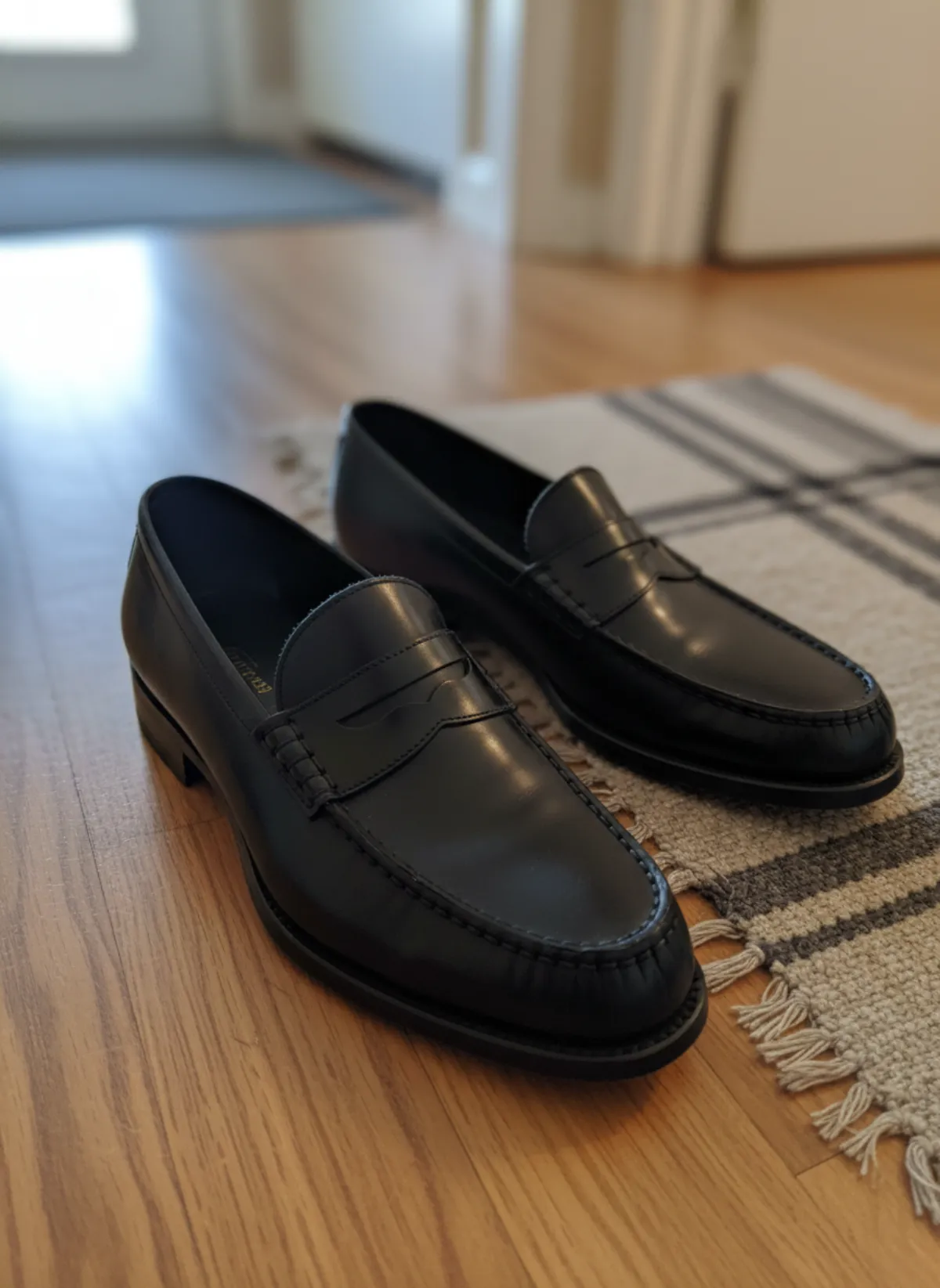
Prep: clean, condition and stuff the shafts
Boots collect more dirt than any other shoe, and every mark shows on a product photo. Brush off dust and dried mud, wipe smooth leather with a damp cloth and let it dry, then apply a thin coat of cream in the same colour and buff it. Brush suede and nubuck in one direction with a suede brush, and use a suede eraser on shiny spots. Clean the sole edges and the welt too; buyers look there.
Remove white salt lines from winter wear with a little water and vinegar on a cloth before they become permanent. Replace frayed laces if you can, and lace both boots the same way to the same height. Close every zip and buckle.
Then give the shafts their shape. Tall boots slump at the ankle and fold over, which hides how high they really are. Use boot shapers or roll up a magazine or packing paper and slide it inside, so the shaft stands straight. Ankle boots need only a little paper in the toe and collar to keep their shape.
Setup: a plain corner in side light
The easiest setup for how to photograph boots for sale at home is the corner where a plain floor meets a plain wall, right next to a window. Pale wood, light tiles or a large sheet of white or grey card bent into a curve all work. The background should be lighter than the boots, so the outline reads, but not pure white for white or cream boots.
Use daylight from the side, with no direct sun and the ceiling light off. Side light shows the shape of the toe, the stitching and the shine of the leather without turning it into a white reflection. If one side is too dark, hold a sheet of white paper or a pizza box lid on the shadow side to bounce light back.
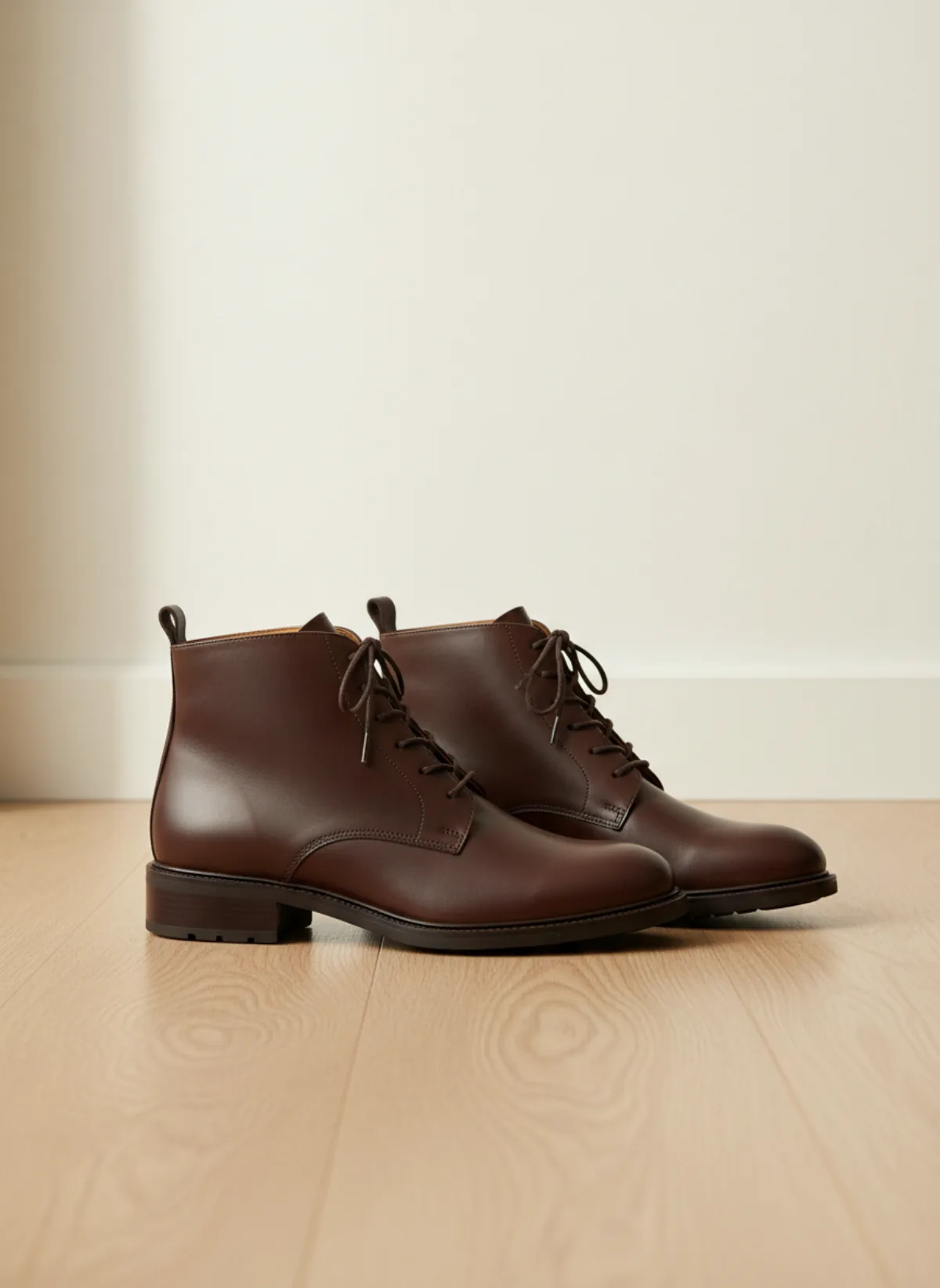
Shoot at boot height or slightly above, with the phone held straight and the 1x lens, not the wide one, which stretches the toes. Leave space around the pair, so a square or portrait crop does not cut the toe or the top of the shaft. The basics for every shoe are in how to photograph shoes for sale; boots add the shaft and the sole.
Knee-high boots: keep the shaft upright and in frame
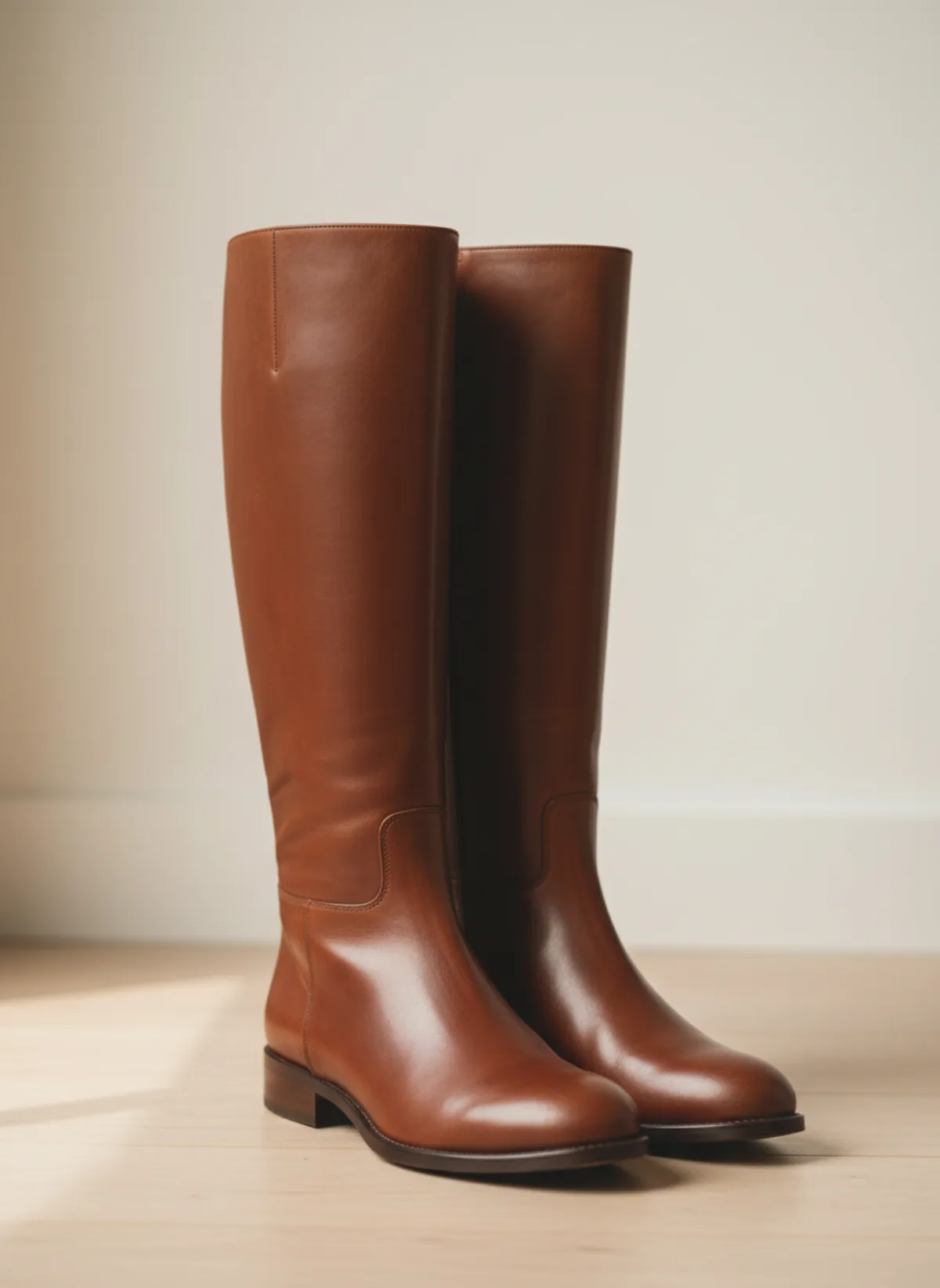
Knee-high and over-the-knee boots are the hardest to photograph, because they are tall and narrow and want to fall over. With shapers inside, stand the pair side by side, slightly angled towards the camera, against the wall. Step back until the whole height from the toe to the top of the shaft fits, with space above.
Shoot one frame of the pair standing in a front three-quarter view and one boot in clean side profile, so the heel height and the shaft line are clear. If the shaft has a zip, turn one boot to show it fully, from the ankle to the top, and photograph the zip pull close.
A knee-high boot is sold on the shaft: its height, its width at the top and whether it is stretch, zip or pull-on. Photograph the top edge of the shaft from above if it has elastic, a gusset or a lining that folds over.
How to photograph boots for sale: nine shots
Take them in the same order for every pair. Buyers then find the shaft, the sole and the condition in the same place in every listing.
The pair, three-quarter
Both boots side by side, angled slightly to the camera, the whole pair in frame. This is the cover photo.
Side profile
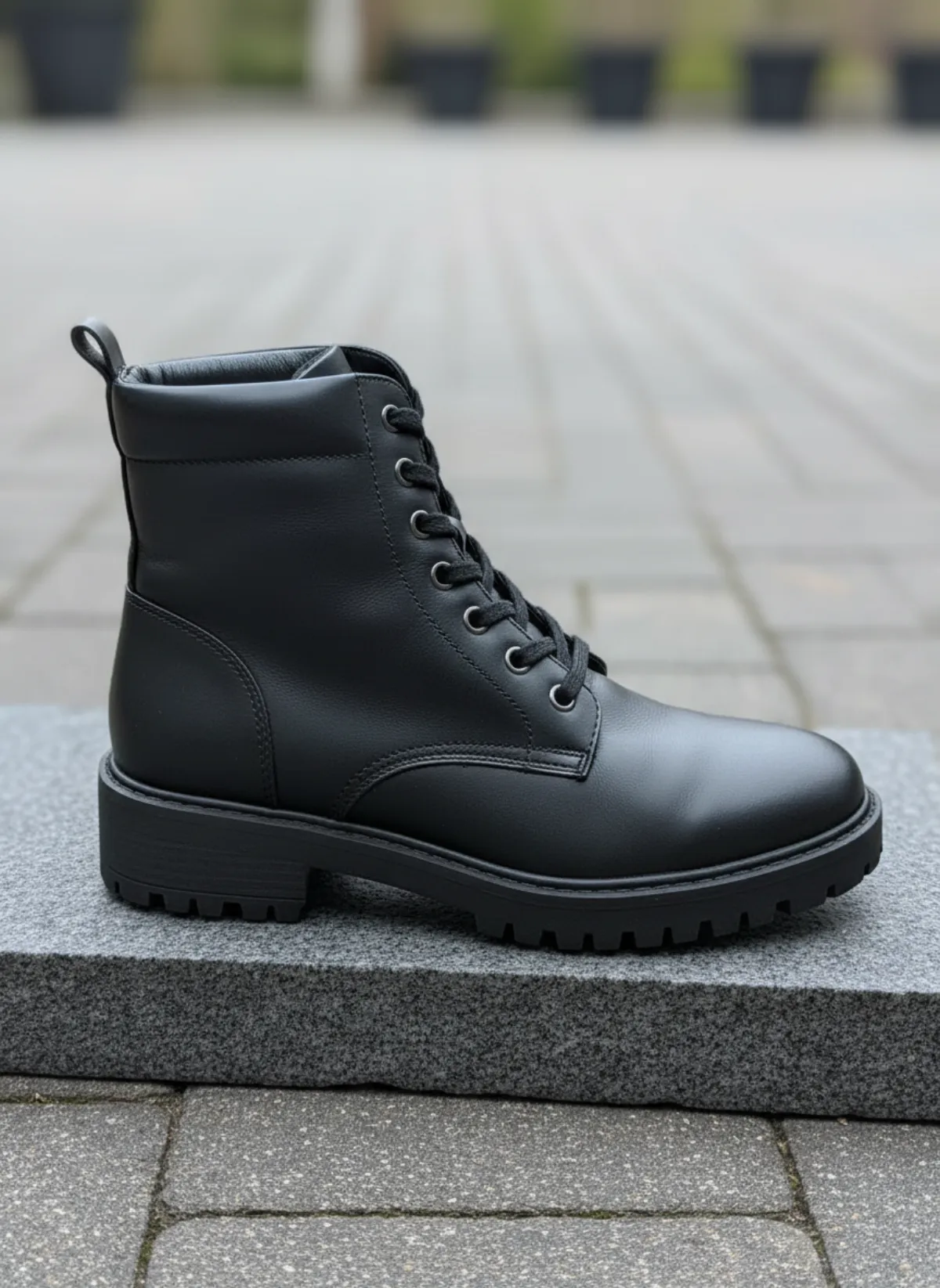
One boot from the outer side, at boot height: the heel, the sole thickness and the shaft line.
Toe
Straight on from the front, so the toe shape, round, almond or square, is clear.
Heel and back
From behind, to show the heel, the back seam and any pull tab.
Shaft and zip
The inner side with the zip or elastic, open and closed, plus the top edge of the shaft.
Soles
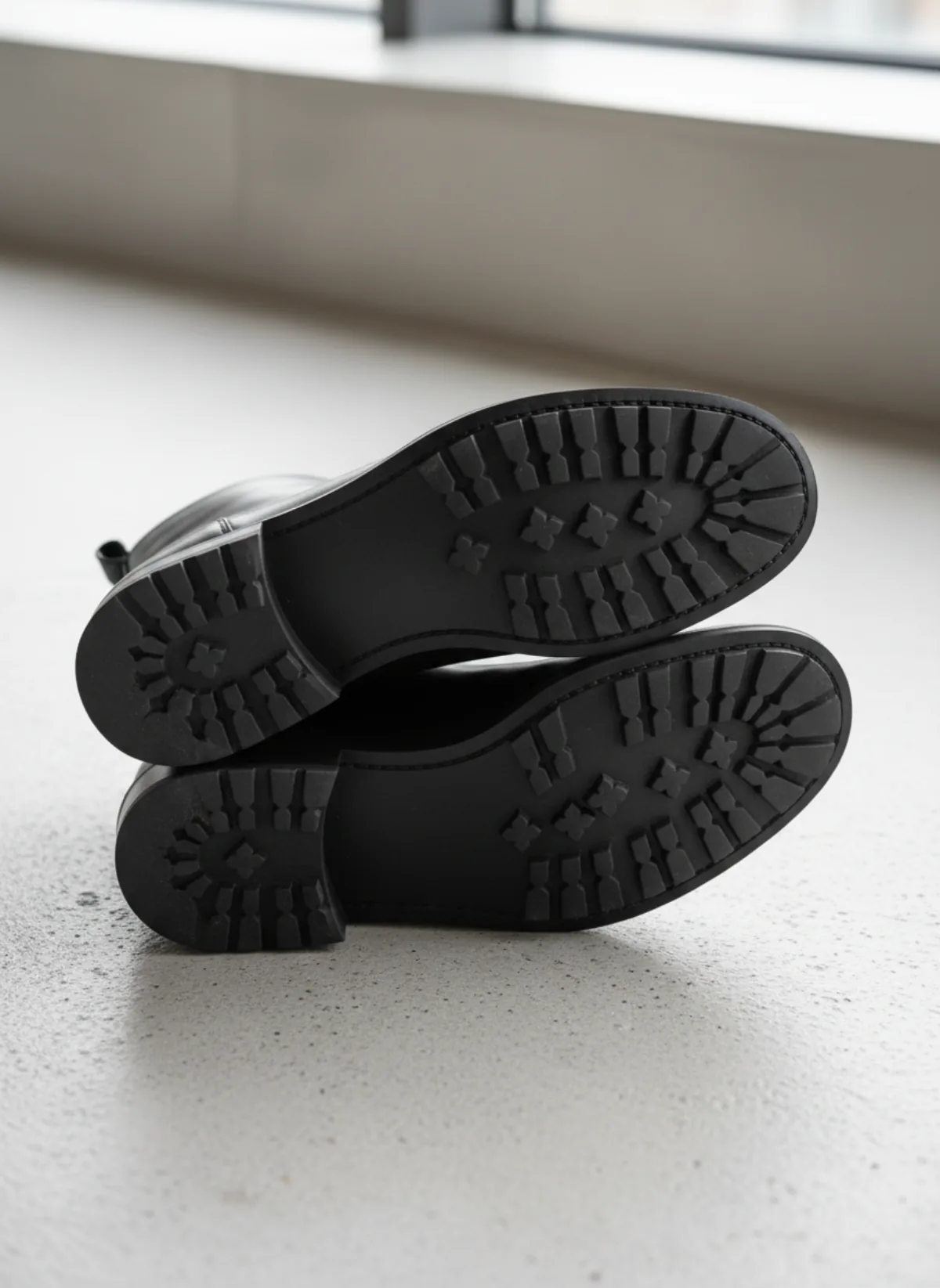
Both soles side by side, flat to the camera, so the tread and the wear are visible.
Inside and size
The insole and the size stamp or label inside the shaft, readable.
Leather close-up
Creasing at the toe box, scuffs and the grain or nap of the material, in side light.
Worn
On feet, close and full length, so the shaft height and the styling are obvious.
Soles, heels and wear: show it honestly
When you work out how to photograph boots for sale second-hand, start with the soles: for pre-owned boots, the sole photo is the one buyers trust most, because it shows how much the boots have been worn. Lay both boots on their side with the soles facing the camera, heels at the same end, and shoot straight on in even light. Wipe the soles first, so the tread pattern reads and the wear is not hidden under dirt.
Look at the heel edges and the ball of the foot: that is where wear shows first. Photograph the heel tips close if they are worn down or replaced, and say so in the listing. A resoled boot is not a problem for most buyers, as long as it is visible.
Then photograph the toe box from above for creasing, the sides for scuffs and the inside heel for lining wear. Every flaw gets its own photo in the same light as the rest, so it looks no better and no worse than it is.
Shaft height, circumference and heel
Boot buyers check three numbers before the size. Measure the shaft height from the top of the sole at the arch to the top of the shaft, the shaft circumference around the widest part at the top, and the heel height at the back from the floor to where the heel meets the upper. Give them in centimetres or inches next to the size.
Knee-high buyers look at the circumference first, because it decides whether the boot will close over their calf. If the shaft has elastic or a lace-up gusset, say how much it stretches. Add the upper and sole material, the lining and whether the boot is water-resistant.
For worn pairs, also give the insole length from heel to toe. It helps buyers compare with boots they already own, especially for vintage boots with old size systems.
Worn photos without a model
A pair on the floor shows the boot, but only a worn photo shows where the shaft ends on the leg and how it looks with trousers, a skirt or a coat. Upload one photo of the pair to boots on feet AI, and Garmo puts them on a model in about a minute: close on the feet, in a full-length look and in a side profile. You choose from 42 ready models (22 women and 20 men), a studio, street or editorial setting and the ratio your shop uses.
Garmo keeps the shape, the colour and the sole from your photo. Fine hardware, zip pulls and small buckles are where any image tool can slip, so check them against the real pair and render again if a detail is off. Keep the shaft measurements in the listing, because the model photo shows the style, not the fit on a particular calf.
For other shoes in the same collection, AI shoe photography covers every type, and AI product photography with models puts boots and clothing together in one look. How to shoot shoes on your own feet is in how to take pictures of shoes on feet.
From a bedroom floor or a shoe tray to boots on a model
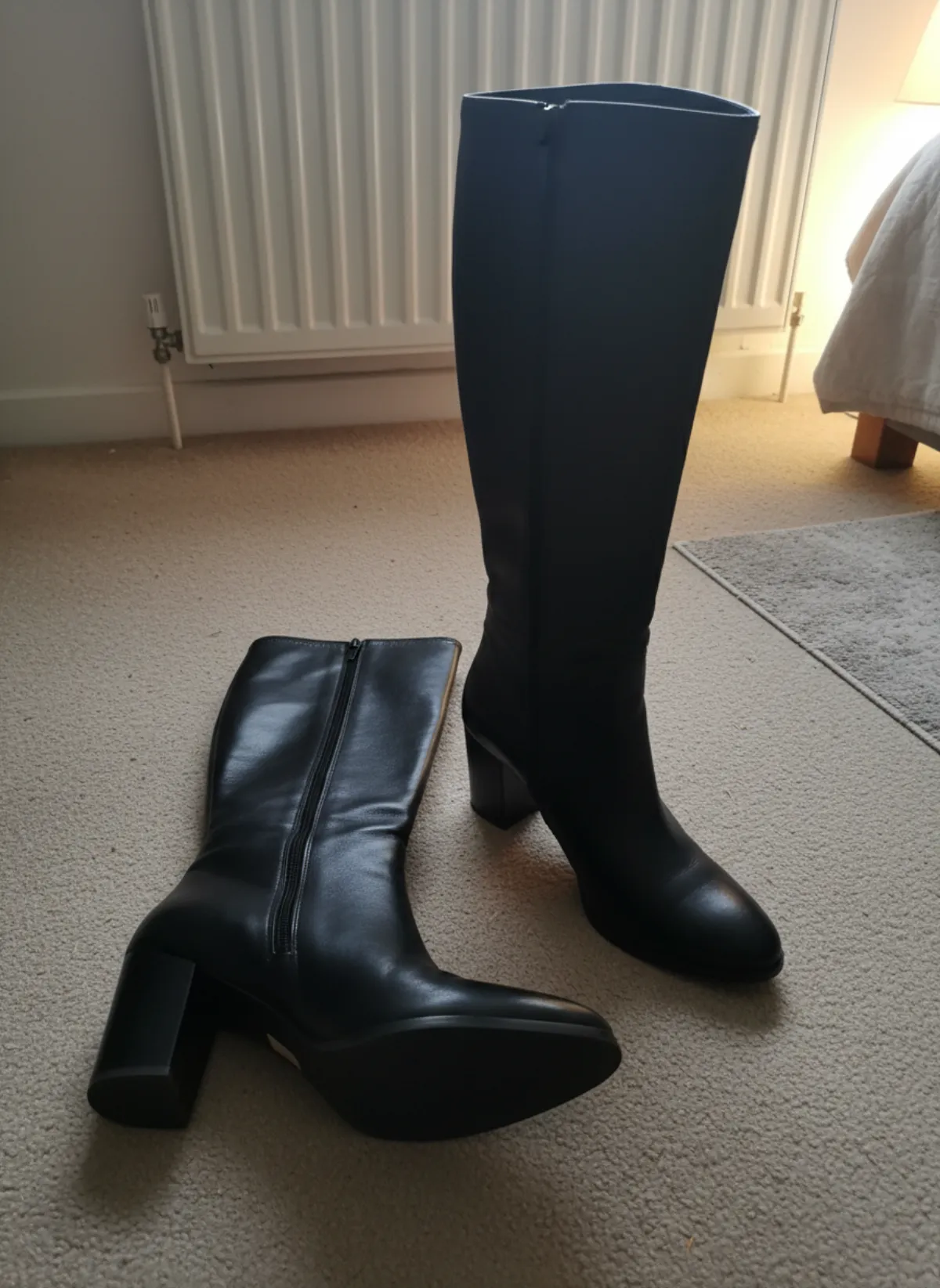
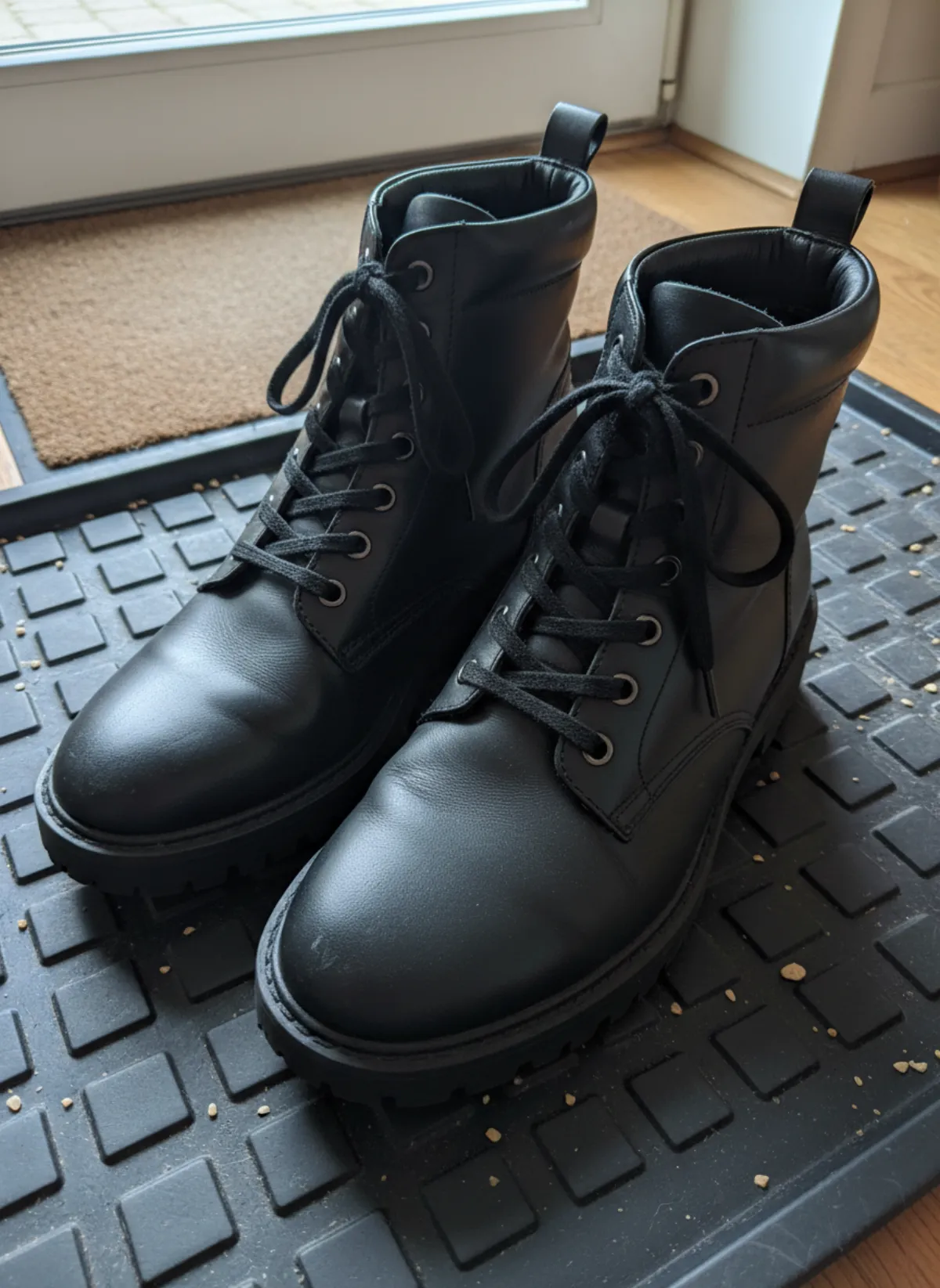
Both pairs were photographed with a phone where they were: one on a bedroom carpet, one on a rubber tray by the door.
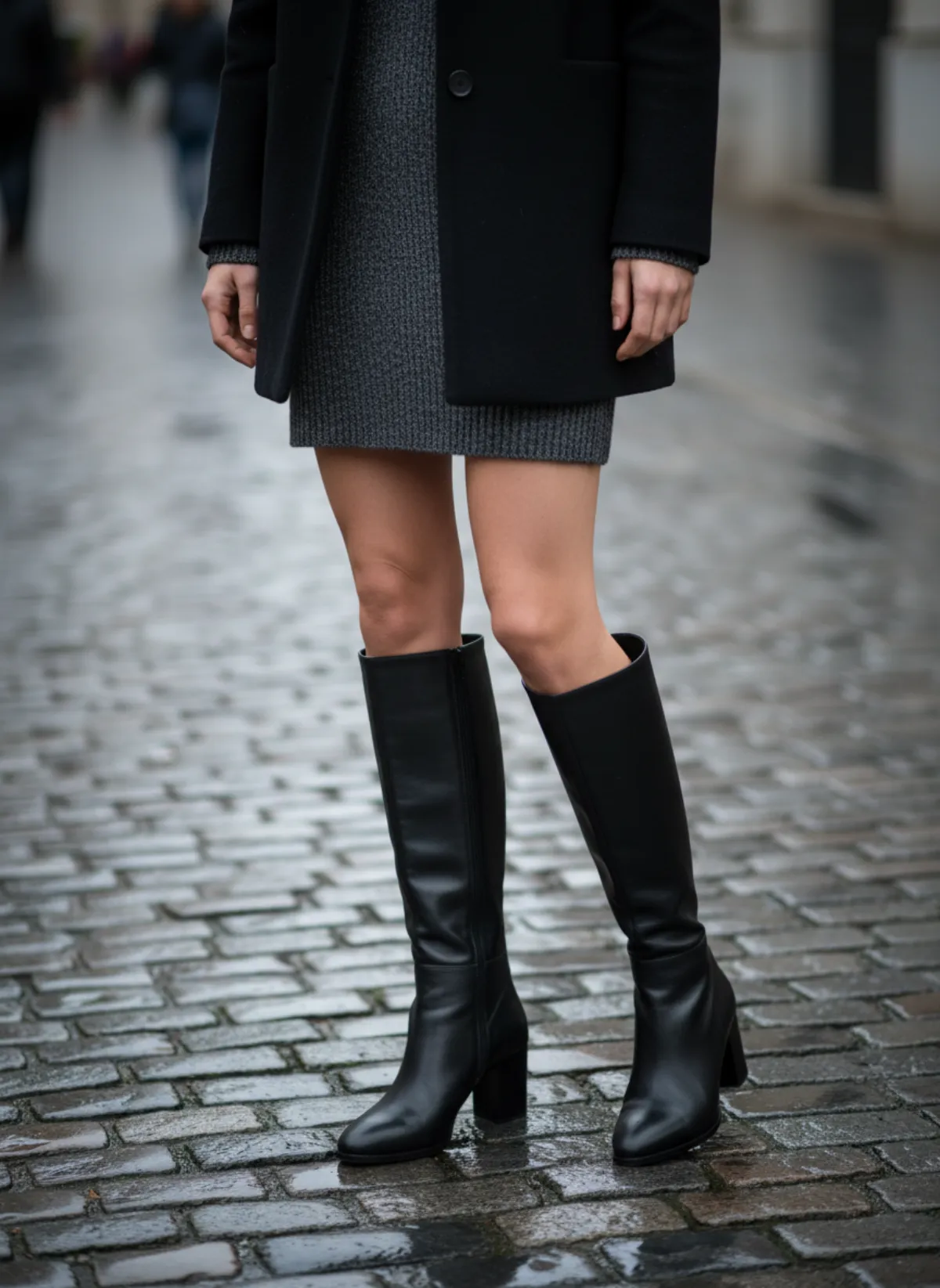
Knee-high leather boots on Alina
One boot fallen over on the carpet hid the shaft height. On the model, the whole shaft shows with a mini dress and a short coat, full length and close on the cobbles.
 Your photo

Chunky lace-up boots on Lola
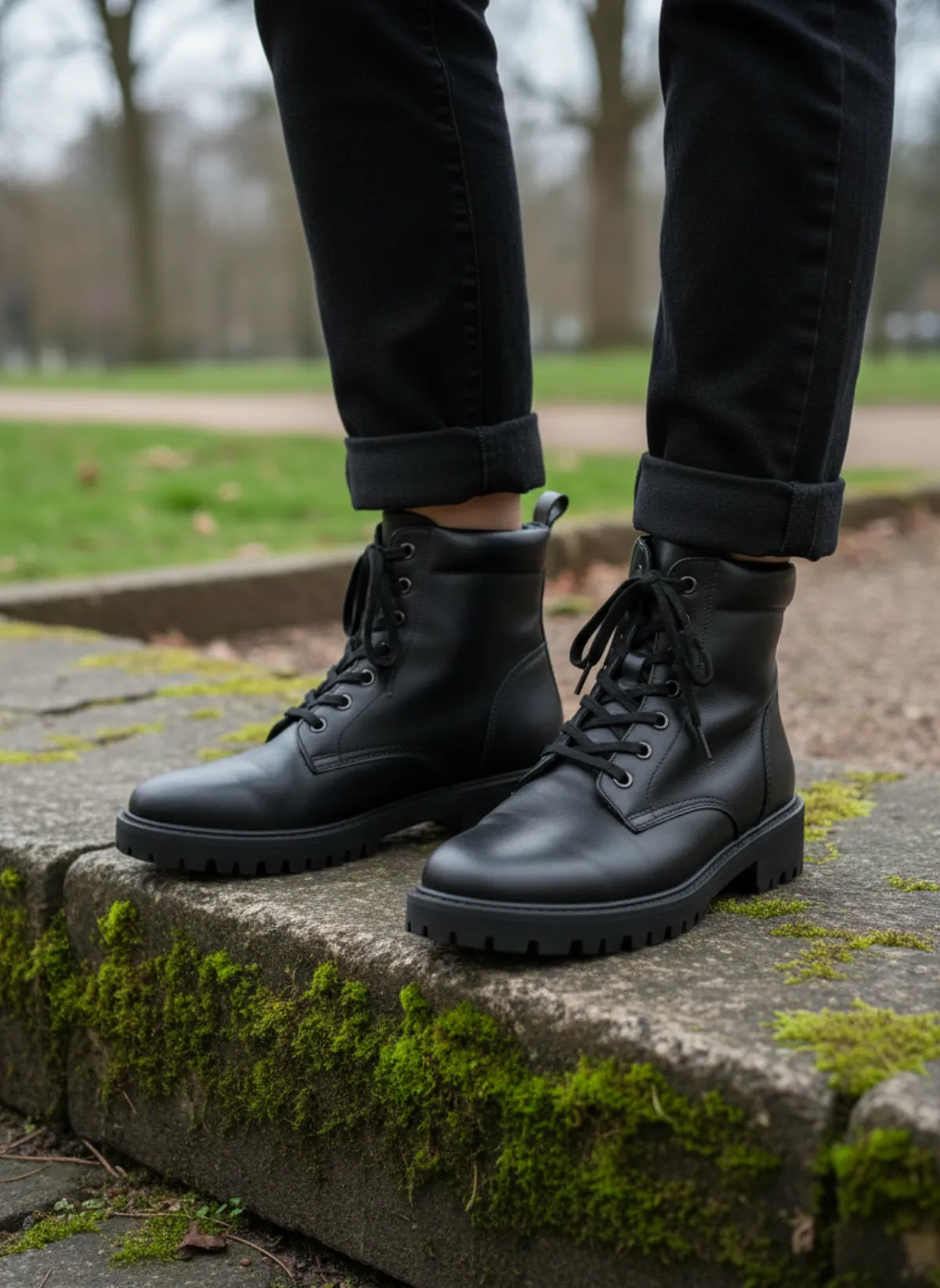
On a shoe tray the lug sole was the least visible part. On feet under cuffed jeans and in a side profile, the sole height and the lacing are the first things you see.
 Your photo
Questions about photographing boots
What is the best way to photograph boots for sale?
Stand the pair on a plain floor against a plain wall in side window light, with the shafts stuffed so they stand straight. Shoot the pair, a side profile, toe, heel, shaft, soles, inside, a leather close-up and one worn photo.
How do you take good pictures of boots?
Use daylight from the side, not the flash, shoot at boot height with the 1x lens and leave space around the pair. Clean and condition the leather first and keep the laces and zips neat.
How do you photograph knee-high boots?
Put boot shapers or rolled paper inside so the shafts stand upright, then step back until the full height fits. Add a side profile and a photo of the zip, and give the shaft height and circumference.
Should I photograph the soles of used boots?
Yes. A sole photo is the clearest proof of wear for pre-owned boots. Wipe them, lay the pair on its side with the soles facing the camera and photograph worn heels close.
Can I show boots on feet without a model?
Yes. Upload one photo of the pair to Garmo's boots on feet AI and the same boots appear on a model, close on the feet, full length and in side profile. Check zips and buckles before publishing.